Amsterdam
Amsterdam is one of those cities that somehow manages to be beautiful, historic, energetic, quirky, and incredibly easy to explore all at the same time. Yes, there are canals, bicycles, coffee shops, and the Red Light District—but Amsterdam is much more than the stereotypes.
Spend a few days wandering beyond the busiest streets around Dam Square and you’ll find quiet canals, neighborhood cafés, sprawling parks, lively markets, centuries-old pubs, and some of the most picturesque streets in Europe.
Quick & Fun Facts
Country: Netherlands
Province: North Holland
Language: Dutch, although English is extremely widely spoken
Currency: Euro (€)
Time Zone: Central European Time (CET) / Central European Summer Time (CEST)
Airport: Amsterdam Airport Schiphol (AMS)
Best Known For: Canals, bicycles, canal houses, museums, tulips, stroopwafels, nightlife and its famously liberal culture
Ideal Stay: 3–5 days for a first visit
Best Way to Explore: Walking, trams and bicycles
Electrical Outlets: Type C and Type F
Emergency Number: 112
Amsterdam has more than 100 kilometers of canals, with the historic Canal Ring recognized as a UNESCO World Heritage Site.
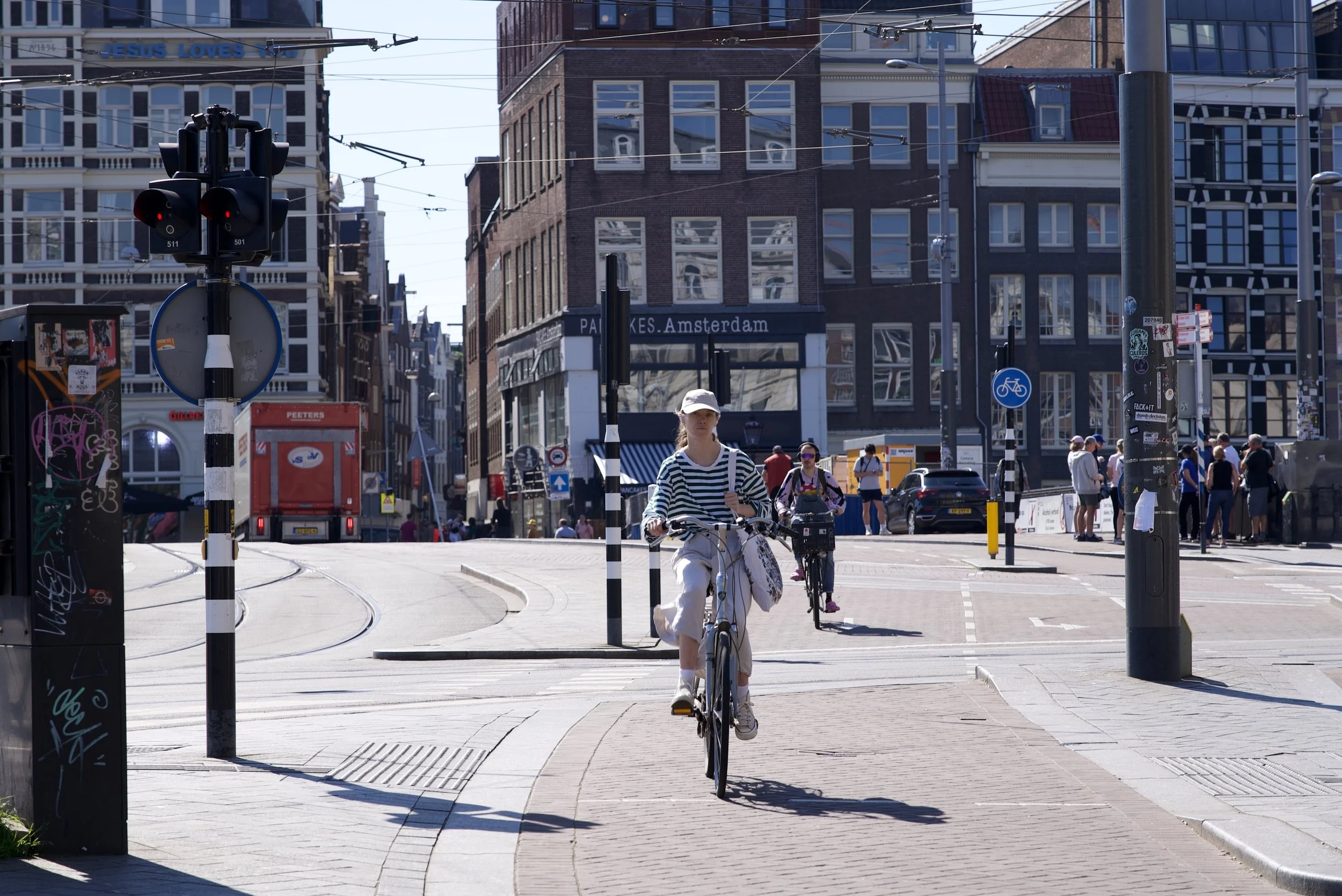
There are hundreds of thousands of bicycles in Amsterdam, and bikes aren't just recreational transportation here—they're part of everyday life. During rush hour, the bike lanes can feel like highways.
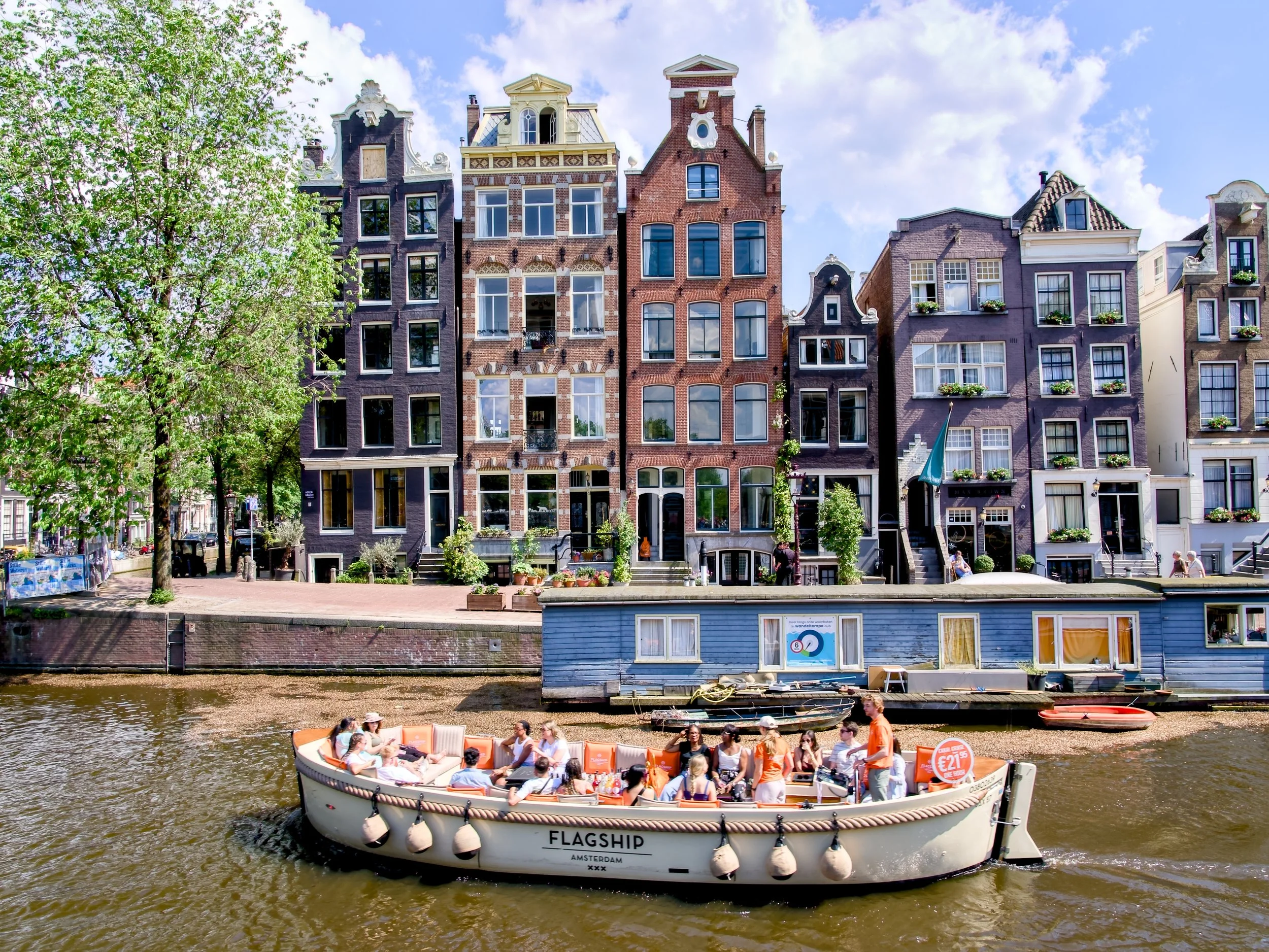
Many of Amsterdam's iconic narrow canal houses were built that way because property taxes were historically influenced by the width of a building's frontage.
Look toward the tops of old canal houses and you'll notice large hooks protruding from the buildings. Those hooks are still used to hoist furniture through upper-floor windows because many of the staircases are far too narrow.
Amsterdam is also famous for its slightly crooked buildings. Some lean intentionally toward the street to make hoisting goods easier, while centuries of settling foundations have given others their distinctive tilt.
Overview & Vibe
Amsterdam is compact enough to feel approachable but large enough that every neighborhood has its own personality.
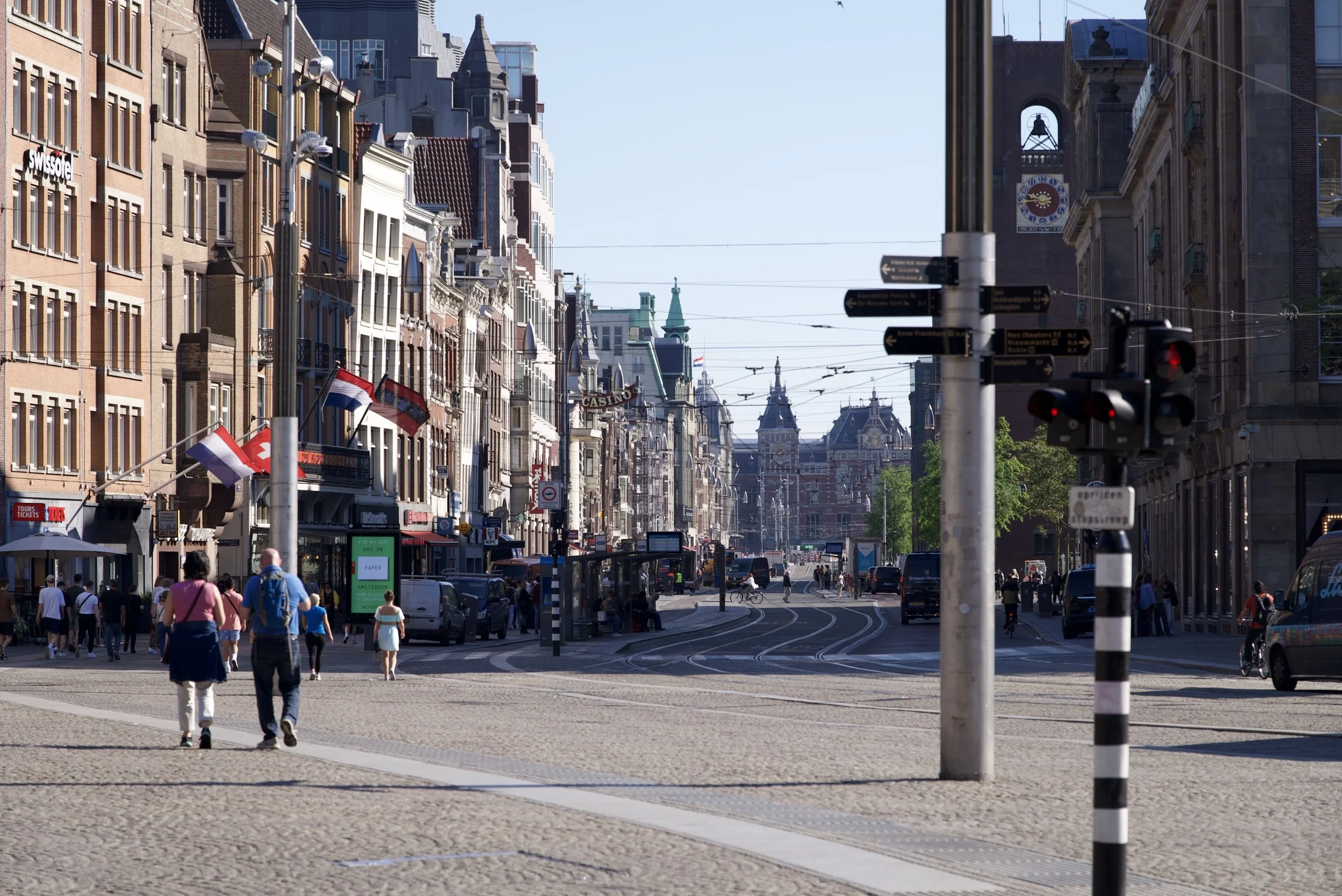
The historic center is a maze of canals, narrow streets, bridges and tall 17th-century houses. It's beautiful, but it's also where you'll find the largest concentration of tourists.
Walk 10 or 15 minutes away from Dam Square and the atmosphere can change dramatically.
The Jordaan feels intimate and residential, with narrow streets, cafés and picturesque canals. De Pijp feels younger and more local, with restaurants, bars and the Albert Cuyp Market. The Museum Quarter is greener, quieter and more refined, while the Canal Belt gives you that postcard Amsterdam experience right outside your door.
Then there's De Wallen, Amsterdam's famous Red Light District. It's fascinating historically and certainly worth seeing, but it can become extremely crowded and rowdy at night.
Amsterdam is also a city where simply wandering is one of the best things you can do. You don't necessarily need an attraction every hour of the day. Walk along the canals, stop at a café, grab a beer in an old brown café and watch the city go by.
That slower pace is where Amsterdam really starts to shine.
Winter: November–February
Winter is cold, dark and often damp, but Amsterdam can also be incredibly atmospheric this time of year.
Hotel prices can be lower outside the Christmas and New Year's periods, crowds are generally lighter, and cozy cafés and brown bars become even more appealing.
Our pick: Late April–May for flowers and spring weather or September for a good balance of weather, crowds and prices.
Best Time to Visit
Amsterdam is a year-round destination, but the experience changes considerably depending on the season.
Spring: March–May
Spring is one of the most popular times to visit, particularly during tulip season. Temperatures begin warming, outdoor cafés reopen and flowers appear throughout the city.
April can be especially busy because of tulip season and King's Day celebrations.
If seeing the famous Dutch tulip fields or Keukenhof is high on your list, you'll generally want to plan your trip around late March through early May, with exact bloom timing varying each year.
Summer: June–August
Summer brings long daylight hours and some of Amsterdam's best weather.
It's perfect for canal cruises, parks, cycling and sitting outside along the canals.
The downside?
Everyone else knows this too.
Summer is peak tourist season, meaning higher hotel prices, larger crowds and longer lines at major attractions.
Fall: September–October
This may be the sweet spot.
September in particular can still offer pleasant weather and long enough days for sightseeing while avoiding some of the extreme summer crowds.
By October, temperatures cool considerably and rain becomes more common, but the changing leaves along the canals can make Amsterdam especially beautiful.
Where to Stay
Where you stay can have a surprisingly big impact on your Amsterdam experience.
Because the city is compact and public transportation is excellent, you don't necessarily need to stay directly beside Dam Square.
In fact, we wouldn't.
Jordaan
Best for: First-time visitors, couples and travelers wanting charm and atmosphere.
The Jordaan is one of our favorite areas of Amsterdam. You'll find beautiful canals, historic buildings, neighborhood restaurants, cafés and small shops while remaining within walking distance of many major attractions.
It's central without feeling quite as chaotic as the busiest parts of the historic center.
Canal Belt
Best for: The classic Amsterdam experience.
The Canal Belt—particularly around the Prinsengracht, Keizersgracht and Herengracht canals—is about as Amsterdam as Amsterdam gets.
You'll pay more for the location, but stepping outside your hotel directly onto one of Amsterdam's famous canals is difficult to beat.
De Pijp
Best for: Food, nightlife and a more local atmosphere.
De Pijp sits south of the historic center and has become one of Amsterdam's most popular neighborhoods.
You'll find the Albert Cuyp Market, countless restaurants, cafés and bars, along with easy access to the Museum Quarter.
It feels noticeably less touristy than the historic center.
Museum Quarter
Best for: Museums, families and travelers wanting somewhere quieter.
This is where you'll find the Rijksmuseum, Van Gogh Museum, Stedelijk Museum and nearby Vondelpark.
It's quieter than central Amsterdam while still being well connected by tram.
Leidseplein / Vondelpark
Best for: Visitors wanting restaurants, nightlife and easy access to attractions.
Leidseplein is busy and energetic, but staying slightly closer to Vondelpark gives you a nice balance between nightlife and quieter surroundings.
Where We Would Avoid Staying: De Wallen
Amsterdam's Red Light District is absolutely worth seeing—but seeing somewhere and sleeping there are two different things.
At night, parts of De Wallen can become extremely crowded, noisy and filled with bachelor parties and intoxicated tourists.
Stay in Jordaan, the Canal Belt, Museum Quarter or De Pijp and simply walk or take public transportation into De Wallen when you want to explore it.
You'll probably enjoy Amsterdam considerably more.

Visit In 't Aepjen
For something unusual, stop inside In 't Aepjen, commonly known as the Monkey Bar.
It's located inside one of Amsterdam's oldest surviving wooden buildings and is connected to stories of sailors returning from overseas voyages—sometimes allegedly paying their bar tabs with monkeys.
Whether every part of the legend is true almost doesn't matter. It's exactly the type of weird little Amsterdam stop that makes traveling fun.
Visit A'DAM Lookout
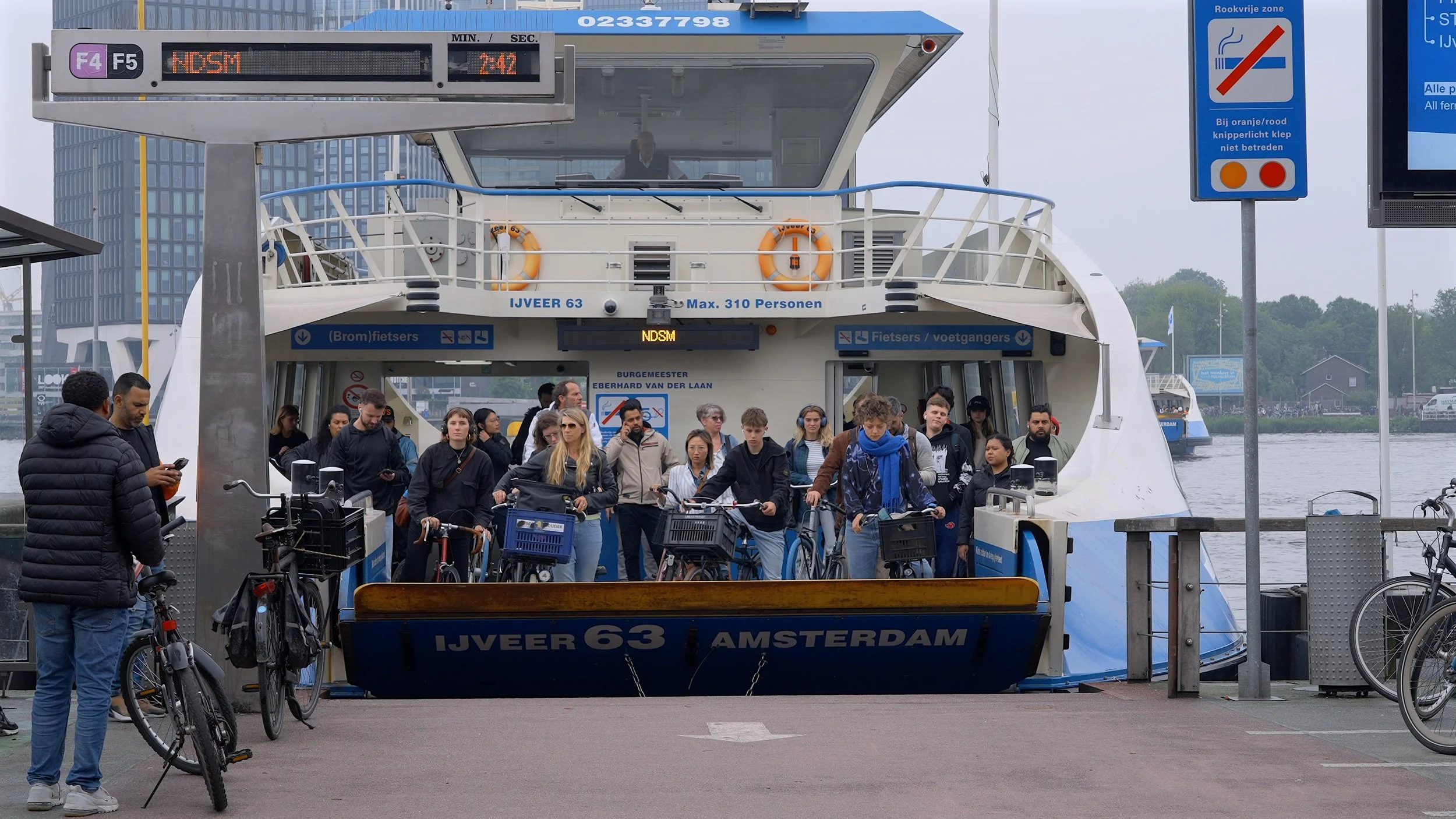
Take the free ferry across the IJ behind Amsterdam Centraal to Amsterdam Noord.
A'DAM Lookout provides panoramic views across Amsterdam, and adventurous visitors can try the famous Over the Edge swing near the top of the tower.
Relax in Vondelpark
When Amsterdam starts feeling crowded, head to Vondelpark.
It's the city's most famous park and a great place to walk, bike, picnic or simply escape the packed streets around the center.
Things to Do & See
Explore the Canal Ring
Don't treat Amsterdam's canals as something you only see while walking between attractions.
They are one of the attractions.
Spend time wandering around Prinsengracht, Keizersgracht and Herengracht, crossing bridges and exploring the smaller side streets connecting them.
Early mornings can be especially beautiful before the streets fill with visitors.
Take a Canal Cruise
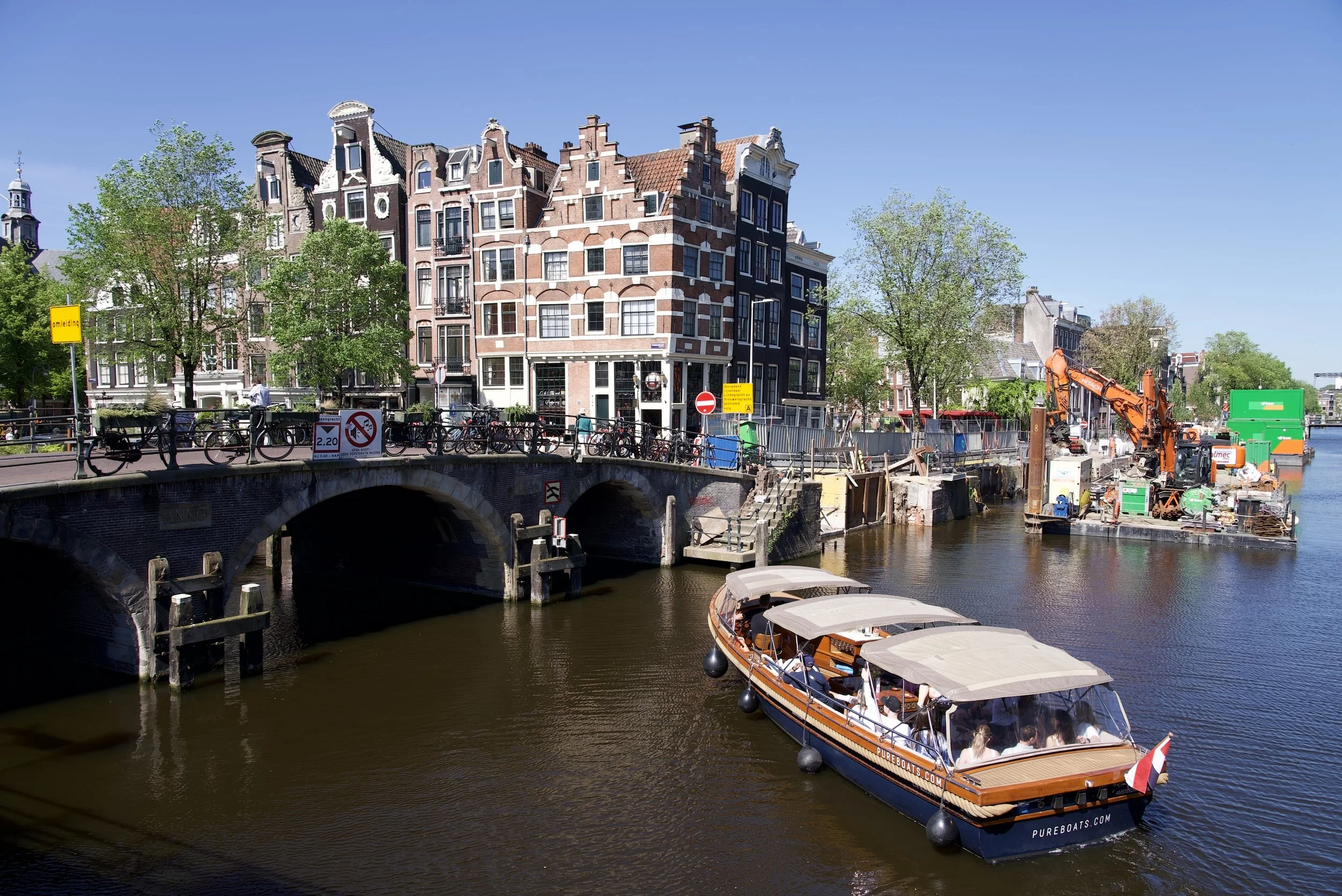
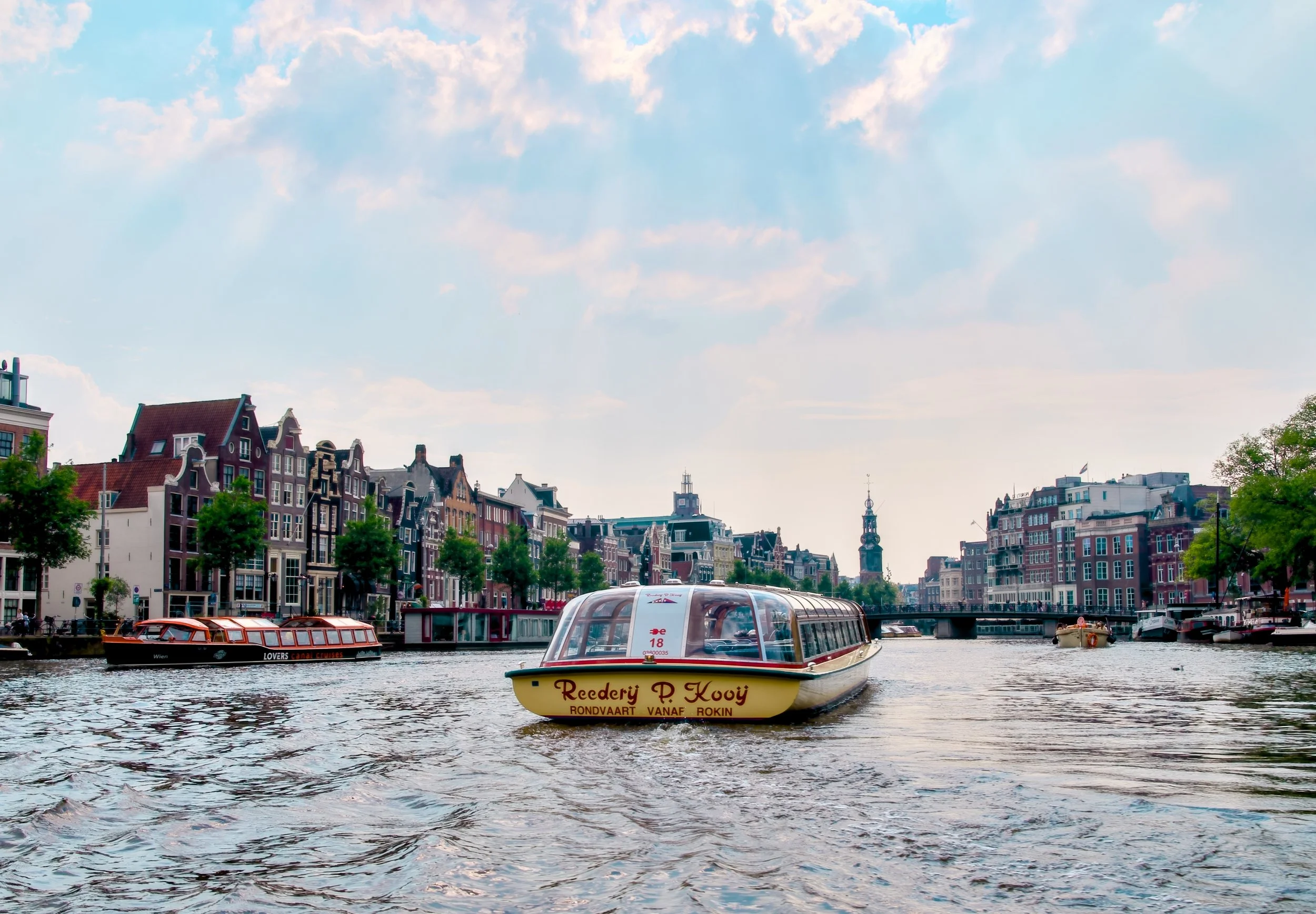
If you're only going to do one touristy thing in Amsterdam, a canal cruise deserves serious consideration.
Seeing the city from the water gives you a completely different perspective and helps explain how Amsterdam developed.
There are everything from large sightseeing boats to smaller open-air boats offering drinks and more intimate tours.
Anne Frank House
The Anne Frank House is one of Amsterdam's most powerful and popular attractions.
You'll walk through the building where Anne Frank, her family and others hid during the Nazi occupation of the Netherlands.
Tickets can sell out quickly, so this is something you should plan well before arriving rather than assuming you'll buy admission at the door.
Rijksmuseum
Even travelers who aren't huge museum people should consider the Rijksmuseum.
It's the Netherlands' national museum and contains works by some of the country's greatest artists, including Rembrandt and Vermeer.
And even if you skip the museum itself, the surrounding Museumplein area is worth exploring.
Van Gogh Museum
The Van Gogh Museum contains the world's largest collection of works by Vincent van Gogh.
This is another attraction where buying tickets ahead of time is smart.
Explore the Jordaan
Give yourself a couple of hours without an itinerary and simply wander.
Explore the canals, browse small shops, find a café and duck into one of Amsterdam's traditional brown cafés for a beer.
Visit the Albert Cuyp Market
Located in De Pijp, Albert Cuyp Market is one of Amsterdam's best-known street markets.
It's a good place to try Dutch snacks, browse local stalls and experience a different side of the city away from the historic center.
Explore De Wallen
The Red Light District is much more historically interesting than its reputation might suggest.
This is one of Amsterdam's oldest neighborhoods, filled with narrow medieval streets, canals and historic buildings.
The Oude Kerk, Amsterdam's oldest building, sits right in the middle of it.
Visit during the daytime and return after dark if you want to see how dramatically the neighborhood changes.
Local Foods to Try
Amsterdam isn't necessarily famous as one of Europe's great food cities, but Dutch cuisine has several things you absolutely should try.
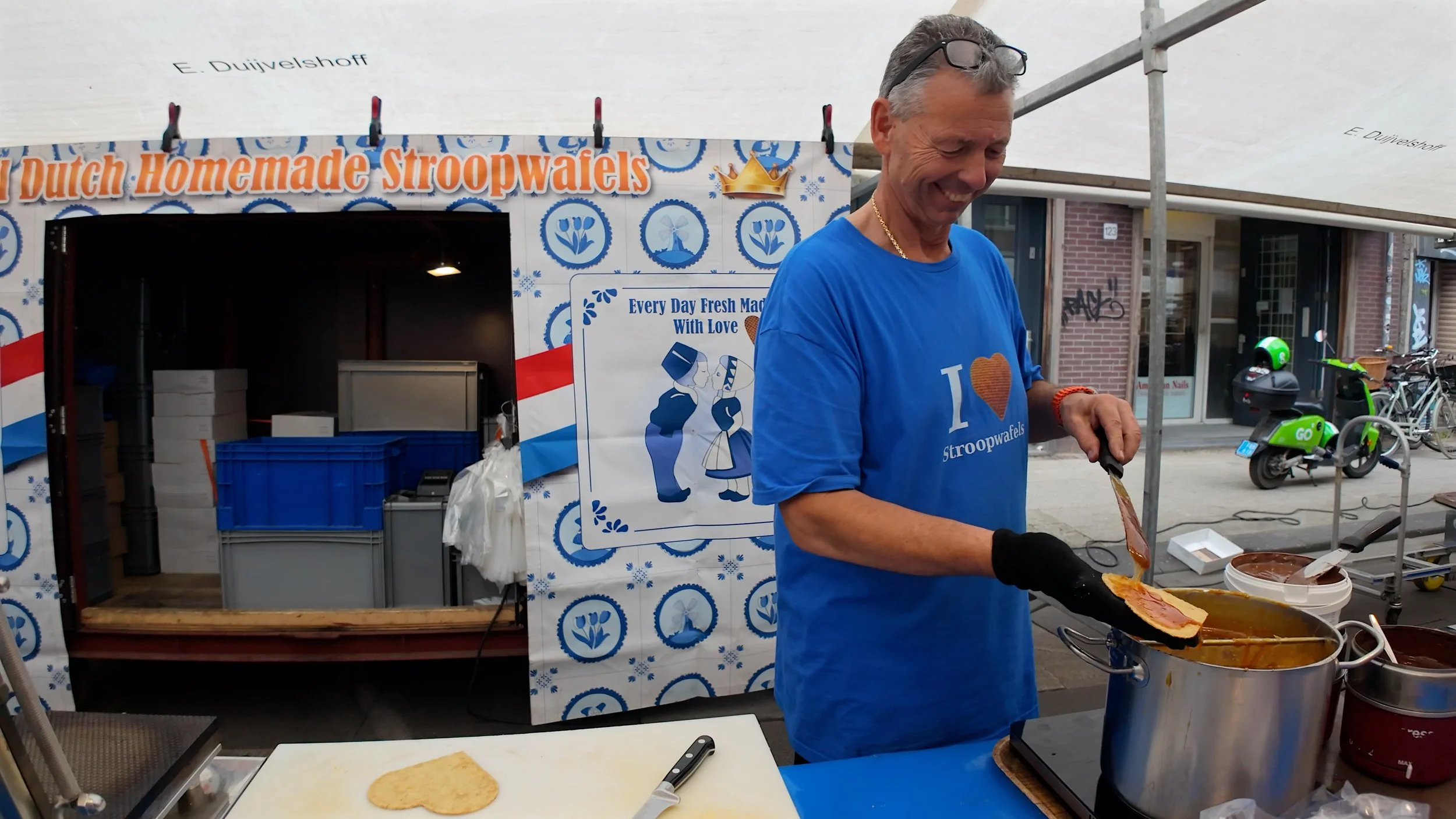
Stroopwafel
Two thin waffle cookies pressed around a layer of warm caramel syrup.
Fresh stroopwafels from a market stall are on another level compared with the packaged versions.
Bitterballen
One of the ultimate Dutch bar snacks.
These crispy fried balls are traditionally filled with a thick meat ragout and served piping hot with mustard.
And when we say hot, we mean surface-of-the-sun hot. Give them a minute.
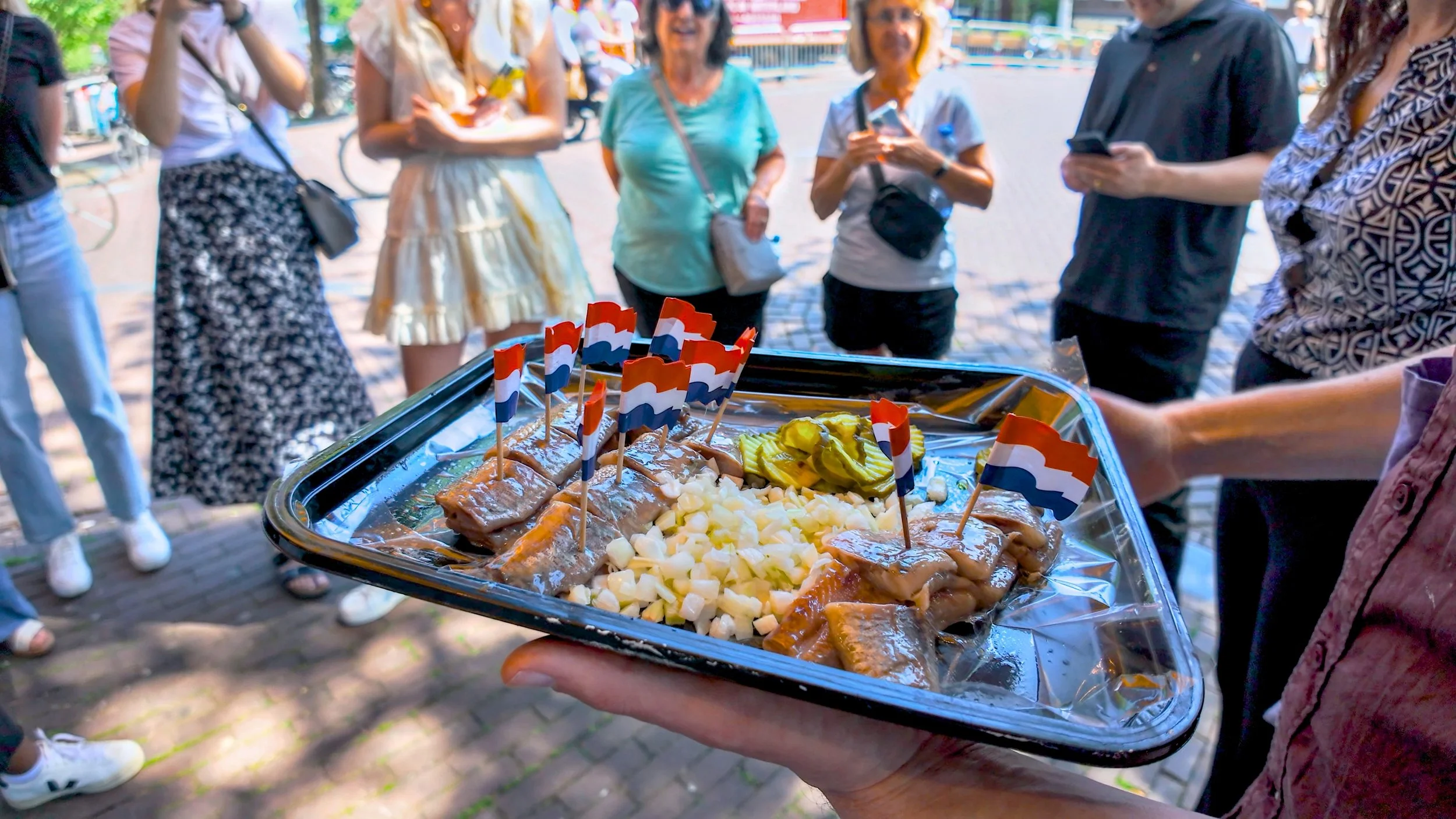
Dutch Herring
Traditionally served raw with chopped onions and sometimes pickles.
You can eat it the Dutch way by holding the fish by the tail and lowering it into your mouth—or maintain whatever dignity you have left and eat it in a sandwich.
Patat
Dutch fries are usually thick-cut and served in a paper cone covered with sauces.
Try them with mayonnaise, curry ketchup or patat oorlog, typically involving mayonnaise, peanut satay sauce and onions.
Poffertjes
Small, fluffy Dutch pancakes traditionally covered with powdered sugar and butter.
They're simple, cheap and dangerously easy to eat.
Dutch Cheese
Gouda and Edam may be internationally famous, but you'll find plenty of other Dutch cheeses throughout Amsterdam.
Look for cheese shops where you can sample aged varieties rather than only buying the tourist-oriented packaged cheeses around Dam Square.
Apple Pie
Dutch apple pie is thicker and heartier than many American versions, usually loaded with apples, cinnamon and a lattice crust.
Add whipped cream and coffee and you've basically created an Amsterdam survival kit.

Getting Around
Amsterdam is one of the easiest major European cities to navigate without a car.
Walking
For central Amsterdam, walking is often your best option.
Many major attractions are relatively close together, and walking gives you the opportunity to discover canals, cafés and side streets you would otherwise miss.
Just remember one important rule:
The bike lane is not a sidewalk.
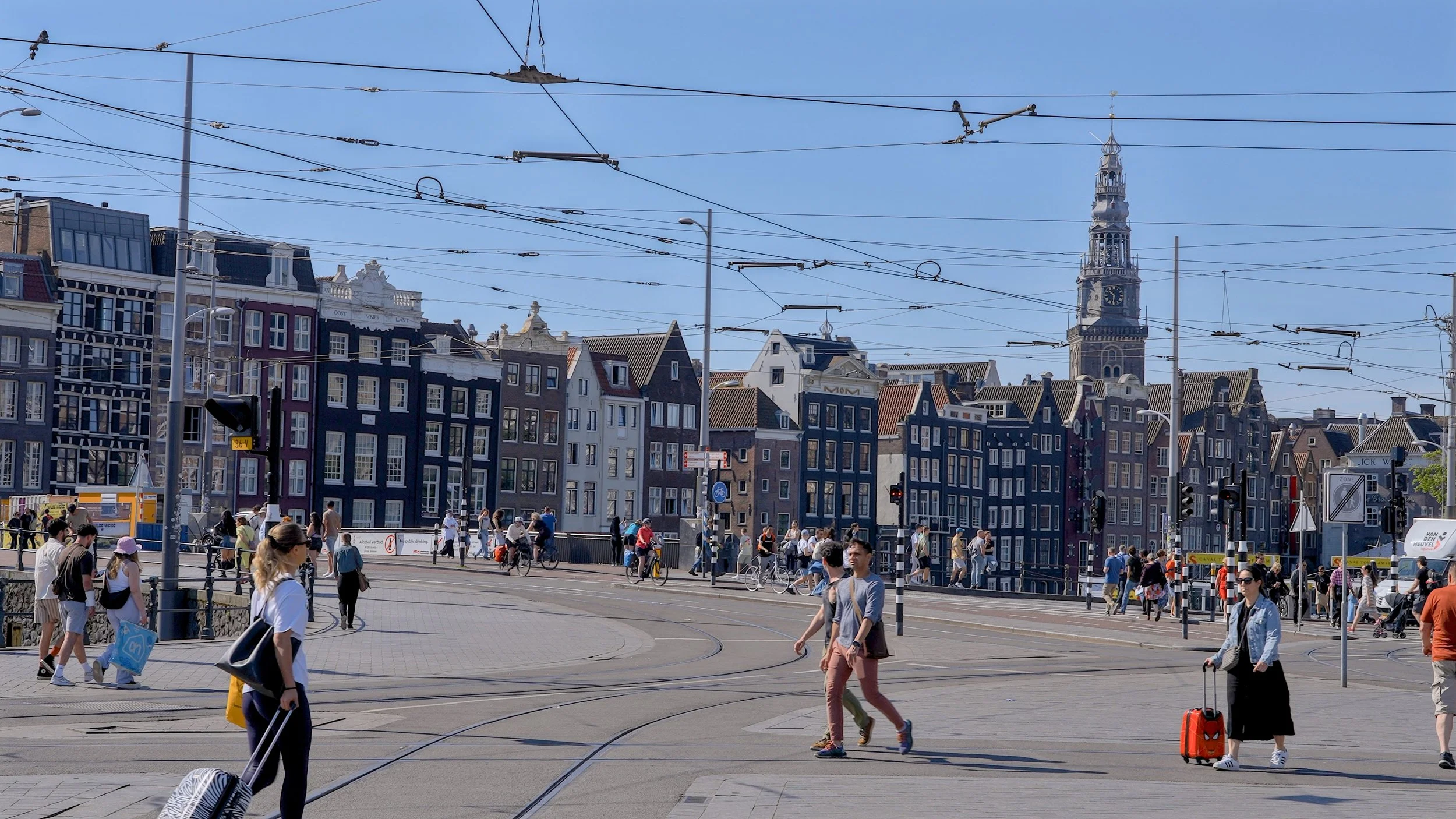
Amsterdam cyclists move quickly and generally expect pedestrians to stay out of their way.
Trams
Trams are probably the most useful form of public transportation for tourists.
They connect Amsterdam Centraal with many major neighborhoods and attractions and are particularly convenient for reaching places such as Museumplein, De Pijp and areas around Vondelpark.
Metro
Amsterdam's metro becomes particularly useful when traveling longer distances or heading outside the historic center. The network currently has five routes connecting areas including Amsterdam Zuid, Noord, Zuidoost, Sloterdijk and Diemen.
Paying for Transportation
Amsterdam's OVpay system makes public transportation extremely simple.
You can check in and out using a compatible contactless debit or credit card, smartphone or smartwatch. Just remember to use the same payment method when checking out.
This means most visitors no longer need to figure out complicated ticket machines or buy a transit card for occasional trips.
Bicycles
Renting a bicycle sounds like the ultimate Amsterdam experience—and it can be.
But don't underestimate Amsterdam cycling.
Locals use bicycles as legitimate transportation, not sightseeing toys. Bike lanes move quickly, intersections can be confusing and inexperienced tourists stopping unexpectedly can create dangerous situations.
If you're uncomfortable cycling in heavy urban traffic, there's absolutely nothing wrong with sticking to walking and trams.
Getting From Schiphol Airport
The train is generally one of the easiest ways to reach Amsterdam from Schiphol Airport, particularly if you're staying near Amsterdam Centraal.
You can use OVpay for occasional train trips by checking in and out with a compatible contactless payment method.
Common Mistakes to Avoid
Staying in the Red Light District
Visit it. Explore it. Learn about its history.
But unless nightlife is the main reason you're visiting Amsterdam, you probably don't need to sleep in the middle of it.
Walking in Bike Lanes
This might be the fastest way to annoy an Amsterdam local.
Pay attention to pavement markings and look in both directions before crossing bike lanes.
Thinking Amsterdam Is Only About the Red Light District and Coffee Shops
Those things exist, but they're a tiny piece of the city.
Spend time in Jordaan, De Pijp, Vondelpark and the Canal Belt before deciding you've "seen Amsterdam."
Waiting Until the Last Minute for Major Attractions
Don't assume you'll arrive and figure everything out.
Popular attractions such as the Anne Frank House and Van Gogh Museum can require advance planning.
Renting a Car
You really don't need one.
Parking is expensive, streets are narrow, cyclists are everywhere and public transportation is excellent.
If you're exploring outside Amsterdam, trains and regional transportation will cover many of the places most visitors want to see.
Confusing a Coffee Shop With a Café
A café is where you go for coffee.
A Dutch coffeeshop is generally associated with the regulated sale of cannabis.
Those are two very different morning coffees.
Only Visiting the City Center
Some of Amsterdam's best experiences happen once you move away from Dam Square.
Explore De Pijp, Oud-West, Amsterdam Noord and other neighborhoods where everyday Amsterdam becomes much more visible.
Forgetting to Check Out of Public Transportation
When using OVpay, you need to tap when entering and leaving trains, trams, buses and metros.
Safety & Things to Know
Amsterdam is generally an easy city for tourists, but there are a few things worth knowing.
Watch for Pickpockets
As in most major European tourist destinations, petty theft is the biggest concern.
Be especially aware around:
Amsterdam Centraal
Dam Square
Busy trams
De Wallen
Major attractions
Crowded nightlife areas
Keep your phone and wallet secured rather than sitting loosely in an open pocket.
Cyclists Have the Right-of-Way Mentality
Whether they technically have the right of way in every situation isn't really the point.
A bicycle traveling toward you at 20 mph will win the argument.
Look carefully before stepping into bike lanes.
Amsterdam Is Extremely Card-Friendly
Credit and debit cards are widely accepted, and you'll rarely need large amounts of cash.
However, having a small amount of euros available can still be useful for smaller purchases and occasional situations where your particular card isn't accepted.
Cannabis Laws Don't Mean Anything Goes
Cannabis is tolerated under specific Dutch rules, but that doesn't mean you can smoke wherever you want.
Respect posted restrictions and local rules, particularly in the historic center.
Don't Photograph Sex Workers
This should be obvious, but apparently it still needs to be said.
Taking photographs of sex workers in the Red Light District is extremely disrespectful and can quickly lead to confrontation.
Watch the Stairs
If you're staying in an older Amsterdam building, prepare yourself.
Traditional canal houses can have extraordinarily steep and narrow staircases. If mobility is an issue—or you're traveling with heavy luggage—confirm that your accommodation has an elevator before booking.
Weather Changes Quickly
Amsterdam weather can go from sunny to windy and rainy remarkably quickly.
A lightweight waterproof jacket is often more useful than an umbrella, especially when the wind picks up.
Visa & Entry Requirements
The Netherlands is part of the Schengen Area, so travelers need to consider their total time spent throughout the Schengen Zone—not simply their time in the Netherlands.
U.S. Citizens
For typical short tourist visits, Americans can travel visa-free within the Schengen Area for up to 90 days during any rolling 180-day period.
That 90-day allowance applies across participating Schengen countries combined. Spending 30 days in France, 30 days in Italy and 30 days in the Netherlands would generally use the full 90-day allowance—it doesn't reset each time you cross into another Schengen country.
For travelers from countries that require one, a short-stay Schengen visa allows travel in the Netherlands and other Schengen countries for up to 90 days within a 180-day period.
ETIAS
ETIAS is planned for visa-exempt travelers entering participating European countries, but as of August 2026, ETIAS is not yet operational and travelers cannot currently apply for it. The Dutch government says the EU will announce the specific launch date in advance.
Because European entry rules continue to evolve, always verify the requirements shortly before your trip rather than relying on information you read months earlier.
Final Thoughts
Amsterdam is one of Europe's easiest cities to fall in love with—but you have to get beyond the stereotypes.
Yes, see the Red Light District. Take a canal cruise. Eat a ridiculous number of stroopwafels.
But also wander through the Jordaan with nowhere particular to go. Grab bitterballen and a beer in an old brown café. Walk through Vondelpark. Explore De Pijp. Take the ferry across the IJ. And give yourself time to simply sit beside a canal and watch Amsterdam happen around you.
The city isn't huge, which means three or four days can give you a fantastic introduction, while five days gives you enough breathing room to slow down and explore neighborhoods beyond the major tourist attractions.
And that's where Amsterdam gets really good.