Bologna
Overview & Vibe
Three cities into our Italian adventure, Bologna was the first place that really felt like the slower, everyday version of Italy we had pictured before arriving.
Rome felt enormous and chaotic. Florence was beautiful but extremely busy and tourist-focused in parts of the historic center.
Bologna felt different.
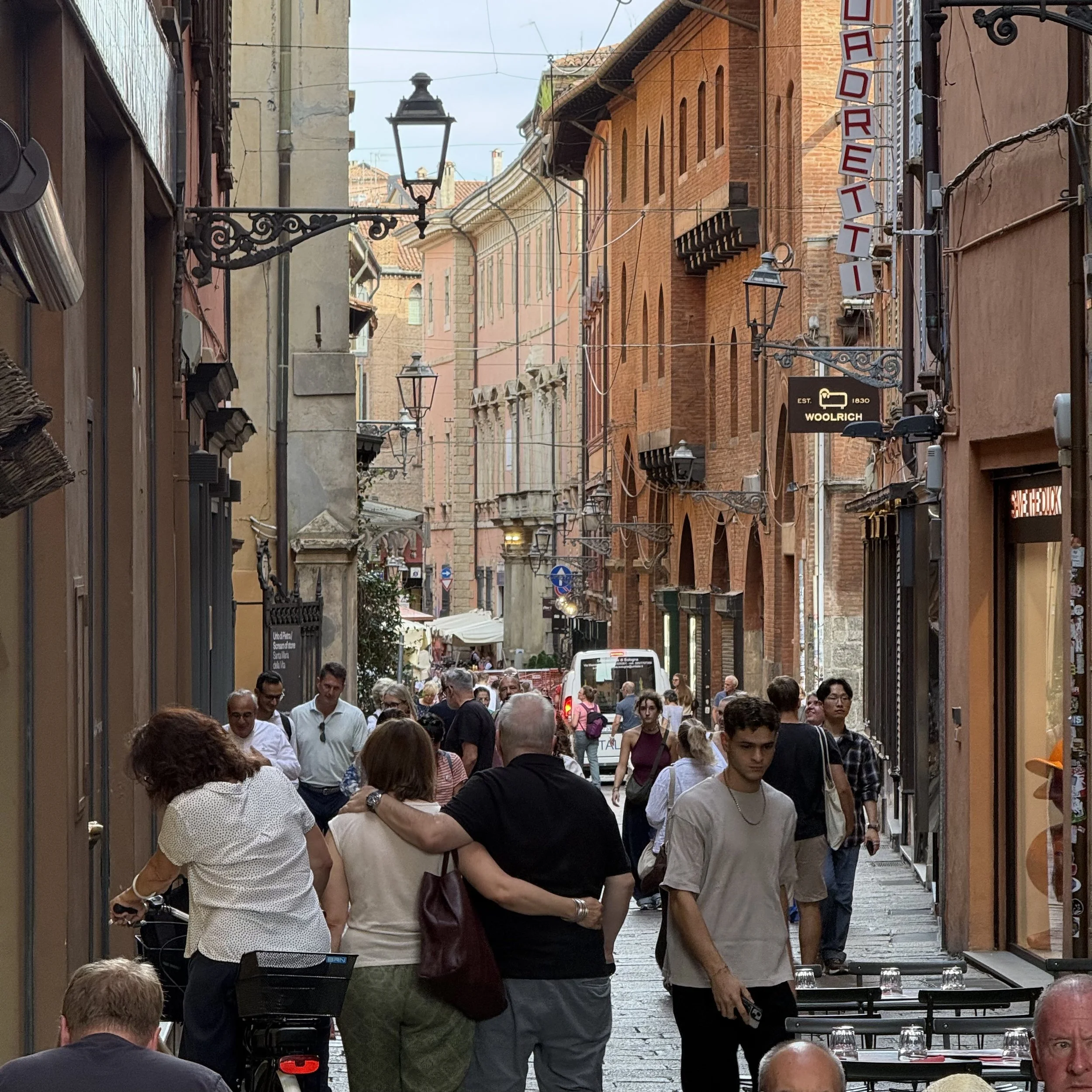
Students rode bikes through the streets. Locals shopped at neighborhood markets. Friends met for drinks beneath the porticoes. Restaurants weren't surrounded entirely by tourists.
It felt like we were visiting a functioning Italian city rather than a city centered around tourism.
The University of Bologna also gives the city a younger energy than its medieval appearance might suggest. Around the university district you'll find students, inexpensive restaurants, cafés, bars and a much livelier atmosphere.
Bologna manages to combine medieval Italy, university-town energy and one of the country's greatest food cultureswithout feeling overwhelming.
That combination is what won us over.
Our bologna experience
Our Stay: 5 nights
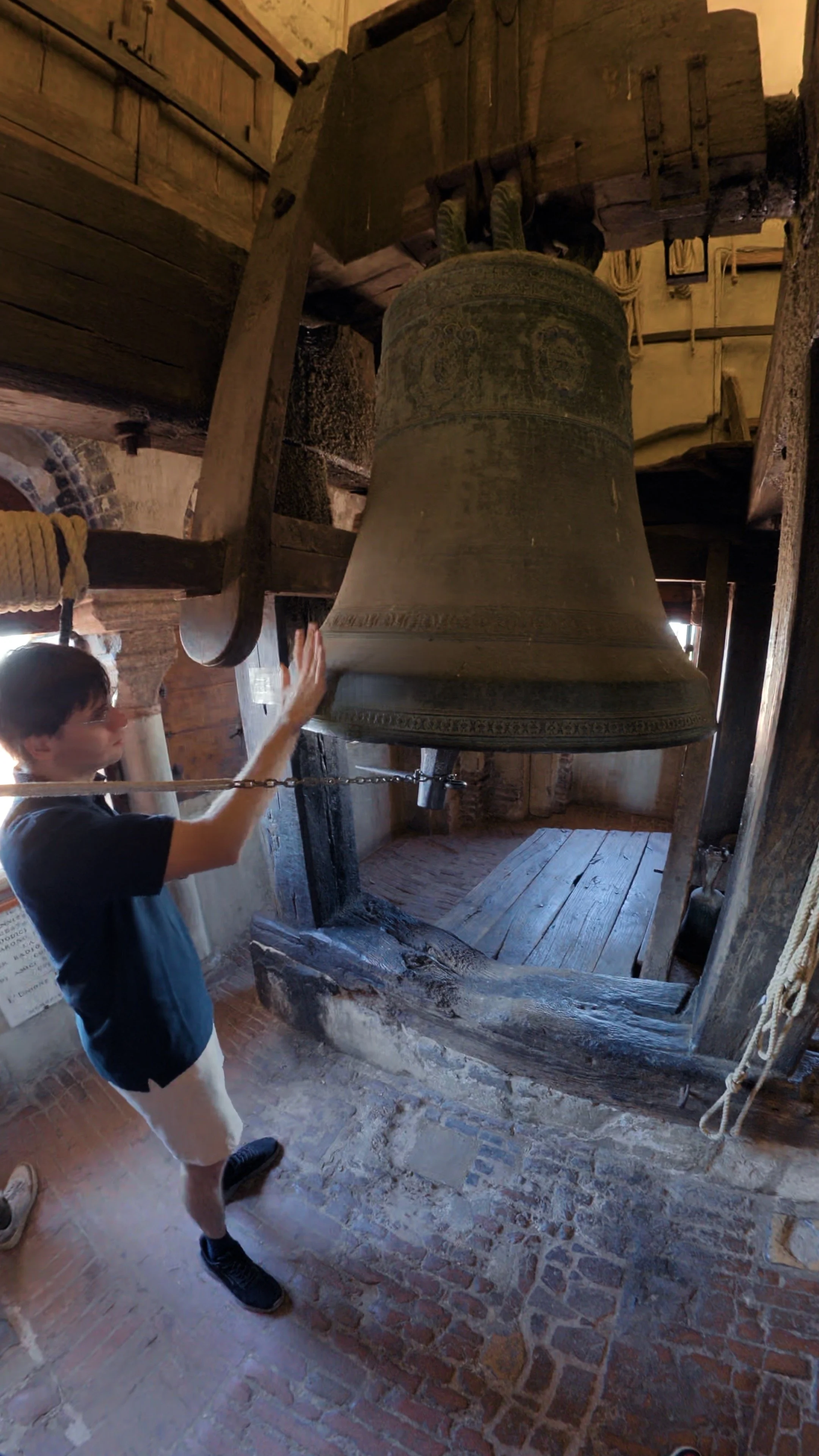
Our Favorite Experience: Climbing the bell tower of Cattedrale Metropolitana di San Pietro
Favorite Area: Around Mercato delle Erbe and the historic center
Favorite Gelato: Il Gelato di Carducci
Biggest Surprise: How relaxed and local Bologna felt
Best Advice: Stay centrally and explore on foot
Would We Return? Yes
Bologna was one of the biggest surprises of our trip through Italy.
After Rome and Florence, we expected another busy Italian tourist destination. Instead, Bologna felt calmer, more relaxed and noticeably more local.
There are major historical attractions here, but Bologna doesn't feel like a city where your entire visit revolves around checking landmarks off a list. We spent just as much time wandering beneath the porticoes, stopping for food and watching everyday life happen around us.
And that became one of our favorite things about it.
Overview
Region: Emilia-Romagna
Best Known For: Food, medieval architecture, porticoes and the University of Bologna
Nickname: La Grassa — “The Fat One,” thanks to Bologna's famous food culture
Historic Center: Compact and extremely walkable
Ideal Stay: 3–5 nights
Closest Major Airport: Bologna Guglielmo Marconi Airport (BLQ)
Best Way to Get Around: Walking
Great For: Food lovers, couples, slower travel and travelers looking for a less tourist-heavy Italian city
Fun Facts About Bologna
The University of Bologna, founded in 1088, is generally considered the oldest university in continuous operation in the Western world.
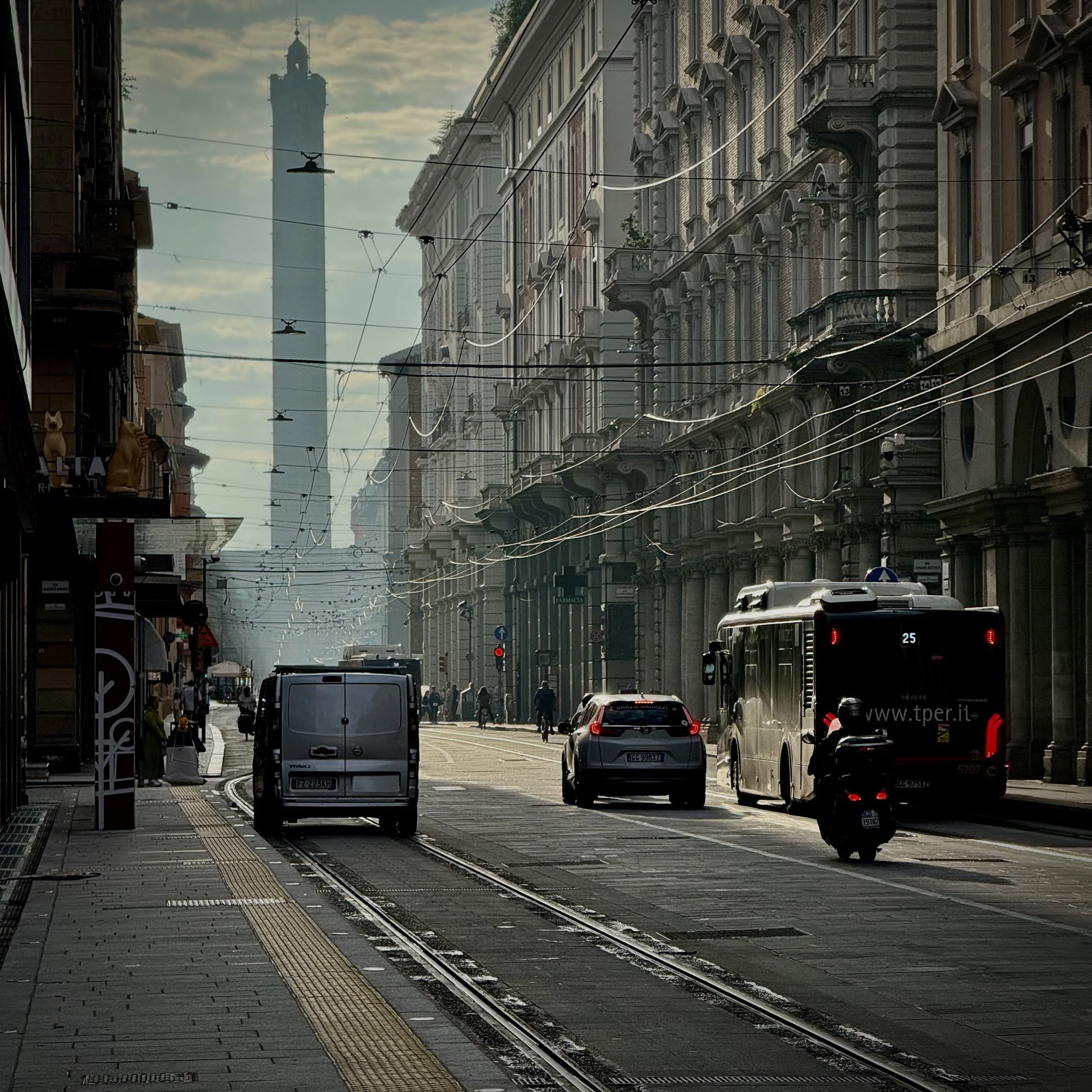
Bologna once had a skyline filled with roughly 100 medieval towers, built by powerful families partly as symbols of wealth and status.
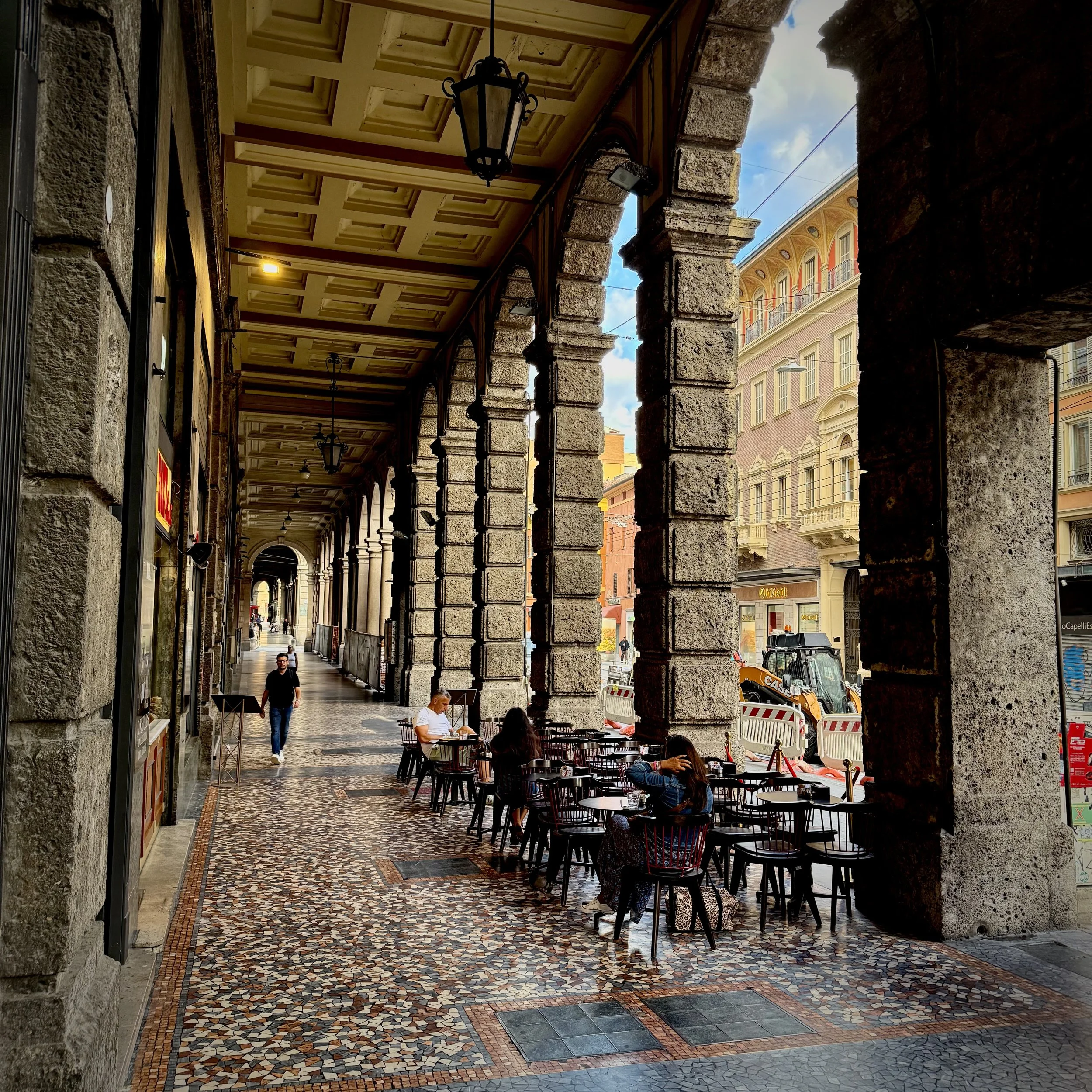
The city is famous for its extensive network of porticoes, which stretch for dozens of miles.
Bologna's porticoes are recognized as a UNESCO World Heritage Site.
Mortadella originated in Bologna, and the American name “bologna” ultimately comes from the city.
Traditional Bolognese ragù isn't normally served with spaghetti. Look for tagliatelle al ragù instead.
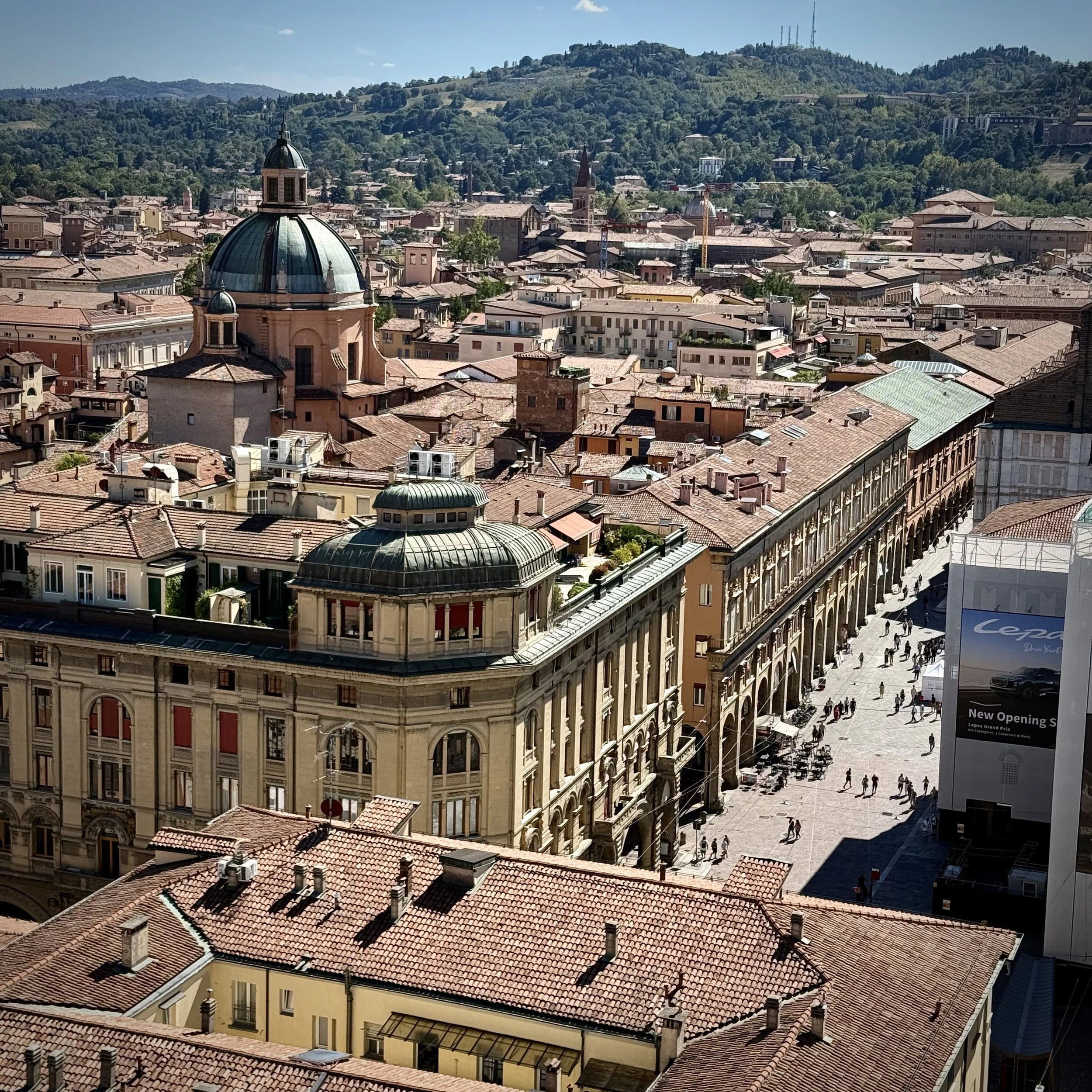
Bologna is nicknamed La Dotta, La Grassa e La Rossa — “The Learned,” for its university; “The Fat,” for its food; and “The Red,” traditionally associated with the reddish color of its buildings and rooftops.
Where to Stay in Bologna
For a first visit, we'd strongly recommend staying in or immediately around Bologna's historic center.
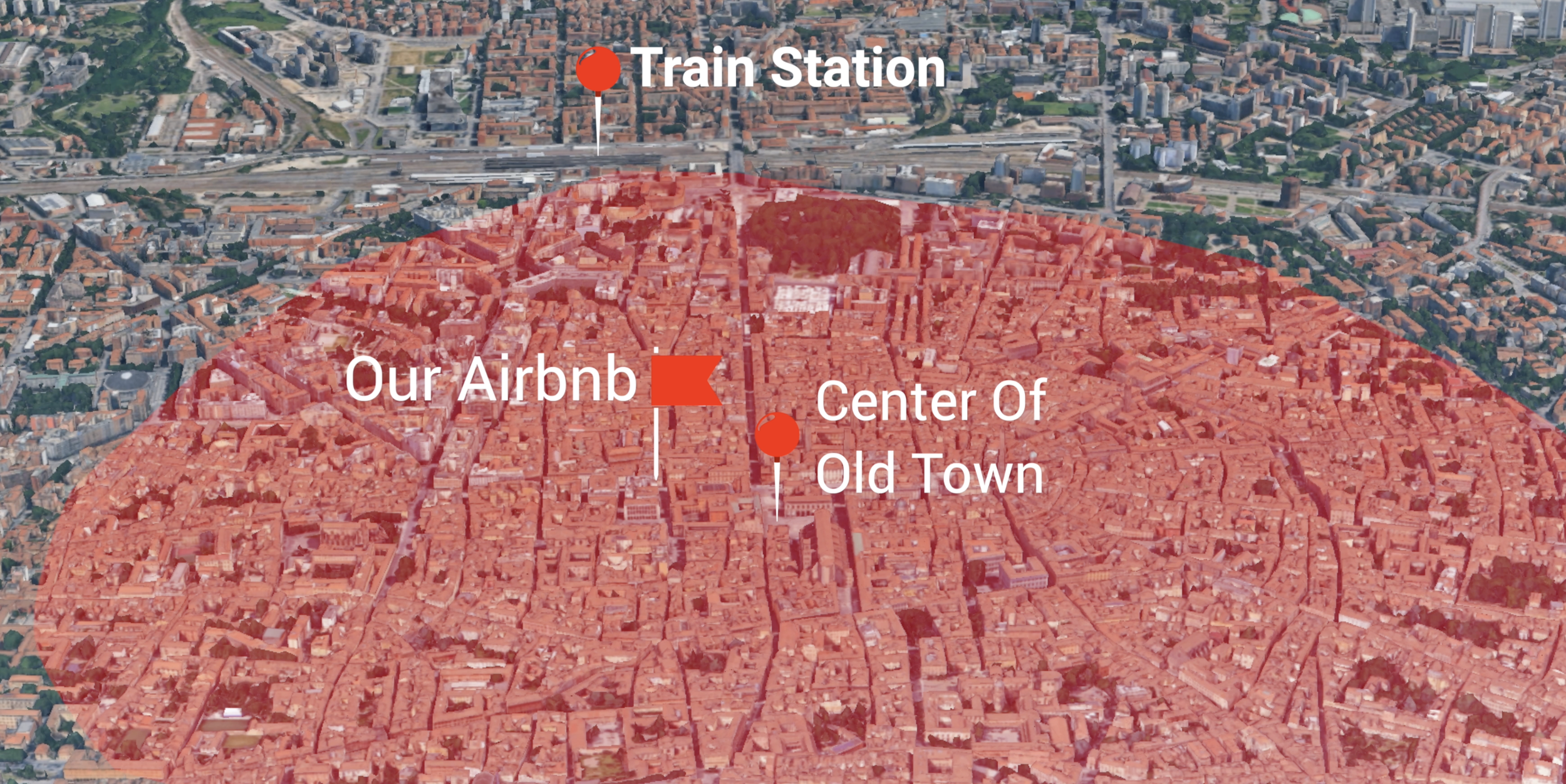
We stayed in an Airbnb near Mercato delle Erbe, and the location was one of the best decisions we made.
We could walk outside and immediately have restaurants, cafés and the market around us. Piazza Maggiore was only a few minutes away, and nearly everything we wanted to see was within walking distance.
After staying farther outside the center in Rome and spending considerably more time commuting, Bologna reminded us just how valuable a central location can be.
Areas We'd Consider
Mercato delle Erbe / Via Ugo Bassi
This would be our choice again. It's central, lively without feeling crazy, surrounded by food options and within easy walking distance of Bologna's major sights.
Piazza Maggiore / Historic Center
The most convenient choice for sightseeing. You'll pay more for the location, but you can walk almost everywhere.
University District
A livelier and generally younger area with lots of cafés, bars and more budget-friendly food. It's worth considering if you enjoy having more activity around you in the evening.
Near Bologna Centrale
Convenient for travelers planning several train day trips, although we'd personally choose somewhere closer to the heart of the historic center if the price difference isn't significant.
Things to Do & See in Bologna
Bologna isn't packed with the same bucket-list attractions as Rome or Florence—and that's part of its appeal.
You can see many of its major sights without turning your vacation into a military operation.
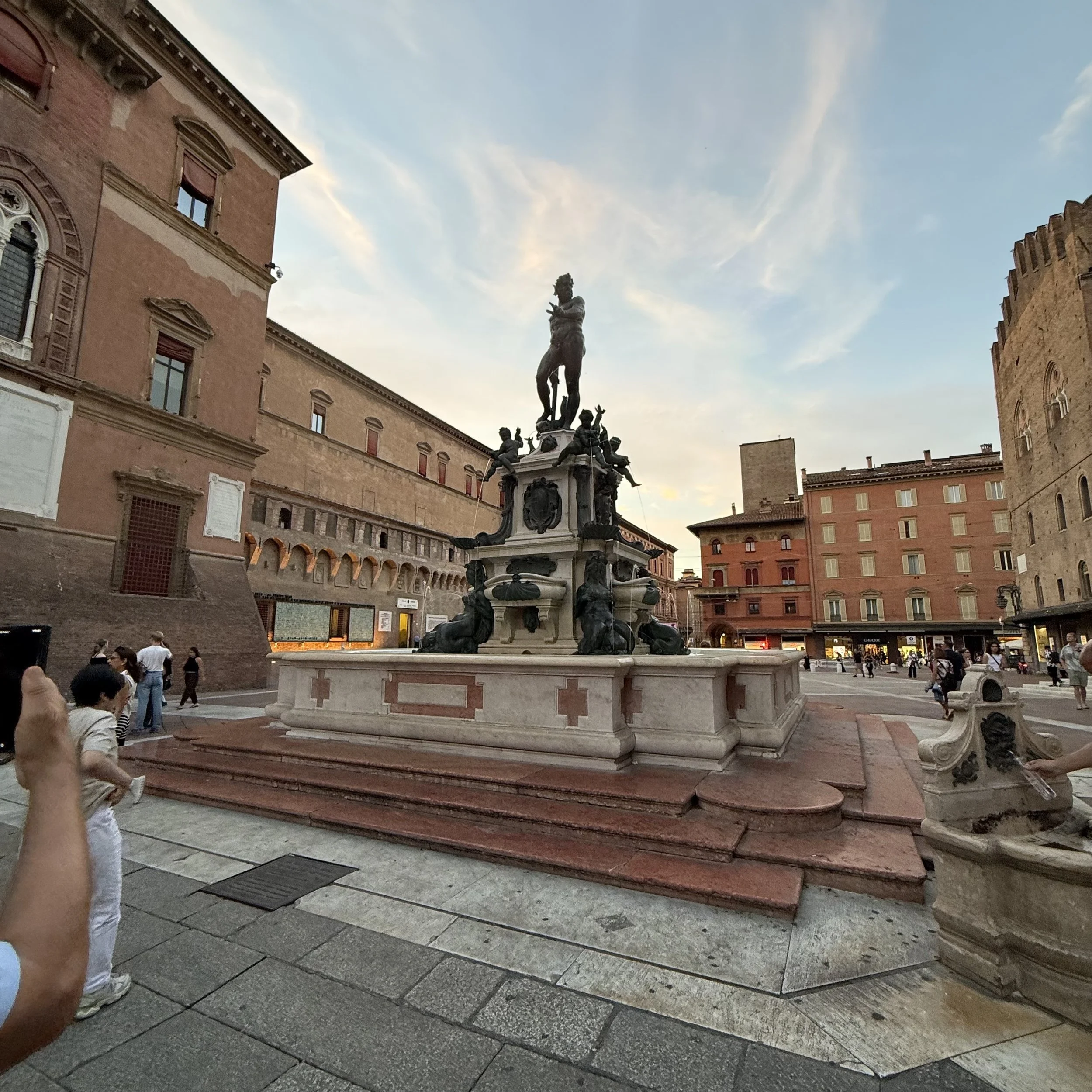
Piazza Maggiore
Start with the heart of Bologna.
Piazza Maggiore is surrounded by historic buildings, cafés and some of the city's most recognizable architecture. It's also one of those places you'll probably find yourself walking through multiple times during your stay.
It's a great place to slow down, people-watch and simply take in Bologna.
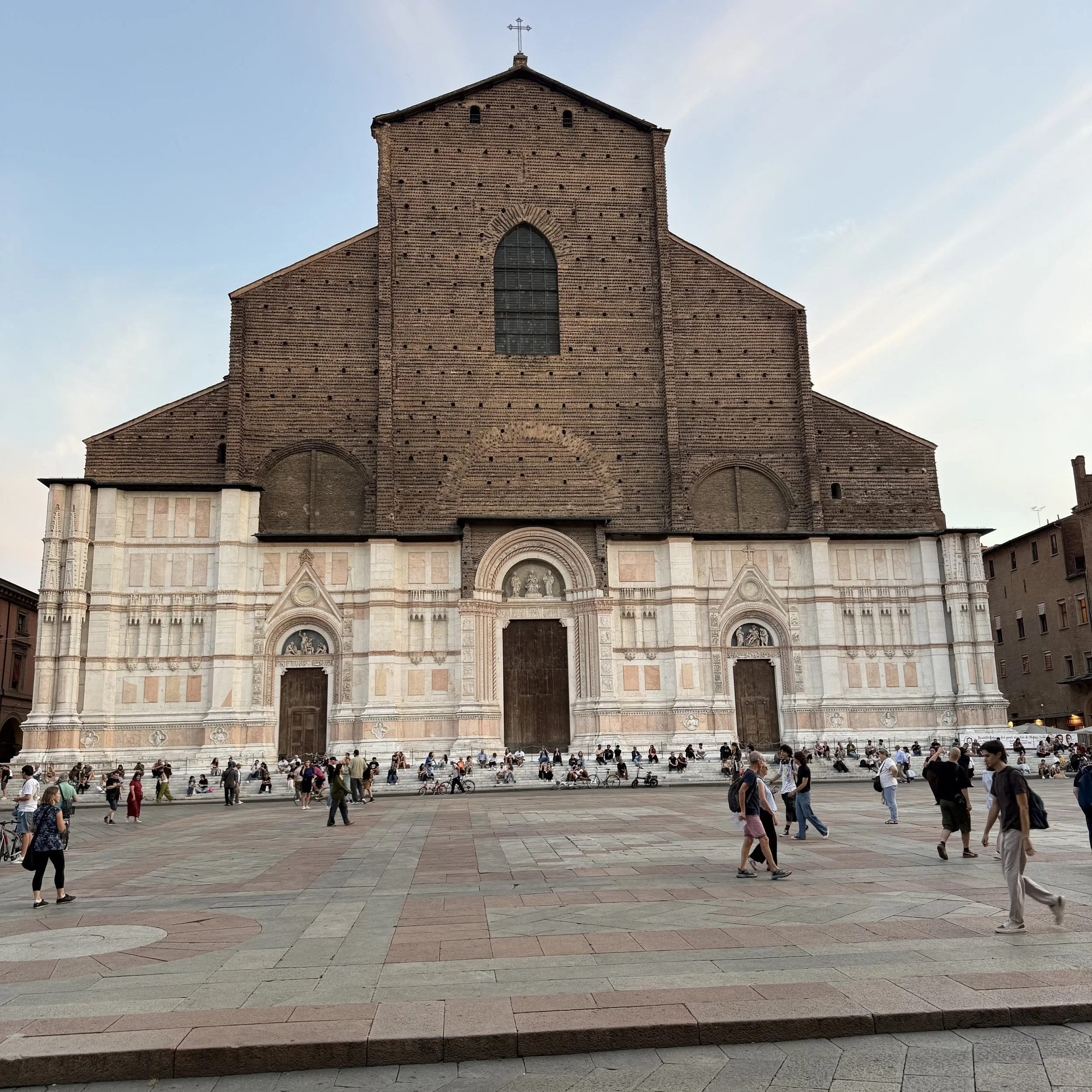
Basilica di San Petronio
Dominating Piazza Maggiore is the enormous Basilica di San Petronio. Construction began in the late 14th century, and one of its most recognizable features is its unusual façade: beautiful marble covers the lower section while exposed brick remains above.
It looks unfinished because, essentially, it is.
Inside you'll also find one of the world's largest meridian lines inside a building, created by astronomer Giovanni Domenico Cassini in the 17th century.
Climb the Bell Tower of Cattedrale Metropolitana di San Pietro
This was one of our favorite experiences in Bologna.
The Cathedral of Saint Peter is beautiful, but don't overlook its bell tower.
The approximately 70-meter tower was constructed around an even older tower dating to around the 10th century—and you can actually see the older structure as you climb.
Our visit included a guide who explained the tower's history as we made our way toward the bells.
Eventually you reach the top and get an incredible view across Bologna's red rooftops, towers and surrounding hills. When we visited, the climb cost only a €5 donation per person, making it one of the best-value experiences we had in Italy.
Opening times can be limited, so check the current schedule before visiting and arrive early.
Walk the Porticoes
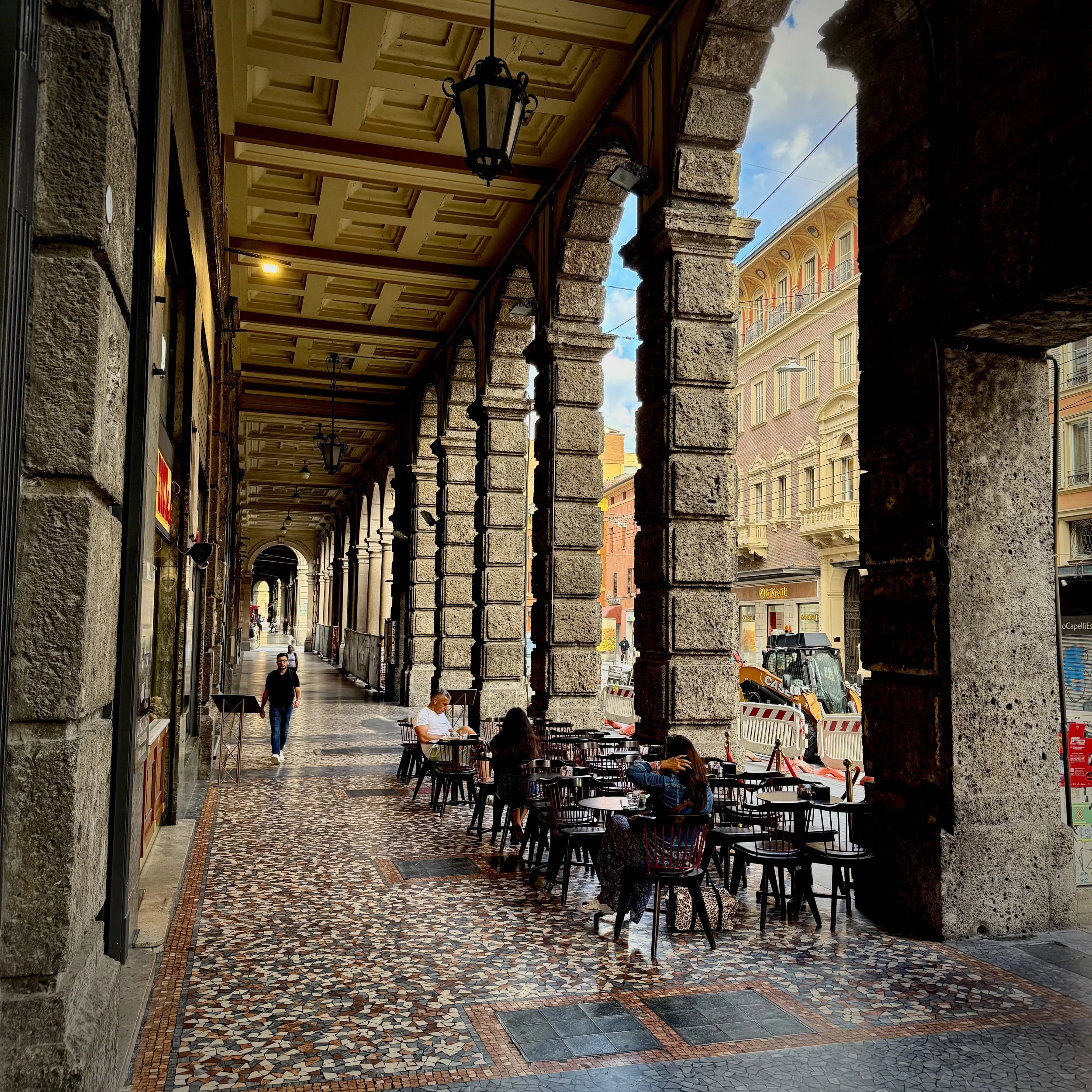
Don't treat Bologna's porticoes simply as sidewalks.
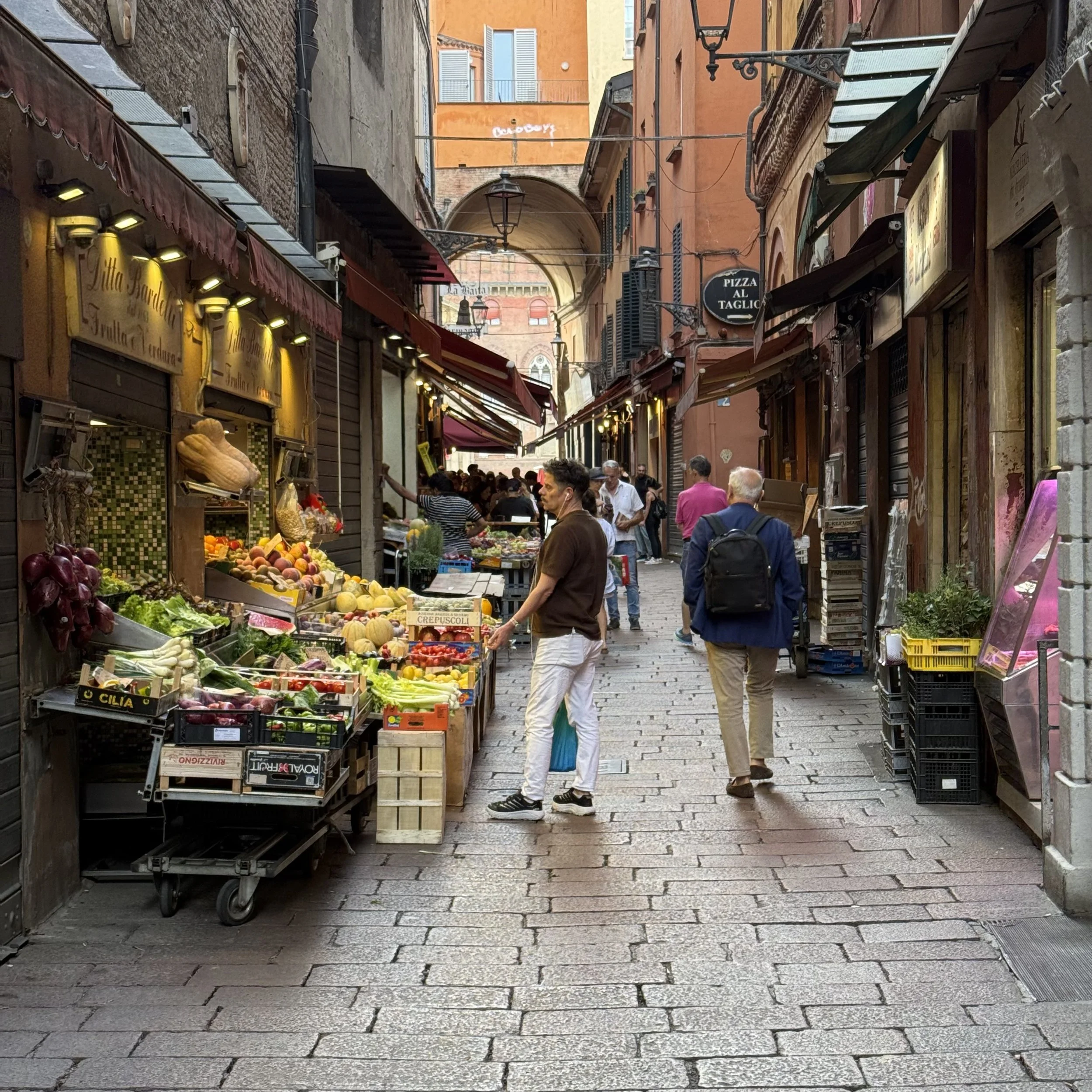
They're one of the city's defining features.
The covered walkways developed as buildings expanded outward, creating additional space above while preserving pedestrian access underneath.
Today you'll find everything from simple covered passages to enormous decorative arches.
They provide shade when it's hot, shelter when it rains and give Bologna a look unlike anywhere else we visited in Italy.
Walking beneath them isn't just how you get around Bologna.
Take a Bologna Food Tour
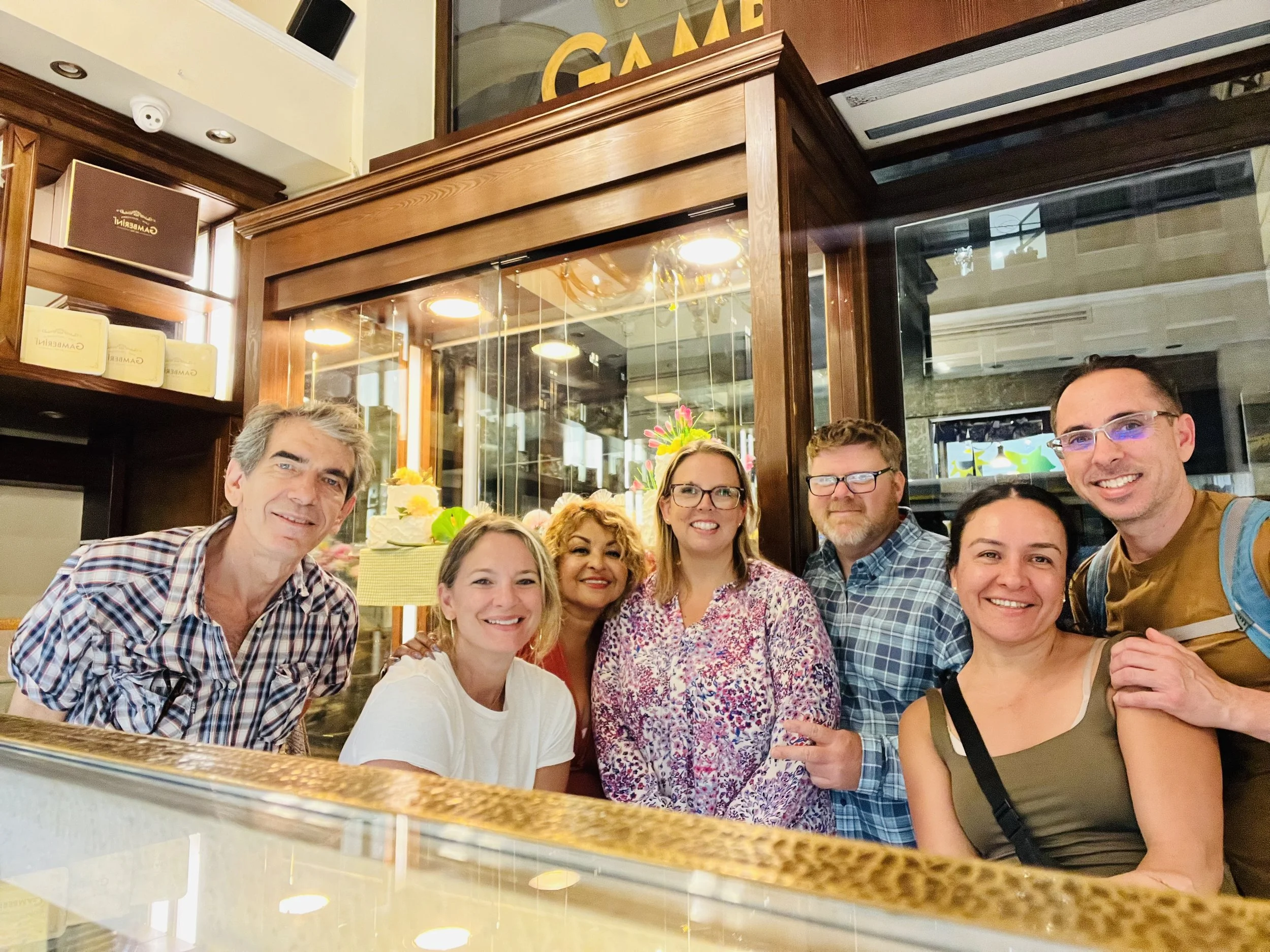
One of the best things we did was take a food tour.
We didn't just taste some of Bologna's famous foods—we learned why they're important, how they're made and where locals actually go to eat them.
It also introduced us to places we probably would have walked straight past on our own.
For a city where food is such a h
Local Foods to Try in Bologna
Come hungry.
Bologna sits in Emilia-Romagna, one of Italy's most celebrated food regions, and many foods people associate with Italian cuisine originated here or nearby.
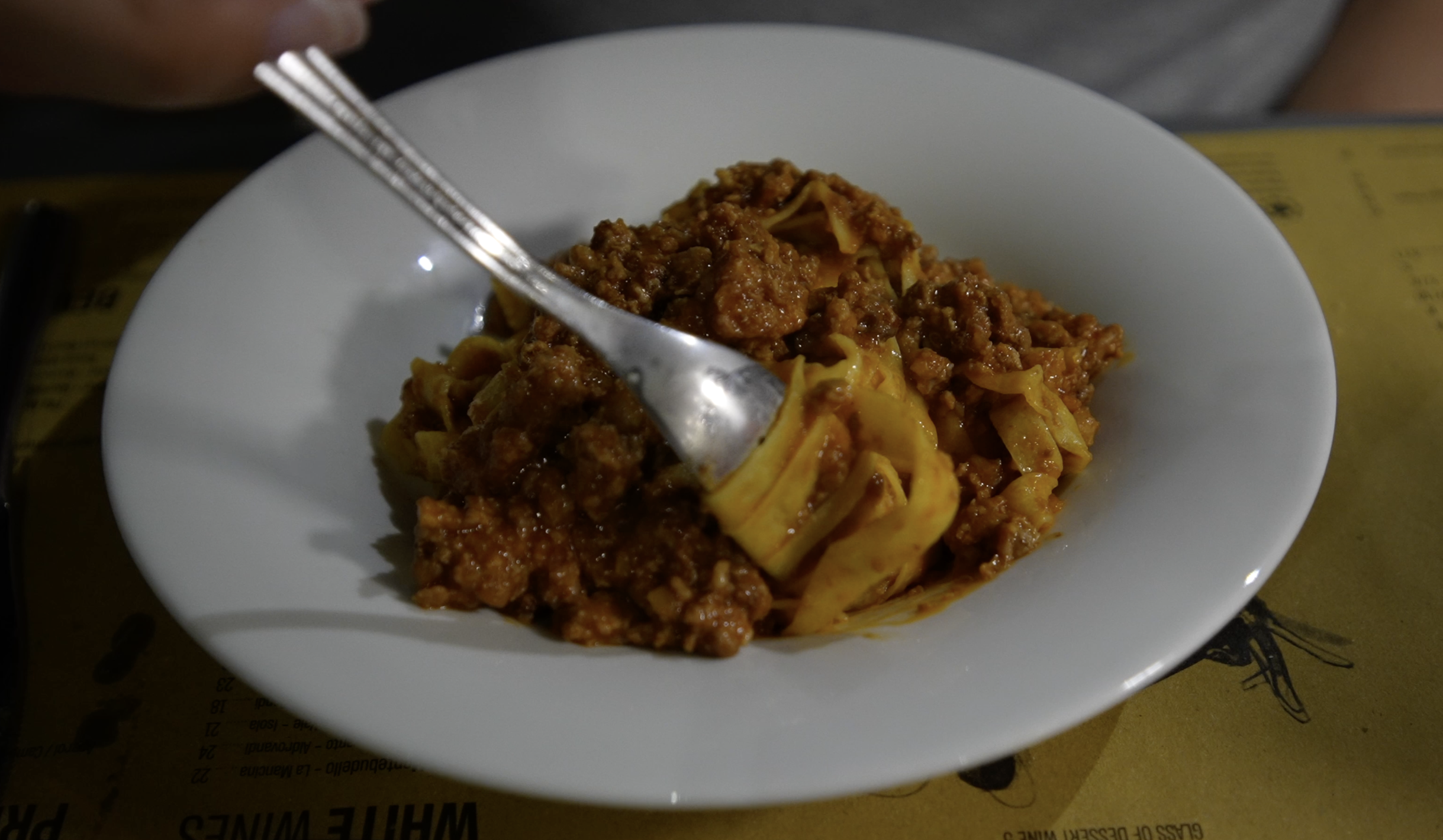
Tagliatelle al Ragù
Forget spaghetti Bolognese. The traditional local combination is tagliatelle al ragù.
The wider egg pasta works beautifully with Bologna's rich, slow-cooked meat sauce. The ragù is also much meatier and less tomato-heavy than the sauce many Americans associate with “Bolognese.”
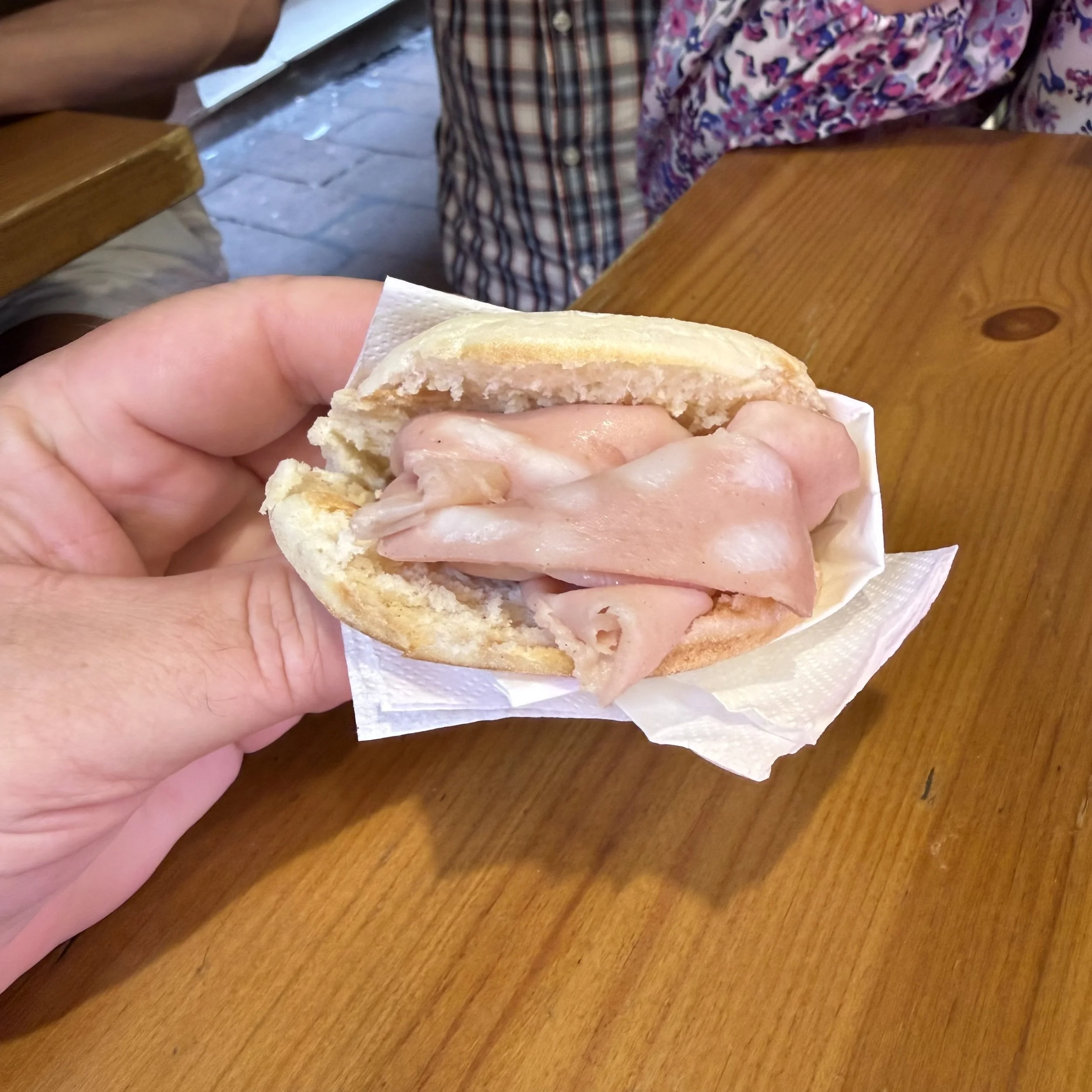
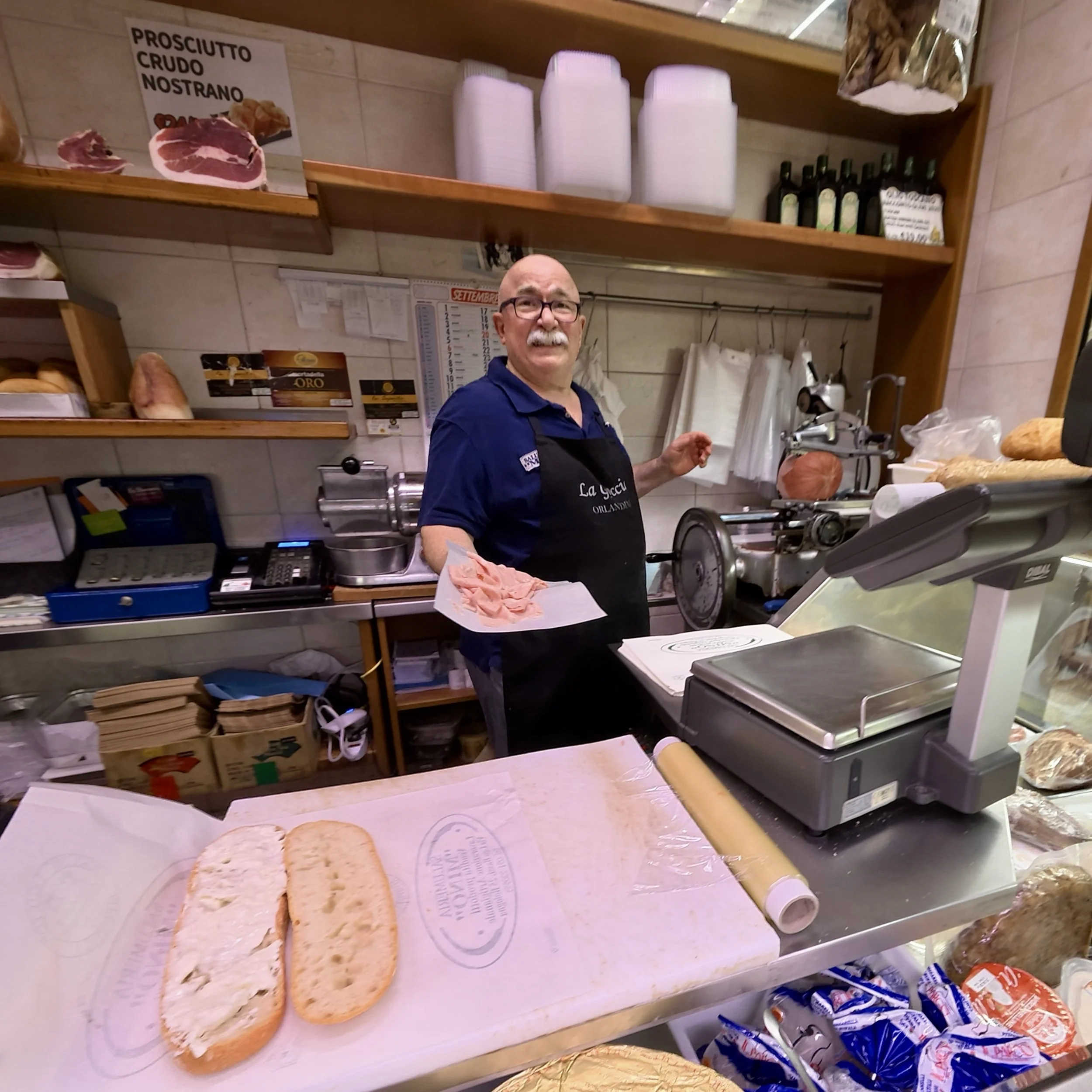
Mortadella
If your only experience with mortadella has you thinking, “So…fancy bologna?”Try it here before making that judgment.
Traditional mortadella is incredibly soft and flavorful, with small pieces of pork fat running through it.
Eat it by itself, inside bread or piled onto a sandwich.
Tortellini
Small, stuffed and one of the foods most closely associated with Bologna and nearby Modena.
A traditional preparation is tortellini in brodo, where the pasta is served in broth.
Lasagne Verdi alla Bolognese
This isn't necessarily the lasagna you're used to back home. Traditional Bolognese versions often feature green spinach pasta layered with ragù and béchamel.
Tigelle & Crescentine
These are worth seeking out if you want something beyond pasta. They're typically served with cured meats, cheeses and spreads and make a great casual meal to share.
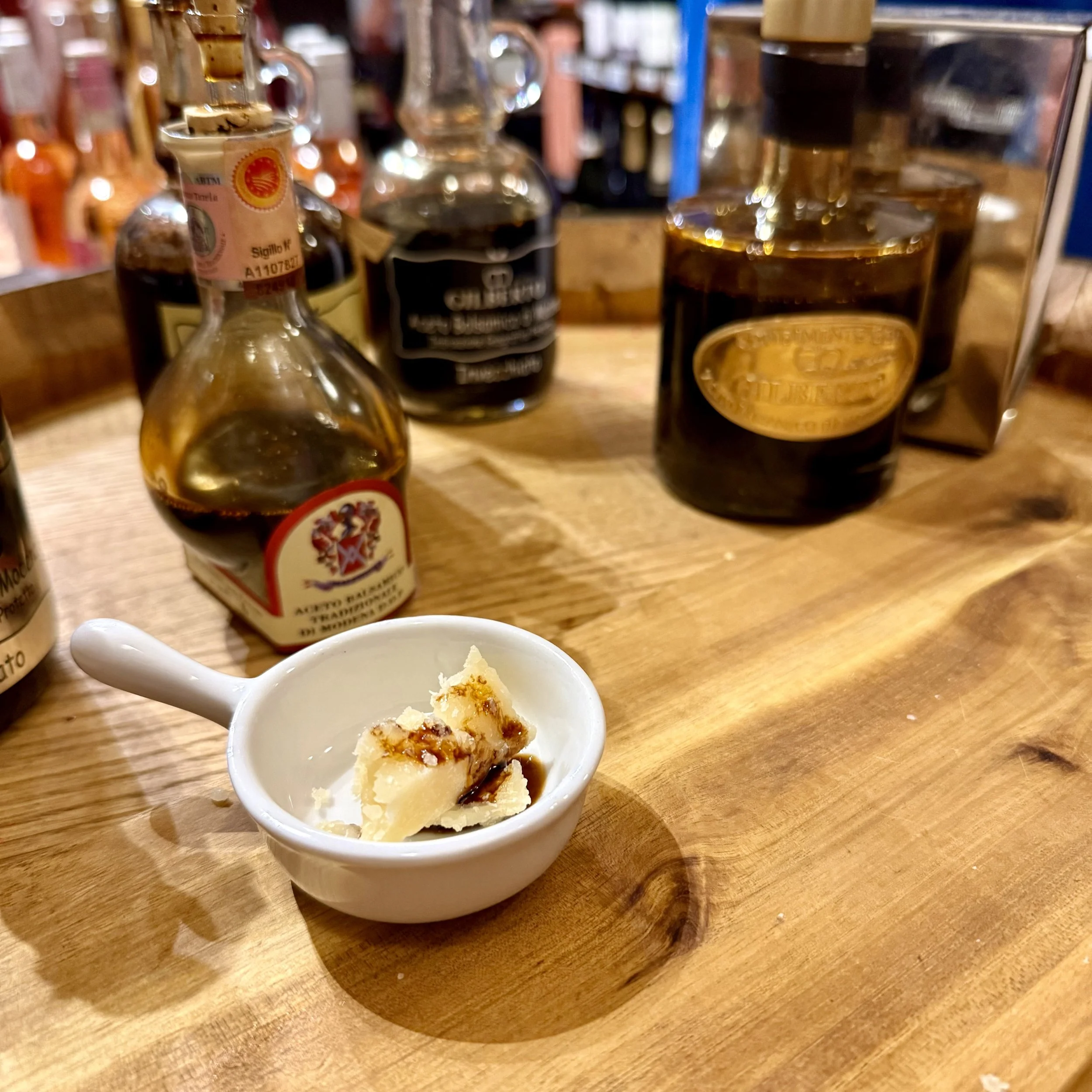
Parmigiano Reggiano
Bologna isn't the actual home of Parmigiano Reggiano, but you're sitting right in the heart of Emilia-Romagna. Take advantage of it.
Fresh Parmigiano Reggiano here is a completely different experience from the plastic container of “Parmesan” hiding in the back of the refrigerator.
Where to Eat in Bologna
One thing we loved about Bologna was that great food wasn't limited to expensive restaurants.
Some of our favorite experiences were simple, casual and affordable.
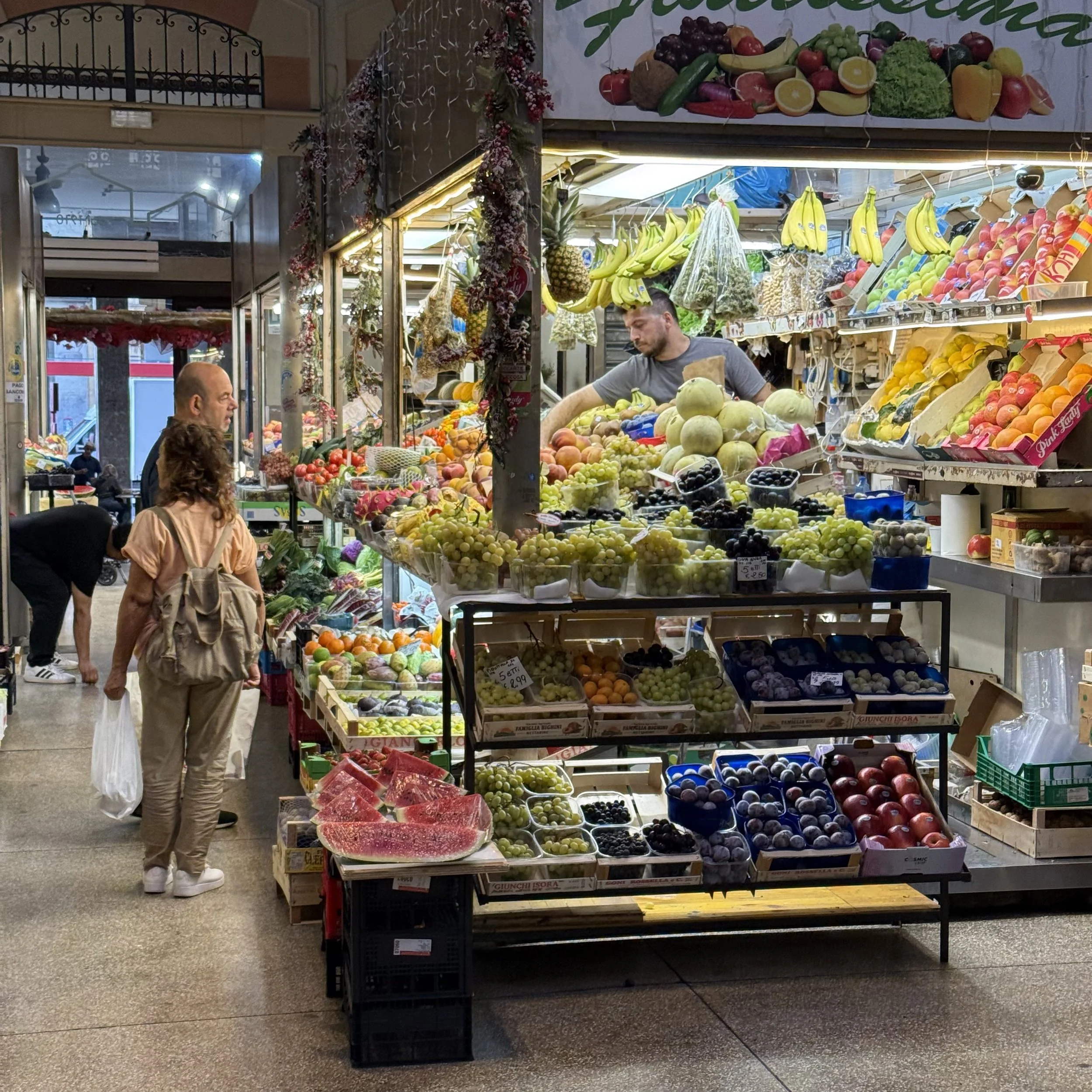
Mercato delle Erbe
We stayed right near Mercato delle Erbe and loved having it nearby.
The market and surrounding streets are filled with produce, food vendors, restaurants and casual places to grab something to eat or drink.
It's especially convenient if you're staying in this part of the historic center.
Traditional Delis & Mortadella Shops
Don't limit yourself to sit-down restaurants.
Some of the most enjoyable food experiences in Bologna come from stepping into traditional delis and food shops and ordering mortadella, cheese and cured meats.
The Quadrilatero is an easy place to start exploring.
Greppia
We enjoyed Greppia for a more traditional Italian meal. The truffle pasta was a standout, and the tiramisu surprised us—especially because neither of us is usually particularly excited about tiramisu back home.
Il Gelato di Carducci
This became our favorite gelato shop in Bologna.
So much so that we went twice.
The artisan gelato was excellent, but those pistachio- and chocolate-dipped cones were what got us.
Our pistachio and chocolate gelato in a dipped cone was around €5 when we visited.
Don't Be Afraid to Eat Something Other Than Italian
Yes, we went to one of Italy's most famous food cities……and ate Japanese food.
And we'd do it again.
Bologna's large student and international population means there's a surprisingly diverse restaurant scene.
After weeks of Italian food, we found a Japanese restaurant serving fried-chicken ramen and Japanese beer, and it ended up being one of our favorite meals in Bologna.
When you're traveling long term, sometimes your body simply says, “Enough pasta. Find me ramen.”
Getting Around Bologna
This one's easy. Walk.
Bologna's historic center is compact, relatively flat and extremely pedestrian-friendly.
Walking is also part of the experience because you're constantly moving through the city's porticoes.
We spent very little on local transportation during our five-night stay because we simply didn't need much of it.
Buses are available for longer distances, and taxis can be useful when arriving with luggage, but once you're centrally located, your feet will probably be your primary form of transportation.
Bologna Centrale is also within reasonable walking distance of the historic center, although we'd consider a taxi if you're carrying several bags.
And if walking isn't your thing…
apparently there's always the little tourist train.
We affectionately named it the Body Odor Express. In our defense, it was hot.
Best Day Trips from Bologna
One of Bologna's biggest advantages is its location.
Bologna Centrale is a major rail hub, making the city an excellent base for exploring northern and central Italy.
Modena is one of the easiest options and a great choice for food lovers. The area is famous for traditional balsamic vinegar and is also closely associated with Ferrari.
Parma is another excellent food-focused trip, particularly if Parmigiano Reggiano and Prosciutto di Parma sound like your idea of sightseeing.
Florence can be reached very quickly by high-speed train, making it possible as a day trip—although we'd personally give Florence several days if you've never been.
Ferrara is much closer and offers a beautiful historic center, Renaissance architecture and a more relaxed pace.
Ravenna is famous for its extraordinary early Christian and Byzantine mosaics and makes a very different day trip from Bologna.
You can even reach Venice by train in roughly an hour and a half on some services, although Venice deserves more than a rushed afternoon if your itinerary allows.
For a five-night Bologna stay, we'd probably choose one day trip and spend the rest of the time enjoying Bologna itself.
Safety & Things to Know Before Visiting Bologna
We generally felt comfortable walking around Bologna and found the historic center easy to navigate.
As with other busy European cities, use normal precautions around the train station, public transportation, markets and crowded tourist areas. Keep phones and wallets secure and don't leave valuables sitting where they're easy to grab.
Bologna also has a huge student population, so some neighborhoods—particularly around the university—can get considerably livelier at night. That's not necessarily a safety issue, but it's worth knowing when choosing accommodation if you prefer quieter evenings.
A few other things worth knowing:
Many restaurants don't open for dinner as early as Americans may be accustomed to.
Don't assume every small business will be open throughout the afternoon.
Comfortable shoes are essential—the city is walkable, but you'll still cover plenty of distance.
Check opening hours for smaller attractions before going. The San Pietro bell tower had limited visiting hours during our stay, and we'd hate to see you miss one of Bologna's best experiences.
If you're traveling by train, compare advance fares instead of assuming you'll get the same price on the day of travel.
Most importantly, don't rush Bologna. This isn't a city that needs a minute-by-minute sightseeing itinerary.
Grab a mortadella sandwich. Wander under the porticoes. Sit in Piazza Maggiore. Get lost down a side street. Stop for gelato.
Bologna was one of the easiest cities we visited in Italy to simply enjoy—and that's exactly what made it memorable.
Common Mistakes to Avoid in Bologna
Treating Bologna as Just a Day Trip
You can see Piazza Maggiore and eat some pasta in a day.
But that's not really why we liked Bologna.
Give yourself enough time to slow down, wander the streets, explore the markets and actually experience the city. We'd recommend at least 2–3 nights, with 4–5 nights working well if you're traveling slowly or adding a day trip.
Booking Trains at the Last Minute
We learned this one personally.
We bought our Reggio Emilia-to-Bologna train tickets the same day, and they were nearly twice what we'd been paying when booking trains ahead. The train was also packed.
If your dates are set—especially for high-speed trains—check fares in advance.
Ordering “Spaghetti Bolognese”
You're in Bologna.
Go for tagliatelle al ragù instead.
Your stomach will thank you, and somewhere an Italian grandmother will inexplicably feel a disturbance in the universe.
Staying Too Far Outside the Center
Bologna is at its best when you can simply walk out your door and explore.
Saving a few euros on accommodation can make less sense if you're constantly commuting into the historic center.
Only Visiting the Famous Attractions
Some of our favorite Bologna experiences weren't the most famous ones.
The Cathedral of Saint Peter bell tower, tiny food shops, hidden canals, markets and simply wandering beneath the porticoes were as memorable as the major landmarks.
Don't over schedule Bologna.