A Visitor’s Guide to Dachau Concentration Camp Memorial Site
A visit to the Dachau Concentration Camp Memorial Site is unlike most stops on a trip through Germany. This is not a traditional tourist attraction. It is a place of remembrance, education, mourning, and reflection.
Located just outside Munich, Dachau was the first permanent concentration camp established by the Nazi regime. It opened in March 1933, only weeks after Adolf Hitler came to power, and became a model for the concentration camp system that followed.
Over the next 12 years, more than 200,000 people from across Europe were imprisoned in Dachau and its network of subcamps. Prisoners included political opponents, Jews, clergy, Roma and Sinti, homosexuals, Jehovah's Witnesses, resistance fighters, prisoners of war, and many others persecuted by the Nazi regime.
Tens of thousands died as a result of executions, starvation, disease, forced labor, medical experiments, and brutal living conditions. The Memorial Site states that 41,500 prisoners died at Dachau.
On April 29, 1945, American forces liberated the camp.
Today, the former camp is preserved as the Dachau Concentration Camp Memorial Site, and visiting it can be one of the most sobering and important experiences of a trip to Bavaria.
This guide covers how to get there, what to expect, what you should see, and a few things you should know before visiting.
Planning Your Visit & Getting to Dachau
How Much Time Should You Allow?
One of the biggest pieces of advice I can give you is: don't rush your visit.
The Memorial Site recommends allowing at least 2½ hours, while many visitors spend three to four hours exploring the exhibitions, reconstructed barracks, memorials, and crematorium area.
If you're traveling from Munich, I would plan on making Dachau at least a half-day experience.
Trying to squeeze it into an hour or two means you'll miss much of the historical context that makes the site so important.
Opening Hours & Admission
The Dachau Concentration Camp Memorial Site is currently open:
Daily from 9:00 a.m. to 5:00 p.m.
It is closed on December 24, and the former crematorium area closes at 4:30 p.m.
Most importantly, general admission is free, and individual visitors do not need an advance reservation to enter the Memorial Site.
Before your visit, check the official Dachau Concentration Camp Memorial Site for current opening information, special events, and possible closures.
Getting to Dachau from Munich
Dachau is surprisingly easy to reach using Munich's public transportation system.
From Munich Hauptbahnhof, take the S2 toward Dachau/Petershausen and get off at Dachau station. The train journey takes approximately 25 minutes.
From Dachau station, take Bus 726 toward Saubachsiedlung and get off at the stop marked KZ-Gedenkstätte. The bus ride takes roughly another 10 minutes.
Public transportation is actually one of the easiest ways to visit. The Memorial Site recommends it when possible because parking is limited and can become crowded.
Visiting by Car
If you're driving, the visitor parking area is located at:
Alte Römerstraße 73
85221 Dachau, Germany
There is a small parking fee, and it's worth carrying cash because the official site notes that card payment is not available at the visitor parking lot.
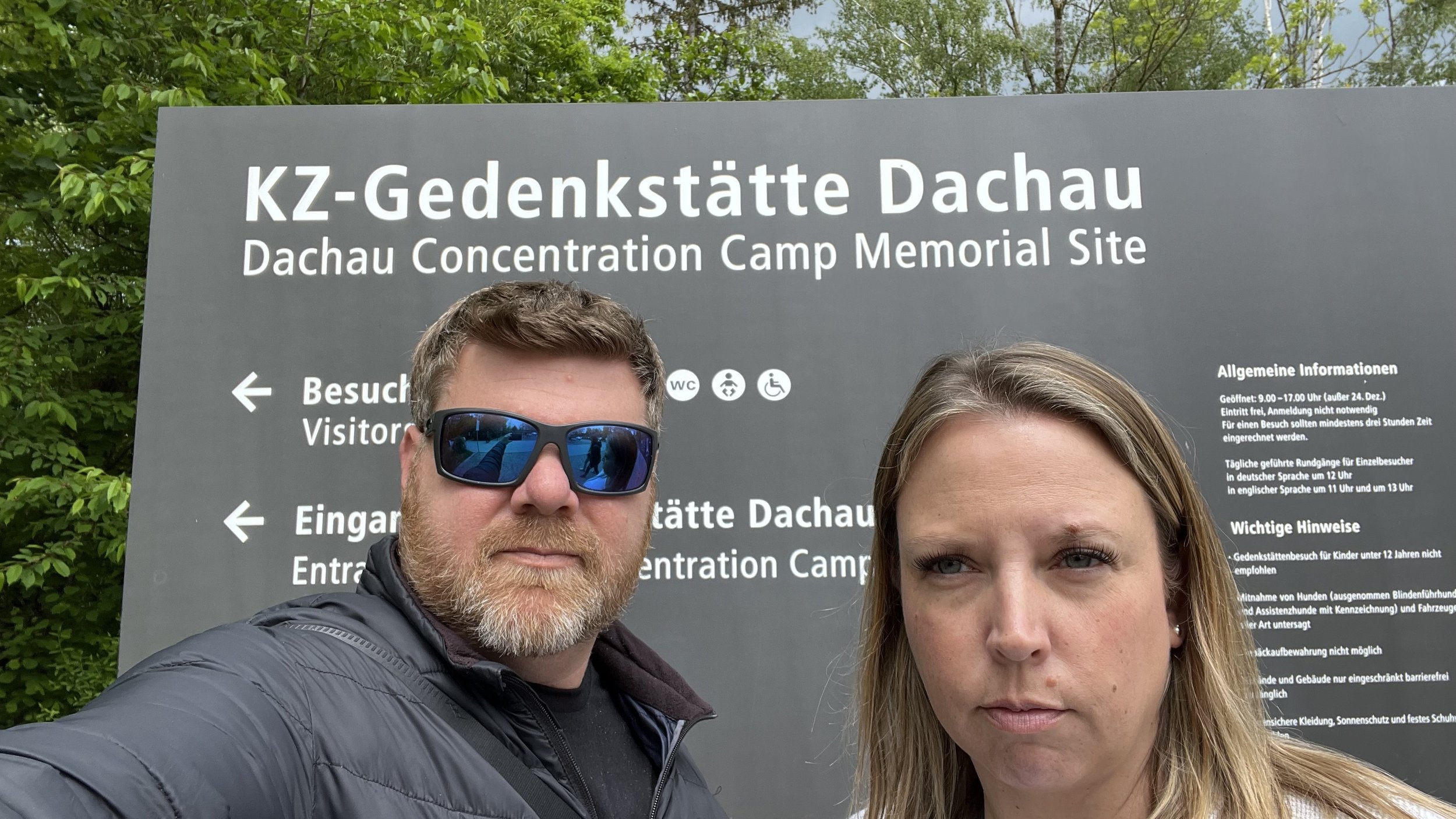
The Visitors' Center and main entrance are located nearby at Pater-Roth-Str. 2a.
Should You Take a Guided Tour?
If this is your first visit, I strongly recommend considering one.
The Memorial Site currently offers daily guided tours for individual visitors in English at 11:00 a.m. and 1:00 p.m. The tours last approximately 2½ hours and cost €4.
Tickets are purchased at the Visitors' Center on the day of your visit. Space is limited, reservations aren't available for these individual tours, and the Memorial Site recommends buying your ticket at least 45 minutes before the tour begins.
A guide can provide historical context that's easy to miss when walking through the grounds independently.
What You'll See at Dachau Concentration Camp Memorial Site
Walking through the entrance to Dachau can be difficult to put into words.
The site today combines original structures, reconstructed buildings, exhibitions, memorials, and large open spaces where parts of the concentration camp once stood.
This is one of those places where understanding what happened where you're standing is far more important than simply seeing a collection of buildings.
The Jourhaus and Camp Entrance
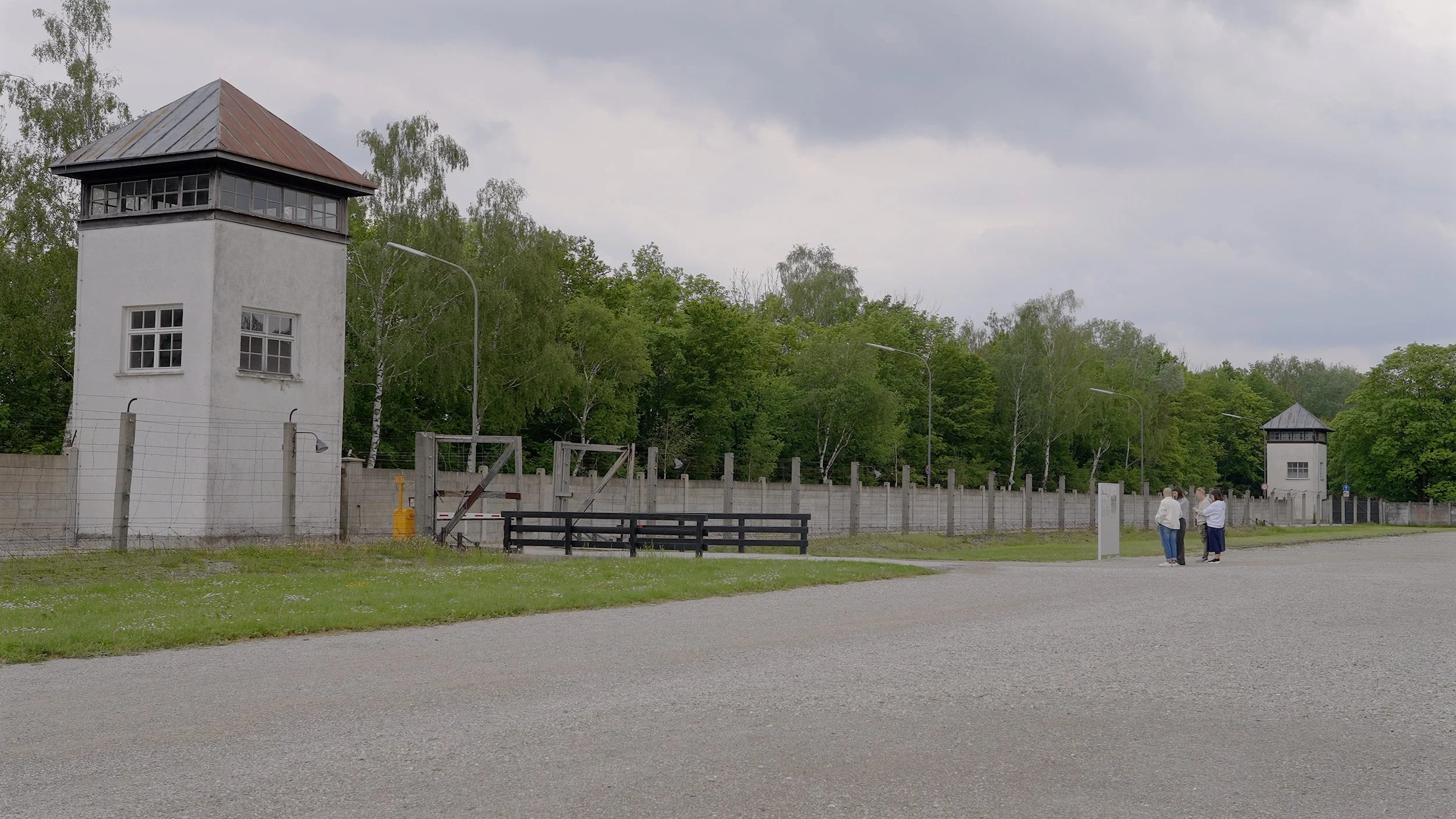
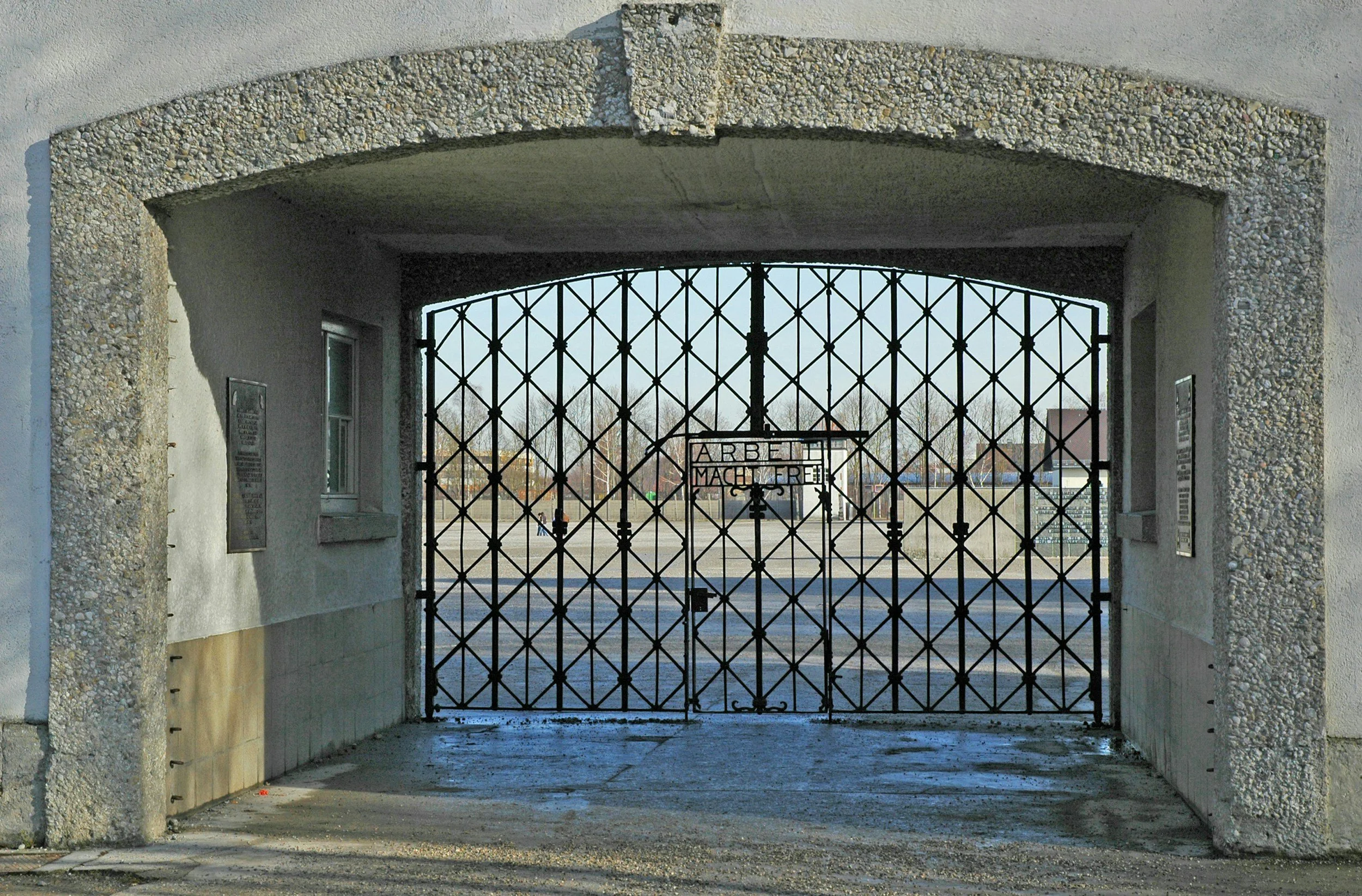
One of the first significant structures you'll encounter is the Jourhaus, the former entrance and guard building.
Prisoners arriving at Dachau passed through this area into the camp.
The gate bears the infamous phrase:
“Arbeit macht frei” — “Work sets you free.”
Seeing these words in their historical setting is very different from encountering them in a textbook or documentary.
From here, you enter the former prisoner camp.
The Former Maintenance Building and Main Exhibition
Make time for the permanent exhibition.
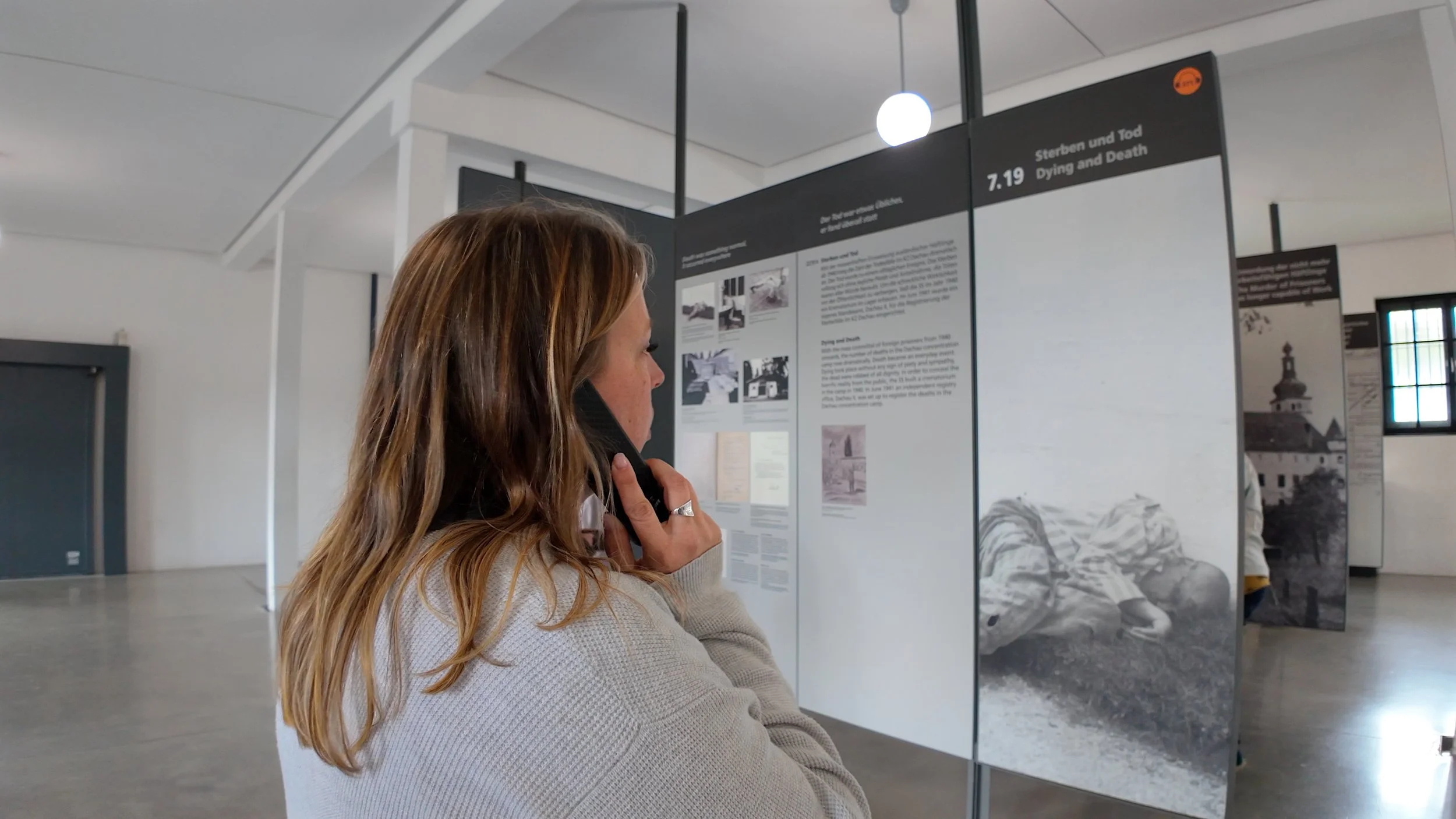
The museum documents the development of Dachau from its establishment in 1933 through liberation in 1945 and examines the experiences of the people imprisoned here.
You'll encounter photographs, documents, prisoner accounts, personal histories, and information explaining how the concentration camp system developed.
This context is essential because Dachau's significance extends far beyond this one location.
It became an important model for the Nazi concentration camp system, including the organization, administration, punishment, forced labor, and terror that would later be implemented elsewhere.
The Roll Call Square
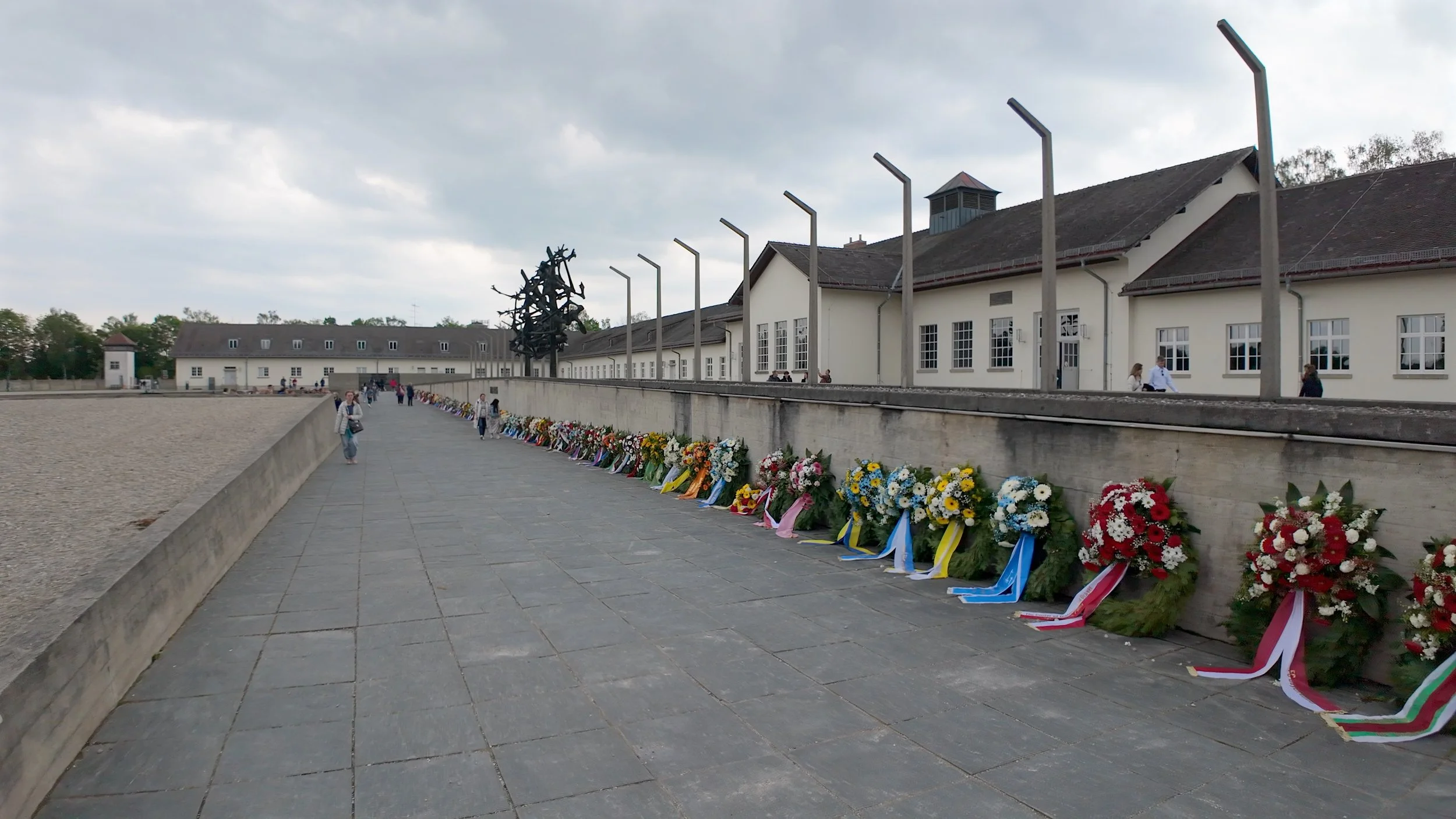
Outside the exhibition is the enormous roll call square, or Appellplatz.
Prisoners were forced to assemble here for roll calls, sometimes standing for extended periods in brutal weather conditions.
Today, its emptiness is part of what makes the space so powerful.
Take your time here rather than simply walking across it to reach the next building.
The Barracks
The original prisoner barracks were eventually demolished after the war.
Today, two reconstructed barracks demonstrate the changing conditions prisoners experienced as the camp became increasingly overcrowded.
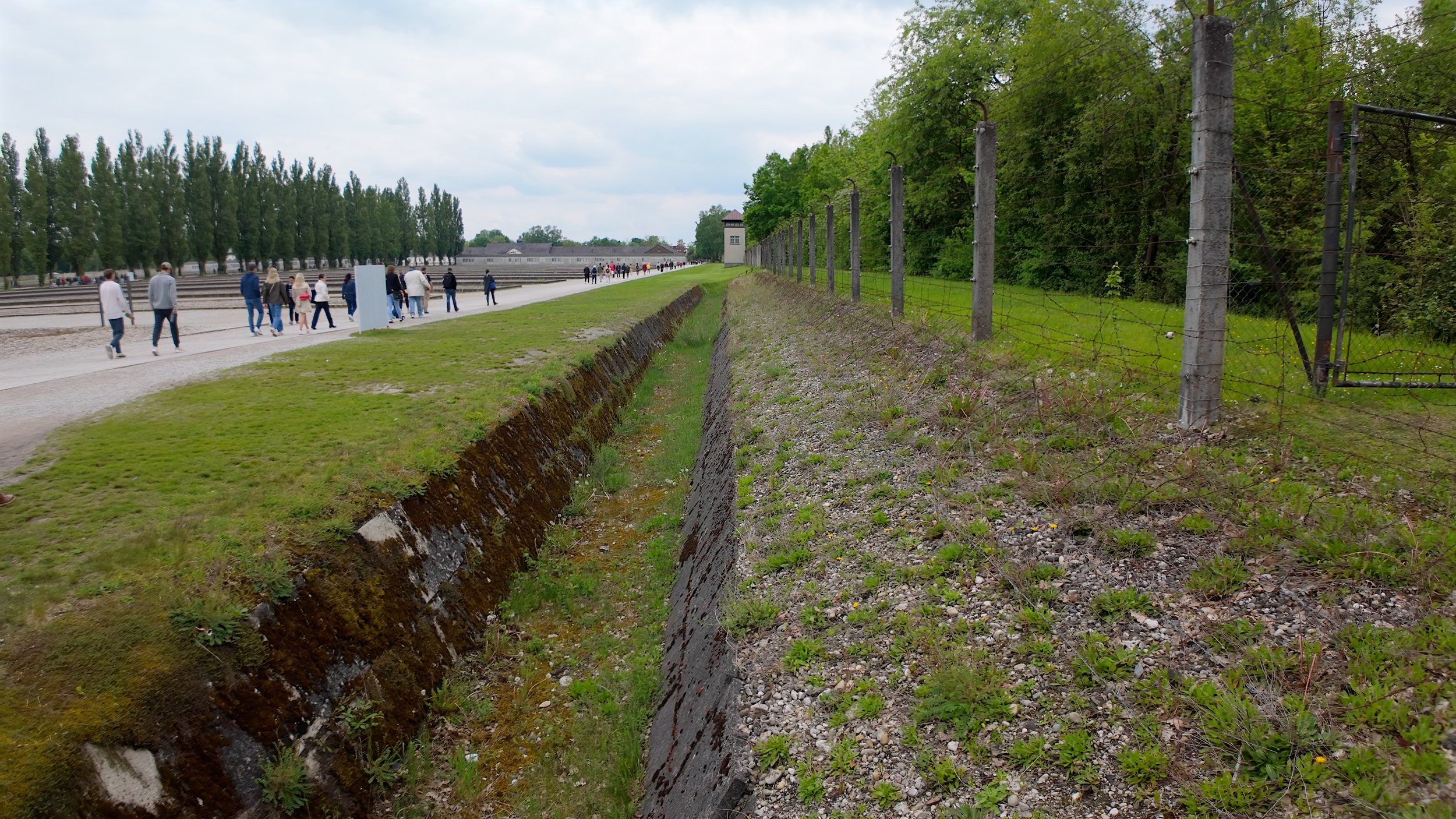
Behind them stretches the former camp road, with the foundations marking where additional barracks once stood.
Walking down this road gives you a much better sense of the enormous scale of the prisoner compound.
Religious Memorials
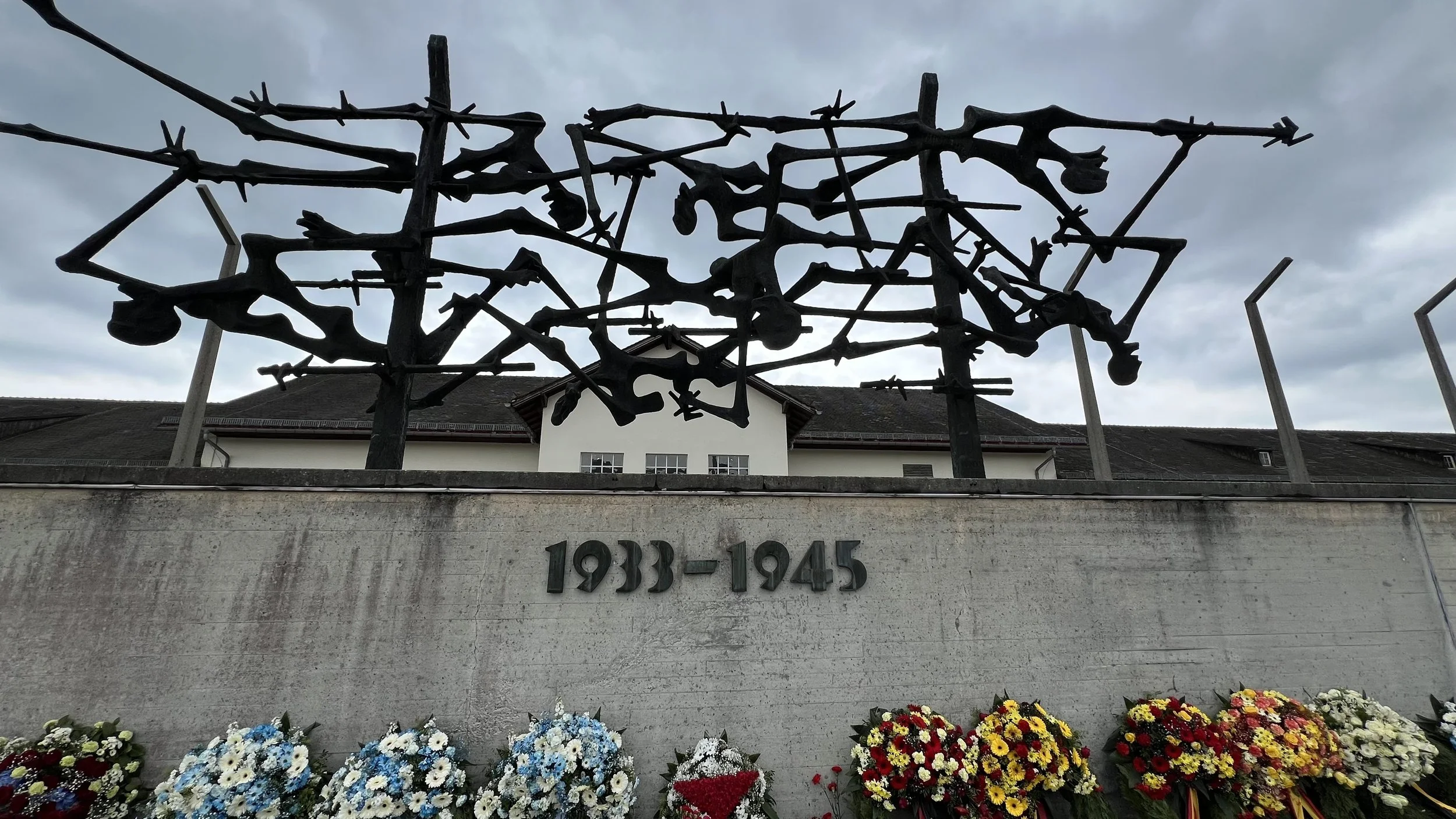
At the far end of the camp are several religious memorials established after the war.
These include Catholic, Protestant, Jewish, and Russian Orthodox places of remembrance, along with the Carmelite convent adjacent to the former camp.
They create a quieter area for reflection after walking through the main prisoner compound.
The Crematorium Area
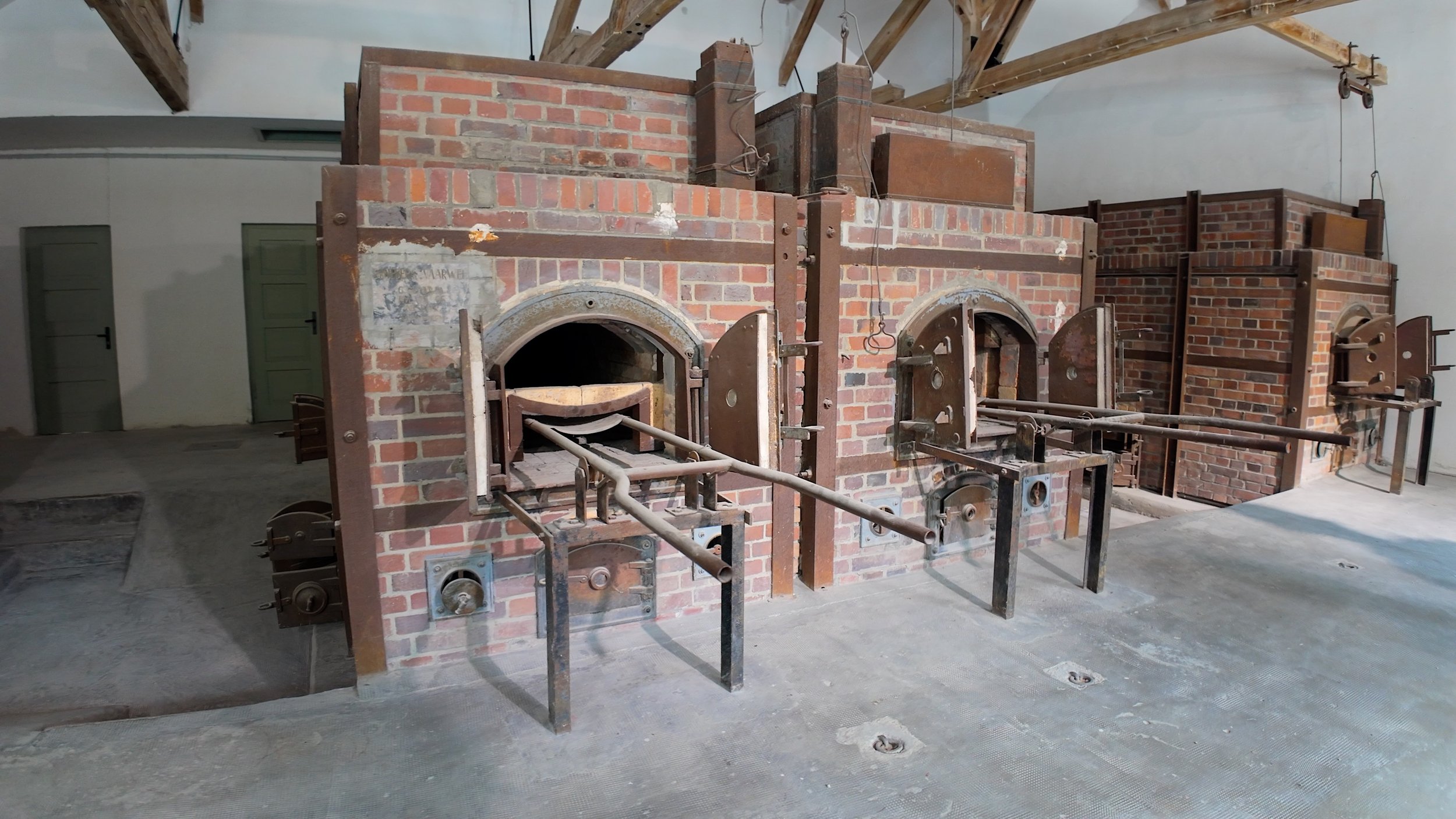
Separate from the main prisoner compound is the former crematorium area.
Here you'll encounter the original crematorium and the later building known as Barrack X, which contained additional cremation ovens and a gas chamber.
This can be the most emotionally difficult part of the visit.
There is no need to rush through it, and there is equally no obligation to linger longer than you're comfortable with.
The Memorial Site exists to preserve the evidence of what occurred here and to commemorate the victims.
Approach this area accordingly.
What to Know Before You Go & Visitor Etiquette
There are a few practical things that can make your visit more meaningful and respectful.
Remember Where You Are
Dachau is a memorial and a place where thousands of people suffered and died.
The Memorial Site describes the grounds as having the character of a cemetery and place of remembrance.
That should guide how you behave while you're there.
Photography for private, non-commercial purposes is generally permitted in much of the outdoor grounds and exhibition areas, but photography is prohibited inside the former crematorium. The Memorial Site also asks visitors who photograph the site to respect its dignity and avoid disturbing other visitors.
This isn't the place for playful poses, selfies in front of memorials, or photographs designed primarily for social media.
If you take pictures, document the site respectfully.
Should You Bring Children?
Parents should think carefully about bringing younger children.
The Memorial Site advises that some material may be inappropriate or disturbing for younger visitors, and its educational programs are intended for visitors 13 and older.
Older teenagers studying World War II or the Holocaust may find a visit extremely educational, particularly if they have some historical background beforehand.
Dress for the Weather
Much of your visit will be outdoors.
Bring comfortable walking shoes and check the weather before leaving Munich.
During summer, bring water and sun protection. In winter, dress warmly—the open areas of the former camp can feel especially cold.
The grounds are fairly large, so expect considerably more walking and standing than you might initially assume.
Give Yourself Time Afterwards
This is one tip that often gets overlooked.
Don't schedule your day too tightly after Dachau.
People react to places like this differently.
Some visitors leave wanting to talk about what they've seen. Others want quiet. You may find yourself thinking about individual photographs, prisoner stories, or particular parts of the exhibition long after you've left.
Giving yourself a little breathing room afterward can be worthwhile.
If you're returning to Munich, the train journey back provides some natural time to process the experience.
My Recommended Way to Visit Dachau
For a first visit, I'd arrive in the morning and allow at least three hours.
Begin at the Visitors' Center and either join an official guided tour or use the available visitor information to orient yourself before entering.
Move through the historical exhibition before rushing toward the barracks or crematorium. Understanding the history first makes the physical locations much more meaningful.
Walk the former camp road.
Spend some time at the religious memorials.
Then visit the crematorium area toward the end of your visit.
Most importantly, don't treat Dachau like a checklist of things to see.
Slow down. Read some of the individual prisoner stories. Look at the photographs. Understand who these people were before they became prisoners.
That human context is ultimately what gives the Memorial Site its meaning.
Final Thoughts
Visiting the Dachau Concentration Camp Memorial Site isn't an easy experience—and it isn't intended to be.
But if you're traveling through Munich or Bavaria and have the time, it can be an extraordinarily important one.
Dachau tells the story not only of the atrocities committed within one concentration camp, but also of how persecution, dehumanization, forced labor, imprisonment, and systematic violence became embedded within Nazi Germany.
More than 80 years after the camp's liberation, walking through its gates provides a connection to that history that books and documentaries simply cannot replicate.
Come prepared to learn.
Give yourself enough time.
Be respectful of the people around you and, most importantly, of the people whose suffering and deaths are commemorated here.
And when you leave, take some time to reflect on what you've seen.
Because ultimately, Dachau isn't preserved simply so that people can see where history happened. It is preserved so that the people who suffered here are remembered—and so that the lessons of what happened here are not forgotten.