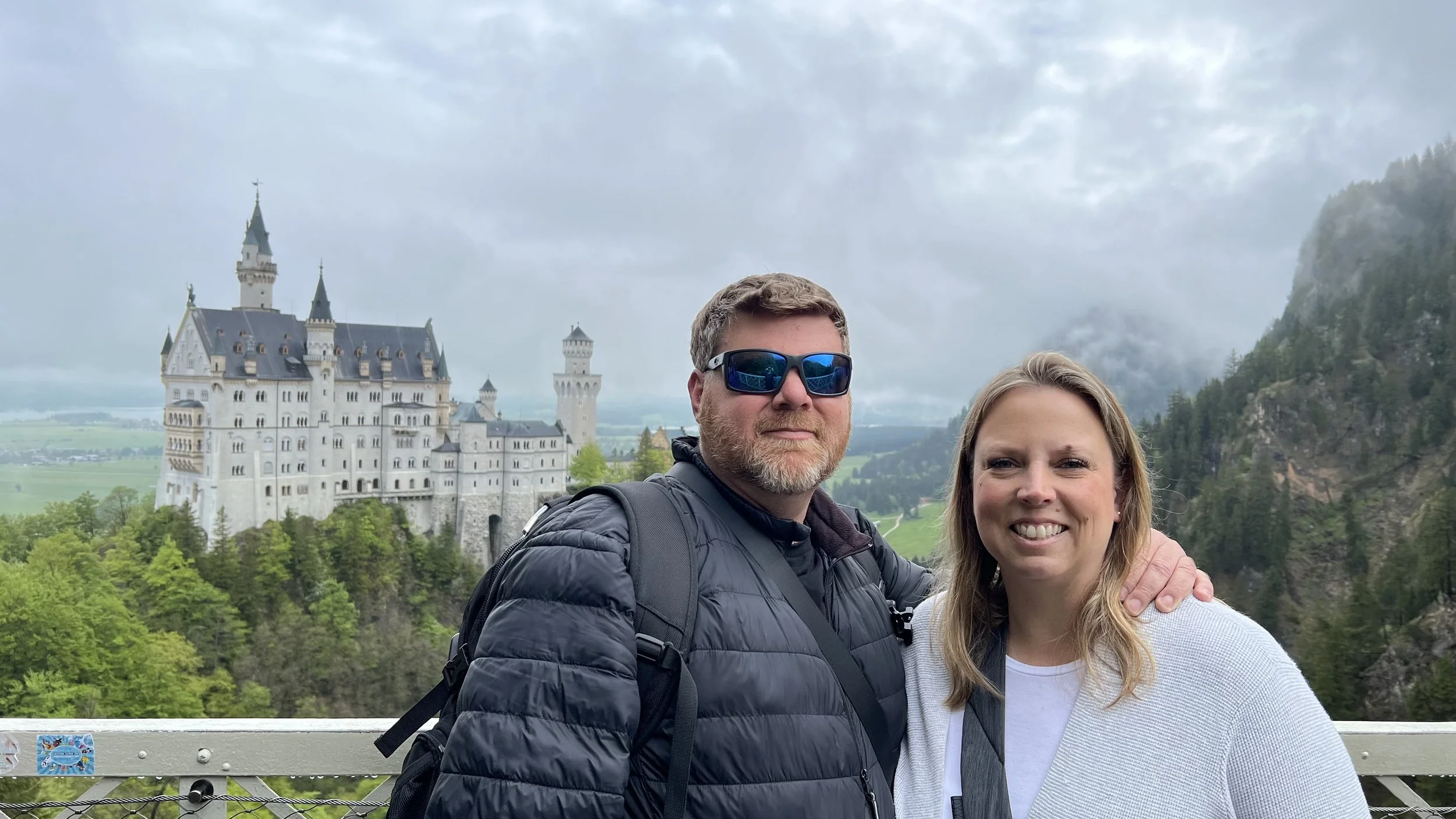
Visiting Neuschwanstein Castle in Bavaria
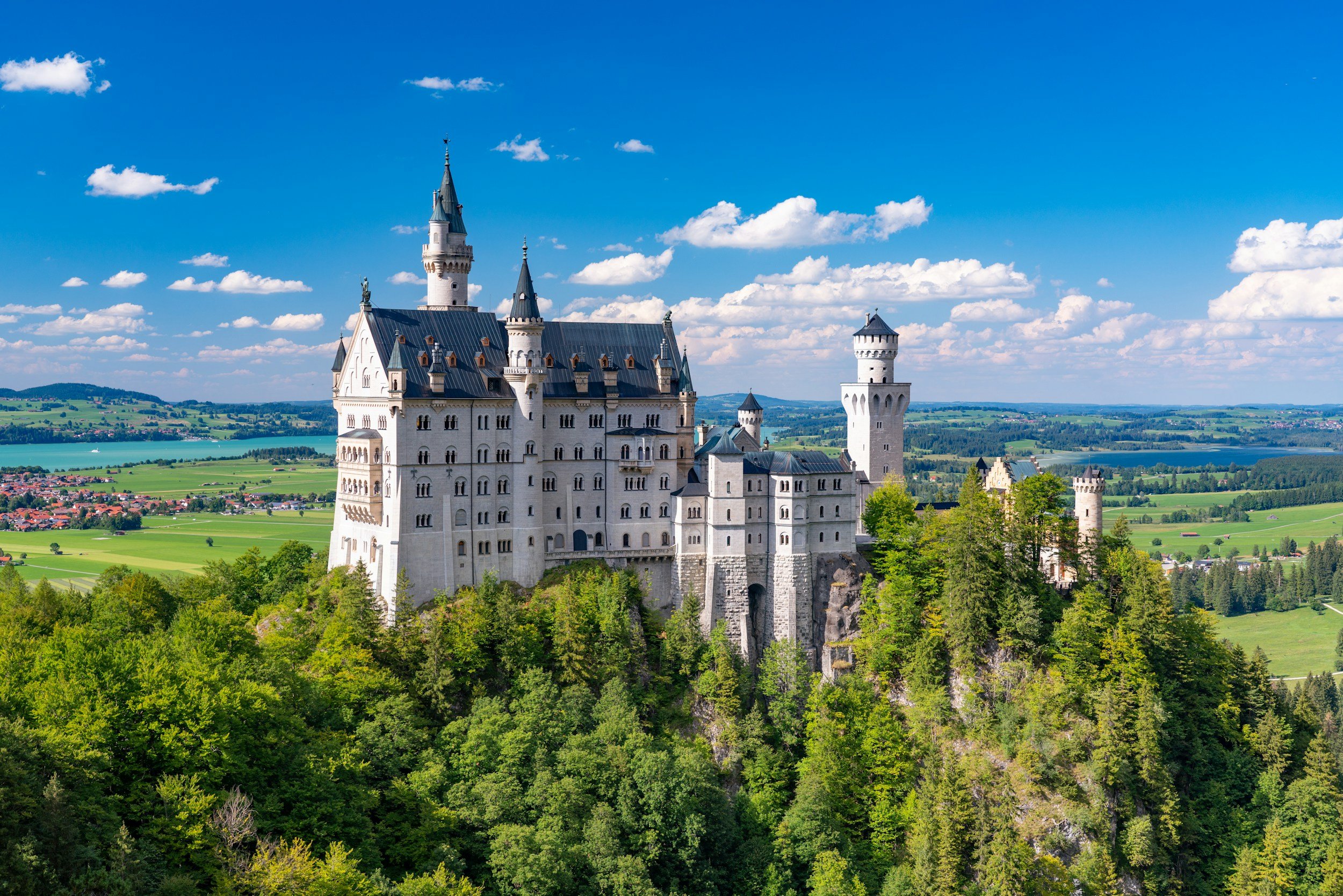
Perched dramatically above the village of Hohenschwangau and surrounded by the Bavarian Alps, Neuschwanstein Castle is one of Germany’s most recognizable landmarks. With its soaring towers, mountain backdrop, and fairy-tale appearance, it’s easy to understand why more than a million travelers make their way here each year.
Built for King Ludwig II of Bavaria in the 19th century, Neuschwanstein wasn’t designed as a defensive medieval fortress. Instead, it was Ludwig’s romantic vision of an idealized medieval castle, filled with elaborate rooms, theatrical details, and references to German legends.
Ludwig moved into the still-unfinished castle in 1884 but spent only a short period living there. In 1886, he was declared unfit to rule under controversial circumstances. Days later, Ludwig and his doctor were found dead in Lake Starnberg. His death remains surrounded by questions and speculation.
Just weeks later, Neuschwanstein was opened to paying visitors, partly to help address the enormous debts associated with Ludwig’s building projects. During World War II, the castle was also used as a storage location for artwork and valuables looted by the Nazis. Fortunately, Neuschwanstein survived the war without being destroyed.
Today, it is one of Bavaria’s biggest attractions—and one where a little advance planning can make an enormous difference.
Here’s what you need to know before you go.
Getting to Neuschwanstein Castle & When to Visit
Neuschwanstein Castle is located near Füssen in southern Bavaria, roughly 120 kilometers southwest of Munich. The actual visitor area is in the small village of Hohenschwangau, directly below the castle.
Getting There by Car
Driving gives you the most flexibility, particularly if you plan to explore more of Bavaria.
Approximate driving times are:
Munich: 1 hour 45 minutes
Innsbruck, Austria: 1 hour 20 minutes
Zurich, Switzerland: 3 hours
Once you reach Hohenschwangau, you'll find designated visitor parking areas. You cannot drive your own vehicle directly to Neuschwanstein Castle, so after parking you'll continue uphill on foot, by shuttle bus, or by horse-drawn carriage.
Getting There from Munich by Public Transportation
Neuschwanstein is also a very manageable day trip without a car.
Take a train from Munich Hauptbahnhof to Füssen, which generally takes around two hours. From Füssen, local buses connect the train station with Hohenschwangau in roughly 10 minutes.
Give yourself plenty of time when planning your castle reservation. Your ticket has a scheduled admission time, and arriving in the village doesn't mean you've arrived at the castle—you still have to get up the mountain.
Taking an Organized Tour
If you'd rather not coordinate trains, buses, tickets, and transportation yourself, organized day trips from Munich are another convenient option.
Many tours combine Neuschwanstein with other destinations in Bavaria, including Linderhof Palace and Oberammergau. Just check exactly what is included before booking, particularly whether your Neuschwanstein admission ticket is part of the tour price.
When Is the Best Time to Visit Neuschwanstein?
Timing can completely change your experience.
Summer is the busiest period, particularly from June through September. Expect more tour groups, crowded viewpoints, and longer waits during the middle of the day.
For a good combination of pleasant weather and smaller crowds, I prefer the shoulder seasons of April and May or October.
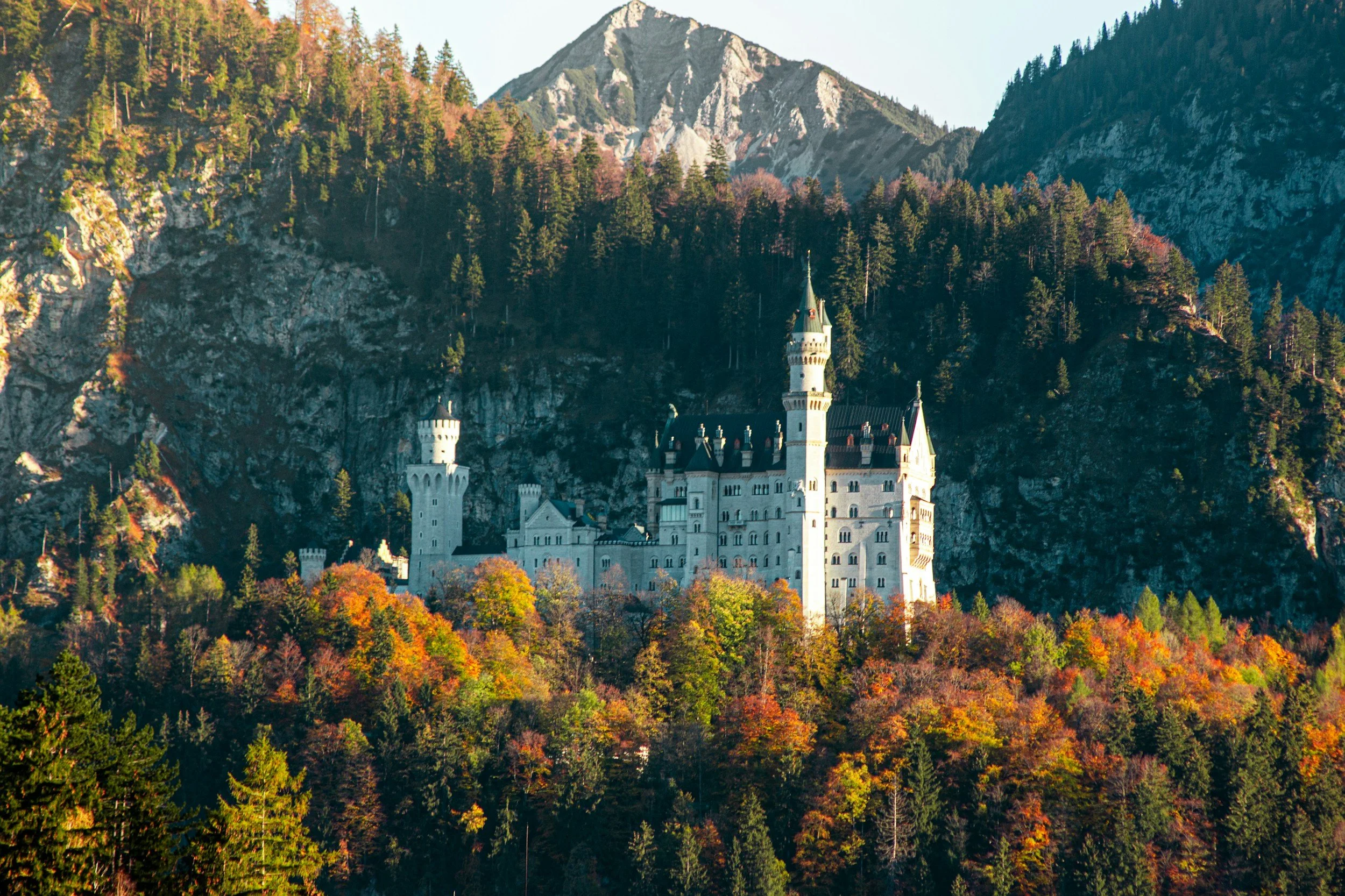
Winter has its own appeal. Snow can transform the surrounding mountains and castle into an incredible scene, and visitor numbers are generally lower. The tradeoff is shorter daylight hours and the possibility that weather conditions will affect trails, transportation, and viewpoints.
Whatever season you choose, go early. Arriving around 9:00 a.m. can help you get ahead of many of the tour buses. If mornings aren't your thing, later in the afternoon is another option. The busiest period is generally from late morning through mid-afternoon.
Neuschwanstein Tickets & Getting Up to the Castle
This is the part of your visit that deserves the most advance planning.
Buy Your Tickets Before You Arrive
Neuschwanstein Castle operates on timed admission, and you cannot simply wander inside on your own.
Tickets are available online in advance, and there is also a ticket center in Hohenschwangau. Same-day availability can be limited—particularly during spring, summer, weekends, and holidays—so booking ahead is strongly recommended.
When purchasing online, make sure you're using the official Neuschwanstein/Hohenschwangau ticketing system rather than accidentally paying inflated prices through a reseller.
Because admission prices, fees, and transportation fares can change, check the current rates when planning your trip.
Children and young people may qualify for free or reduced admission, but they still need the appropriate ticket or reservation.
Don't Underestimate the Journey to the Entrance
One of the most common mistakes first-time visitors make is thinking their arrival time in Hohenschwangau is the same as their arrival time at Neuschwanstein.
It isn't.
The castle sits high above the village, and you'll need additional time to reach it.
You have three main options.
Walking: The walk is approximately one mile uphill and generally takes around 30–40 minutes. The route is paved but fairly steep, so comfortable walking shoes are important.
Shuttle bus: For most visitors, this is my preferred option. The shuttle takes you uphill toward the Marienbrücke, or Mary's Bridge, area. From there, you can visit the famous viewpoint before walking downhill toward the castle entrance.
Horse-drawn carriage: Carriages also travel between the village and castle area. They don't take you all the way to the entrance, so you'll still have a short uphill walk after getting off.
My Favorite Way to Do It
Take the shuttle bus uphill, visit Mary's Bridge, and then walk downhill to Neuschwanstein Castle.
Marienbrücke spans the gorge behind the castle and provides the classic panoramic view you've probably seen in photographs. On a clear day, it's spectacular.
Just remember that the bridge can become extremely crowded, and access may occasionally be restricted because of weather or safety conditions.
After seeing the viewpoint, continue downhill toward the castle and make sure you're at the entrance at least 15 minutes before your scheduled admission time.
After your tour, skip the transportation altogether if you're able and walk back down to Hohenschwangau. It's an easy downhill stroll and a great way to enjoy the scenery.
And keep an eye out for a small stand selling Quarkbällchen—little German fried pastries that make an excellent post-castle snack.
If you need something more substantial, look for a Leberkäse sandwich, a simple Bavarian comfort food that's perfect for a quick lunch.
What to See at Neuschwanstein & Around Hohenschwangau
As spectacular as Neuschwanstein looks from the outside, the interior is a completely different experience.
King Ludwig II created rooms inspired by medieval legends, Wagnerian operas, royal symbolism, and his own highly romantic vision of kingship.
Visitors typically see the interior as part of a relatively short timed tour. One important thing to know before entering is that photography is generally not permitted inside the castle, so enjoy the rooms while you're there—you can take plenty of photographs outside afterward.
Don't Leave Immediately After Your Tour
Here's one of my favorite insider tips.
As you're exiting the castle, look for the signs leading toward the café. Continue down the hallway past the café and toward the door at the end.
You'll find access to a balcony area with beautiful views overlooking Hohenschwangau and the surrounding landscape, along with another interesting perspective toward Mary's Bridge.
It's an easy spot to miss when everyone else is heading directly for the exit.
Explore Hohenschwangau
Don't treat the village as nothing more than a parking lot for Neuschwanstein.
Hohenschwangau has cafés, souvenir shops, Bavarian restaurants, places to grab a beer, and several other attractions worth exploring.
One of the best additions to your day is a walk down toward Alpsee Lake. The lake sits beneath the surrounding mountains and offers a peaceful contrast to the crowds around Neuschwanstein.
History enthusiasts can also visit the Museum of the Bavarian Kings to learn more about Ludwig II and Bavaria's royal family.
What About Hohenschwangau Castle?
Across the valley from Neuschwanstein sits Hohenschwangau Castle, where Ludwig II spent part of his childhood.
It's smaller and less theatrical than Neuschwanstein, but it offers additional context for Ludwig's life and the Bavarian royal family.
Admission is separate, so if you want to tour both castles, allow enough time between reservations rather than trying to squeeze everything into a few hours.
Insider Tips for the Best Neuschwanstein Experience
Neuschwanstein is absolutely worth visiting, but it rewards travelers who don't rush it.
If you're carrying larger bags or unnecessary belongings, consider using the available storage facilities before your tour. Traveling light makes the uphill journey and castle visit much easier.
Wear proper shoes. Even if you take transportation uphill, you'll still do plenty of walking, and exploring viewpoints can involve steep or uneven terrain.
Give yourself more time than you think you need. Between parking, buses, Mary's Bridge, walking to the entrance, your timed tour, photographs, lunch, and exploring Hohenschwangau, the visit can easily occupy most of a day.
If you have extra time, consider exploring some of the hiking trails in the surrounding mountains. Getting away from the main visitor route rewards you with quieter surroundings, mountain scenery, and different perspectives of the castle.
And perhaps most importantly, don't spend your entire visit chasing the perfect photograph.
Some of the best moments here come from simply slowing down and appreciating the setting—the Bavarian Alps, forests, lakes, villages, and two royal castles rising above the landscape.
Final Thoughts
Neuschwanstein Castle is popular for a reason.
There's something almost surreal about seeing those famous towers appear above the trees for the first time. Add the story of Ludwig II, the dramatic mountain scenery, Mary's Bridge, Alpsee Lake, and the surrounding Bavarian countryside, and you have much more than a quick castle tour.
The key is to plan ahead.
Reserve your castle tickets in advance, arrive early or later in the afternoon to avoid the biggest crowds, leave plenty of time to reach your scheduled entrance, and don't limit your visit to the castle itself.
Take the shuttle toward Mary's Bridge. Walk back down through the forest. Explore Hohenschwangau. Stop at Alpsee Lake. Grab a Quarkbällchen or Leberkäse sandwich along the way.
Neuschwanstein may look like something from a fairy tale, but with the right planning, visiting it doesn't have to be complicated.
And that's the real insider secret: give Neuschwanstein enough time to be more than a photo stop, and it can easily become one of the highlights of a trip through Bavaria.