Nuremberg (Nürnberg) is one of Germany’s most interesting cities—a place where medieval walls, half-timbered buildings, beer halls, Christmas markets, and some of the country’s most important 20th-century history all come together. It’s compact enough to explore on foot, less overwhelming than Munich, and makes an excellent addition to a Bavaria itinerary.
Overview & Vibe
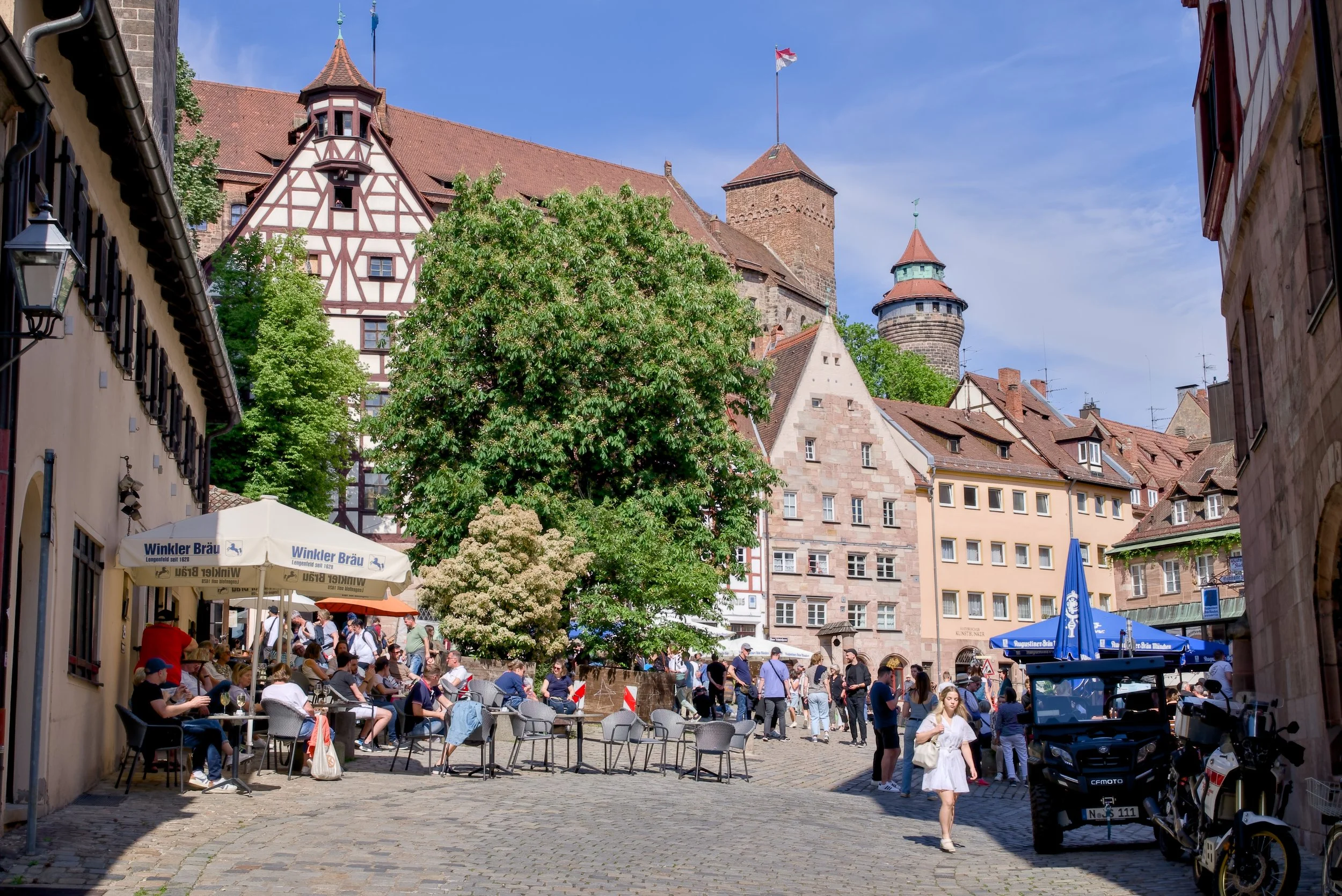
Nuremberg feels like a smaller, more manageable alternative to Munich. The historic Altstadt, or Old Town, is filled with cobblestone streets, churches, colorful buildings, traditional restaurants, beer halls and small squares, all watched over by the Imperial Castle at the northern end of town.
The city is divided roughly in half by the Pegnitz River, with picturesque bridges and riverfront buildings creating some of Nuremberg's prettiest views.
Despite its medieval appearance, Nuremberg isn't a tiny tourist town. It's a major modern German city, but much of what visitors come to see is concentrated inside the old city walls. That makes it particularly easy to explore.
Nuremberg also has two very different sides to its history. You can spend the morning walking through medieval streets and touring an imperial castle, then spend the afternoon learning about Nazi Germany and the Nuremberg Trials. That combination gives the city considerably more depth than you might expect from a quick stop on a Bavaria itinerary.
For most travelers, 2–3 days is about right, although Nuremberg also works extremely well as a day trip from Munich.
Quick & Fun Facts
State: Bavaria
Population: Around 530,000
Language: German, although English is widely understood in tourist areas
Currency: Euro (€)
Time Zone: Central European Time (CET)
Best known for: Medieval Old Town, Nuremberg Castle, Nazi-era history, Christmas markets, bratwurst and gingerbread
Ideal stay: 2–3 days
Airport: Nuremberg Airport (NUE)
Main train station: Nürnberg Hauptbahnhof
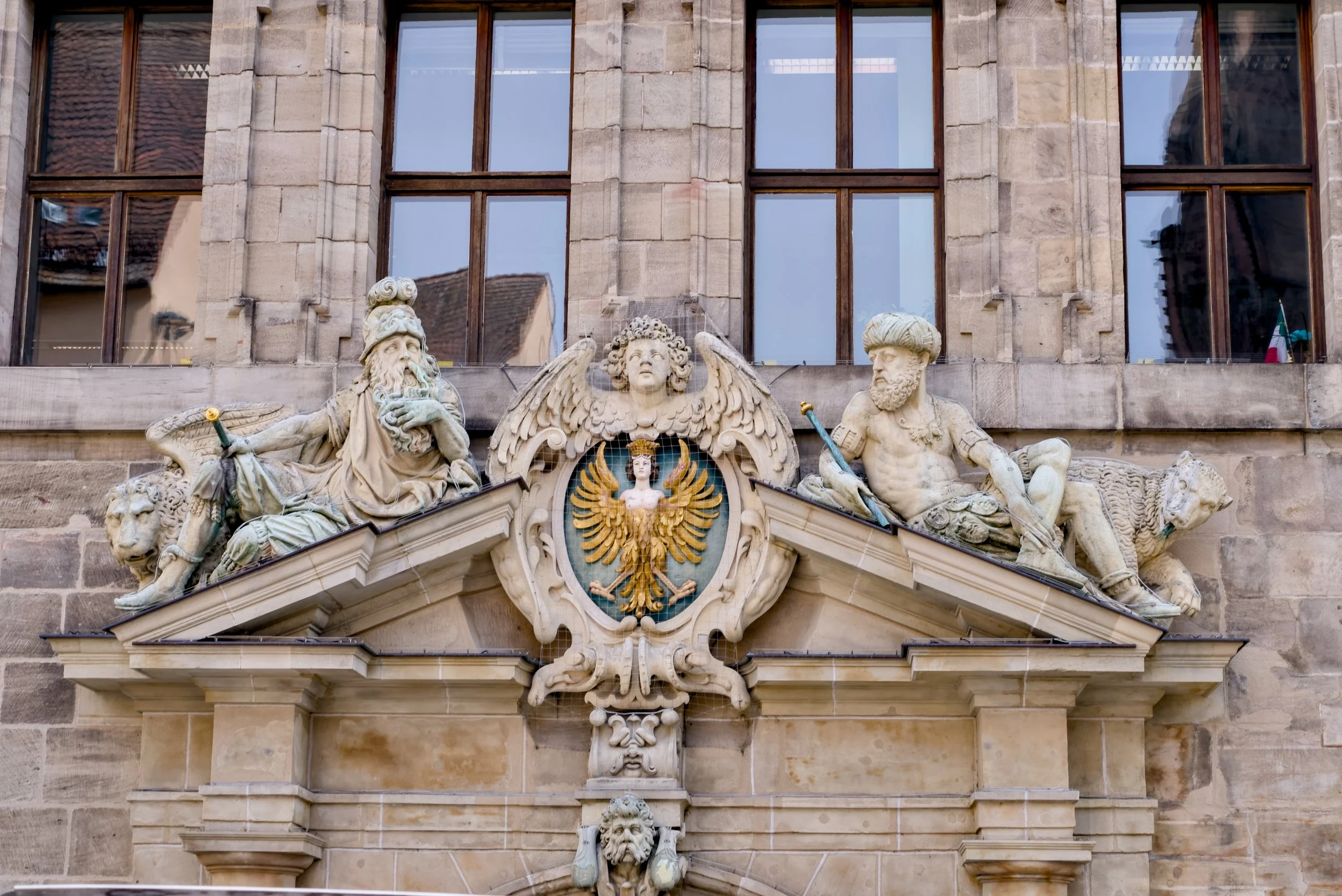
Nuremberg was one of the most important cities of the Holy Roman Empire, and emperors frequently stayed at its imposing Imperial Castle. The historic center is still surrounded by much of its medieval city wall.
The city also played a major role during the Nazi era. Hitler chose Nuremberg for enormous Nazi Party rallies, and after World War II it became the site of the famous Nuremberg Trials.
On a much lighter note, Nuremberg is famous for its tiny Nürnberger Rostbratwürste. Traditionally, you'll often see them served in groups of six, eight, ten or twelve—or three stuffed into a bread roll as the popular Drei im Weggla.
Nuremberg's Christkindlesmarkt is also one of the oldest and most famous Christmas markets in Germany.
Best Time to Visit
May through June and September through early October are arguably the sweet spots. Temperatures are generally comfortable for walking, outdoor restaurants are busy, and you avoid some of the peak summer crowds.
July and August bring warmer weather and longer days, but they're also part of the busiest travel season. Nuremberg usually isn't as overwhelmed with tourists as Munich, but popular Old Town attractions can still get crowded.
December is a completely different experience. The Nuremberg Christkindlesmarkt transforms the Old Town into one of Europe's classic Christmas destinations. It's incredibly atmospheric, but you'll pay for that atmosphere with larger crowds and potentially higher accommodation prices.
January through March is the quietest period. You'll encounter colder, darker weather, but hotels can be cheaper and the major attractions considerably less crowded.
Our pick: Late May, June or September for the best combination of weather, crowds and prices. Choose December instead if experiencing one of Germany's most famous Christmas markets is the priority.
Getting Around
Nuremberg is extremely easy to navigate.
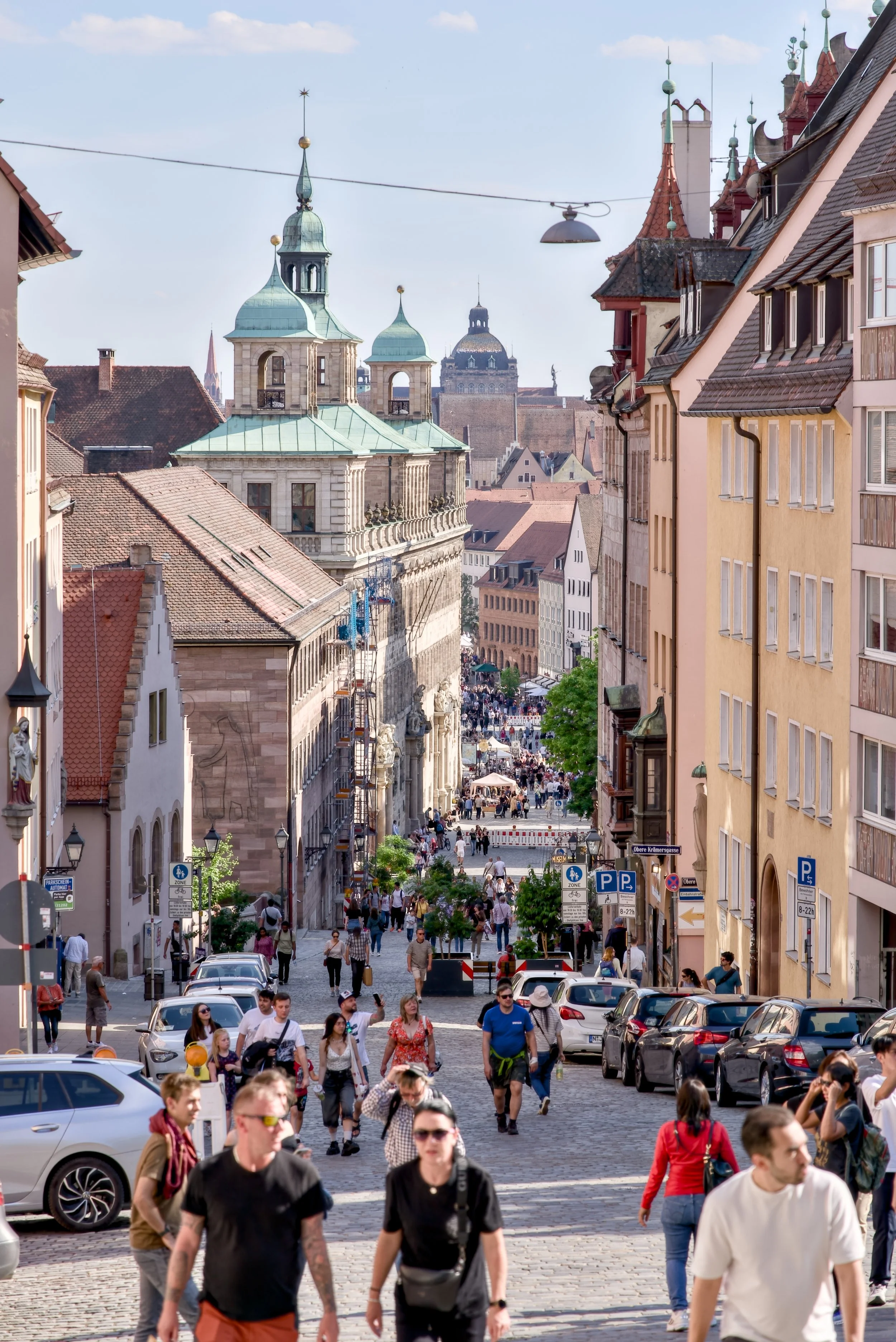
If you're staying inside or near the Altstadt, walking will handle most of your sightseeing. The historic center is compact, and wandering between attractions is part of the experience.
For longer distances, Nuremberg has an excellent public transportation network consisting of U-Bahn trains, trams, buses and S-Bahn services. The U-Bahn is particularly useful for reaching destinations outside the historic center.
You'll probably want public transportation for the Nazi Party Rally Grounds, since they're southeast of the Old Town.
Nürnberg Hauptbahnhof is extremely convenient. The station sits directly beside the Old Town and provides easy connections to Munich and numerous other German cities.
Nuremberg Airport is also unusually convenient for a city airport. The U2 U-Bahn line connects the airport with the central train station in roughly 12–15 minutes, making an expensive airport transfer unnecessary for most visitors.
You definitely do not need a rental car for Nuremberg itself.
Things to Do & See
Explore the Altstadt
Start simply by walking. Nuremberg's Old Town is the attraction as much as any individual building.
Walk along the Pegnitz River, wander the smaller side streets, cross the historic bridges and gradually make your way uphill toward the castle.
Nuremberg Imperial Castle
Sitting above the Old Town, Kaiserburg Nürnberg is Nuremberg's signature landmark.
The castle was an important residence for rulers of the Holy Roman Empire and today offers castle interiors, exhibitions and excellent views across the city's rooftops.
Even if you don't tour every section, walk up to the castle area for the views.
Hauptmarkt
The Hauptmarkt is Nuremberg's main market square and one of the natural centers of the Old Town.
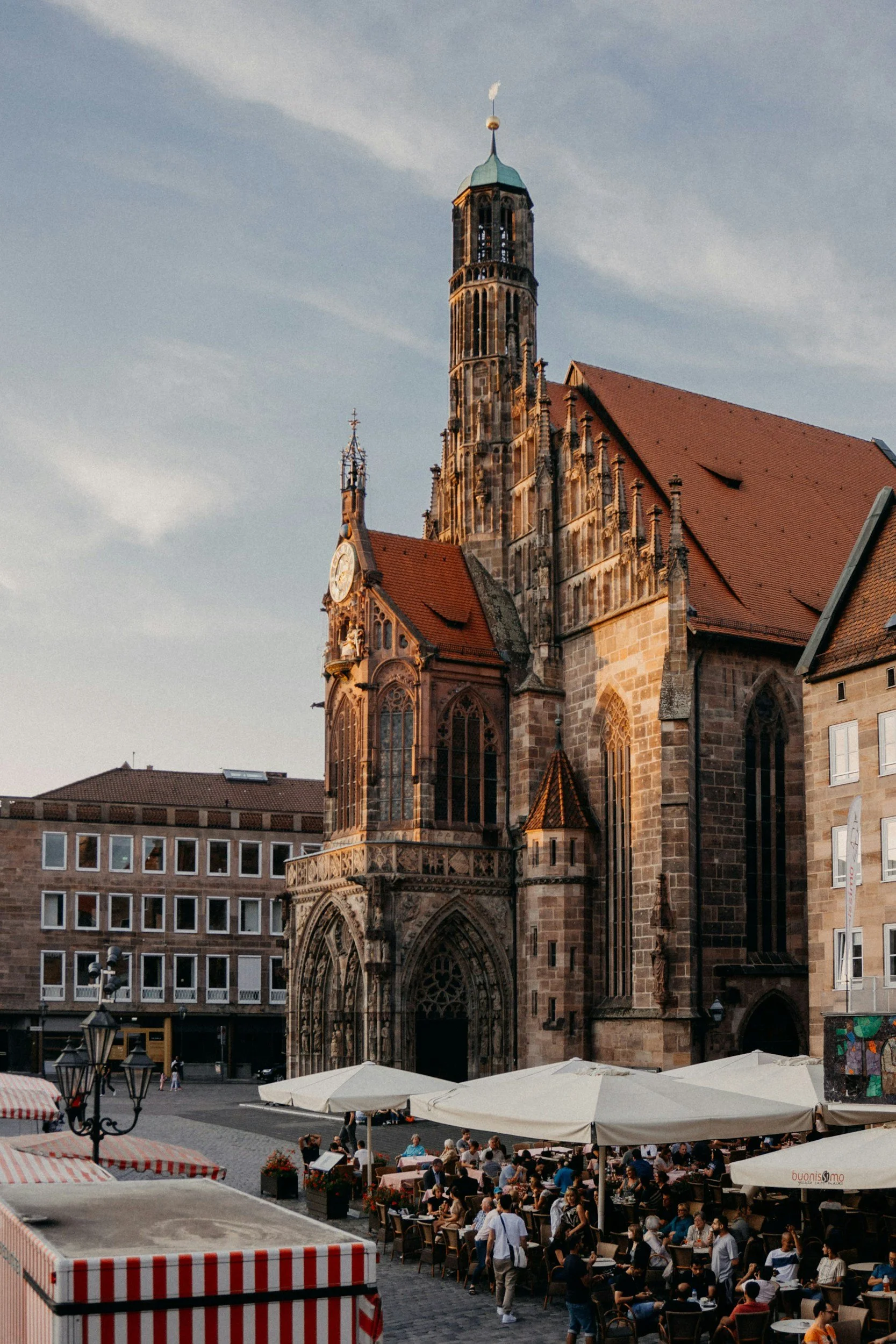
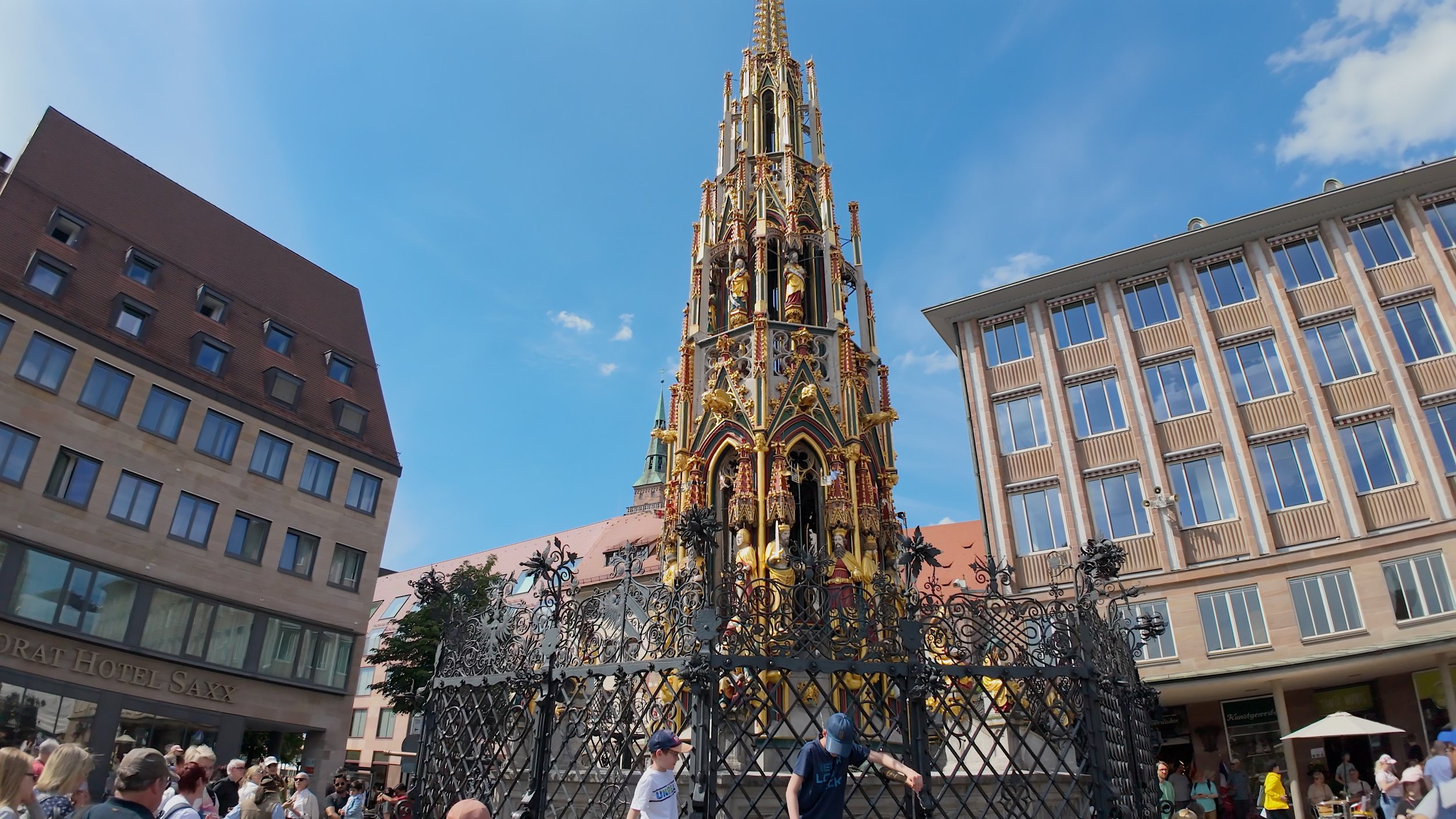
It's home to the ornate Schöner Brunnen, or Beautiful Fountain, and the Frauenkirche. During December, this area becomes the heart of the famous Christkindlesmarkt.
St. Lorenz Church
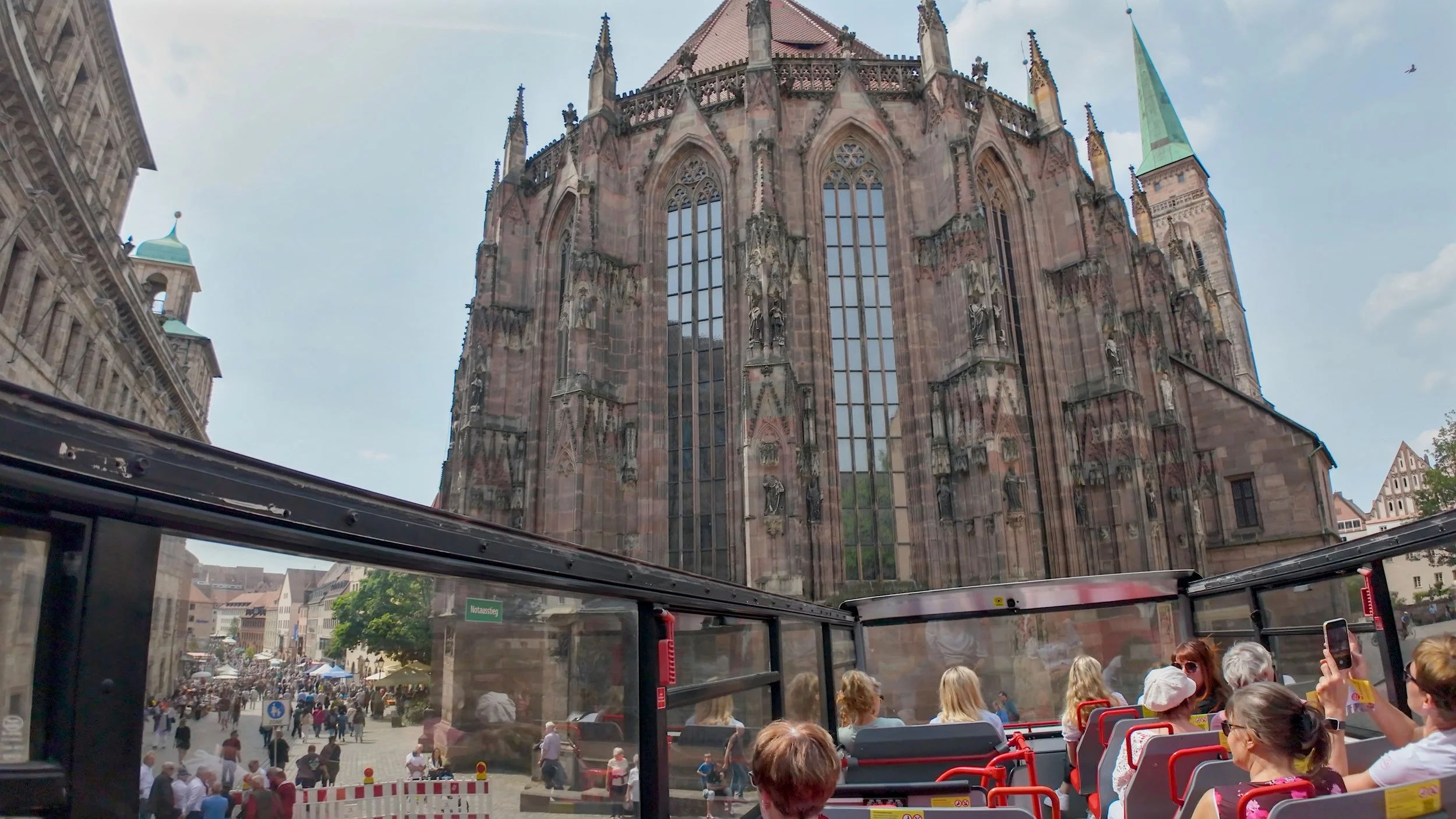
The twin towers of St. Lorenz, or St. Lawrence Church, dominate the southern Old Town. The Gothic church dates back to the Middle Ages and is one of Nuremberg's most impressive historic buildings.
St. Sebald Church
Another of the city's great medieval churches, St. Sebald sits between Hauptmarkt and the castle. The surrounding streets are also some of our favorite areas for simply wandering around.
Weißgerbergasse
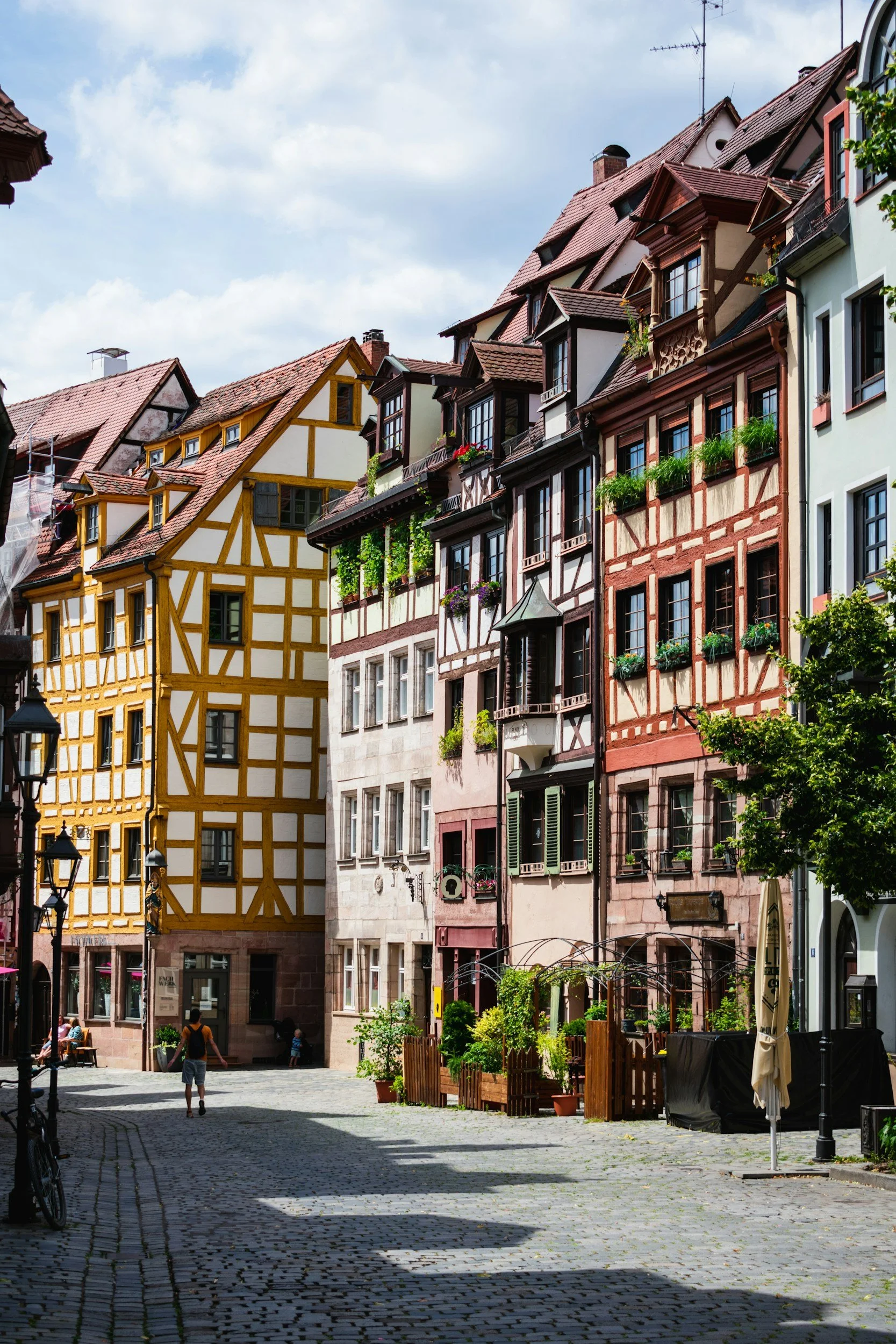
If you're hunting for the postcard version of Nuremberg, head for Weißgerbergasse.
The narrow street is lined with colorful historic timber-framed houses and is one of the most photographed locations in the city. Go early if you want photos without half of Germany walking through the background.
Hangman's Bridge & Weinstadel
The Henkersteg, or Hangman's Bridge, and neighboring Weinstadel create one of Nuremberg's prettiest riverfront scenes.
It's a quick stop but absolutely worth including while walking around the Old Town.
Documentation Center & Nazi Party Rally Grounds
Nuremberg was heavily associated with the Nazi regime and hosted massive Nazi Party rallies.
The former rally grounds remain one of Germany's most important places for understanding how the Nazi movement used propaganda, architecture and mass gatherings to influence the population.
Allow several hours if you want to properly explore the area and exhibitions rather than rushing through it.
Memorium Nuremberg Trials
Courtroom 600 at the Palace of Justice became internationally famous following World War II when leading Nazi officials were prosecuted during the Nuremberg Trials.
The Memorium Nuremberg Trials explains the trials, their defendants and their lasting impact on international criminal law.
If you're interested in WWII history, we'd make room for both the Rally Grounds and Nuremberg Trials museum.
Walk the Medieval City Walls
Large sections of Nuremberg's old defensive walls and towers remain intact. Walking alongside them gives you a better appreciation for how substantial the medieval city once was.
Germanisches Nationalmuseum
If you have extra time—or get a rainy day—the Germanisches Nationalmuseum contains an enormous collection covering German-speaking culture, history and art.
It's one of Germany's major museums, although travelers who aren't big museum people can easily prioritize Nuremberg's streets and historic sites instead.
St. Lorenz – Best for Convenience
South of the Pegnitz River, St. Lorenz puts you between the main train station and the heart of the Old Town.
It's convenient for transportation, shopping, restaurants and sightseeing and would be one of our first choices for a short visit.
Gostenhof – Better for a Local Feel
Just outside the Old Town, Gostenhof has a younger, more residential atmosphere with cafés, bars and international restaurants. Accommodation can sometimes be cheaper here while the historic center remains easily accessible by public transportation.
For most first-time visitors, though, we'd still choose Altstadt or the Hauptbahnhof/Old Town edge unless the savings are substantial.
Where to Stay
Altstadt – Best Overall
For a first visit, inside the Old Town walls is the easiest choice. You'll be within walking distance of the castle, Hauptmarkt, churches, restaurants, shopping streets and most of Nuremberg's major sights.
The Old Town isn't huge, so don't obsess over finding a hotel directly beside one particular attraction.
Near Hauptbahnhof – Best for Train Travelers
The area around Nürnberg Hauptbahnhof is especially convenient if Nuremberg is one stop on a larger Germany trip.
The station sits immediately outside the southeastern edge of the Old Town. You can walk through the city walls and be in the historic center within minutes while still having easy access to regional and long-distance trains.
This is one of those cities where staying near the train station doesn't necessarily mean sacrificing location.
St. Sebald – Best for Historic Atmosphere
The northern half of the Altstadt around St. Sebald Church and Nuremberg Castle has some of the city's strongest medieval atmosphere.
You'll find beautiful streets, historic buildings, restaurants and easy access to the castle. It's a particularly good choice if you want that classic "old Germany" feeling when you step outside your hotel.
Common Mistakes to Avoid
Treating Nuremberg as nothing more than a day trip. You can see the highlights in one long day, but two nights gives you enough time to experience the Old Town and explore the city's important WWII sites without constantly watching the clock.
Only visiting the medieval attractions. The castle and Old Town are fantastic, but Nuremberg's 20th-century history is incredibly important. The Rally Grounds and Nuremberg Trials sites provide an entirely different perspective on the city.
Assuming Nuremberg is basically a smaller Munich. It's culturally Franconian, and locals tend to take that distinction seriously. Try the local food, beer and wine instead of looking exclusively for Munich-style experiences.
Driving into the Old Town. There's little reason to deal with parking and restricted streets when the historic center is so walkable and public transportation is excellent.
Staying too far outside the center just to save a few euros. Nuremberg often offers reasonably priced accommodation around the Old Town and Hauptbahnhof. Check those areas before booking something far into the suburbs.
Expecting every business to take cards. Germany has become much more card-friendly, but cash hasn't disappeared. Smaller restaurants, bakeries, market stalls and independent businesses may still prefer or require cash. Carry some euros.
Trying to cram every museum into your itinerary. Nuremberg has a surprising number of museums and historic attractions. Unless you're staying several days, choose the ones that genuinely interest you and leave time to simply explore the city.
Safety & Things to Know
Nuremberg is generally a very safe destination, and most visitors should feel comfortable walking throughout the central tourist areas during both the day and evening.
Normal city precautions still apply. Keep an eye on your belongings around the Hauptbahnhof, crowded public transportation, festivals and Christmas markets, where pickpocketing is more likely than in quieter parts of town.
Germany uses the euro, and carrying a small amount of cash is useful.
Most shops are closed on Sundays, with exceptions including some businesses at train stations, airports, restaurants and tourist-oriented locations. Don't plan your big shopping expedition for Sunday unless staring through locked storefront windows is part of the itinerary.
Public transportation generally operates on an honor system rather than requiring you to pass through turnstiles. Make sure you have the correct ticket and that it is validated when required. Ticket inspections happen, and fines aren't exactly the souvenir you want to bring home.
Nuremberg's Old Town has cobblestones, hills and uneven surfaces, particularly as you approach the castle. Comfortable walking shoes are much more useful than trying to win a European fashion contest.
Finally, don't be afraid to slow down. Nuremberg isn't a city where you need a checklist of 25 attractions. Some of the best moments come from wandering the Old Town, grabbing a Drei im Weggla, sitting beside the Pegnitz River and enjoying a city that feels historic without feeling like a theme park.
For a Germany itinerary that already includes Munich, Nuremberg makes a particularly good contrast: Munich is bigger, busier and grander, while Nuremberg is more compact, medieval and easygoing. Both are worth visiting, but they feel surprisingly different for two cities only about an hour apart by high-speed train.