⬅Back
What Is Oktoberfest Really Like?
Oktoberfest is one of the world's most famous festivals, attracting millions of visitors to Munich, Germany, every year. But if you're imagining nothing more than enormous beer tents filled with people drinking one-liter beers, you're missing a huge part of the experience.
After spending five nights in Munich and visiting Oktoberfest at different times of the day, we discovered that it's much more like a massive Bavarian state fair than simply a beer festival.
There are enormous beer halls, traditional Bavarian music, carnival rides, food stands, historic attractions, and people from around the world celebrating together. And depending on when you visit, the atmosphere can be completely different.
During weekday mornings and early afternoons, you'll find families enjoying lunch, children riding carnival rides, and visitors casually exploring the festival grounds. By evening, those same beer tents transform into enormous parties, with thousands of people standing on benches, singing along to live music, and enjoying the festivities.
What we appreciated most was that you can experience Oktoberfest however you want. You don't have to drink beer, dress in traditional clothing, or spend the entire day inside a beer tent to have a great time.
The History of Oktoberfest: How It All Started
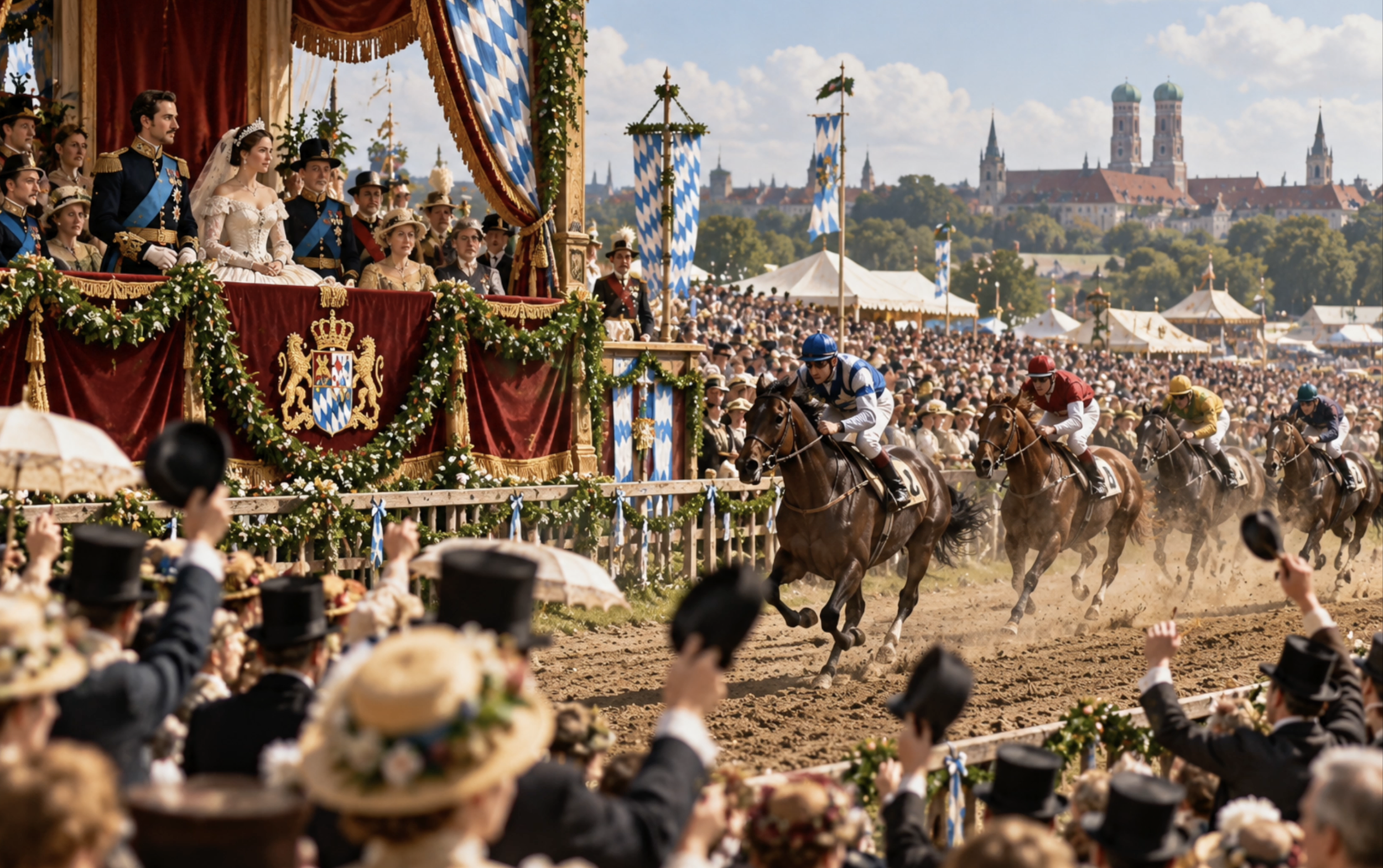
Oktoberfest dates back to October 12, 1810, when Crown Prince Ludwig of Bavaria married Princess Therese of Saxe-Hildburghausen.
The people of Munich were invited to celebrate the royal wedding, and the festivities concluded with a horse race on a meadow outside the city. The celebration was so popular that it became an annual tradition.
That meadow eventually became known as Theresienwiese, or Therese's Meadow, which is still where Oktoberfest takes place today. Locals commonly refer to the festival as Wiesn.
Over the following two centuries, Oktoberfest evolved from a royal celebration into a major Bavarian cultural festival. Horse racing eventually disappeared, while beer tents, food vendors, music, and amusement rides became central parts of the celebration.
And if you're wondering why a festival called Oktoberfest takes place mostly in September, there's a practical explanation. In 1872, organizers shifted the celebration earlier to take advantage of September's warmer weather and longer daylight hours.
Today, Oktoberfest combines more than 200 years of Bavarian tradition with one of the world's largest annual celebrations.
Where Is Oktoberfest Held? Understanding the Festival Grounds
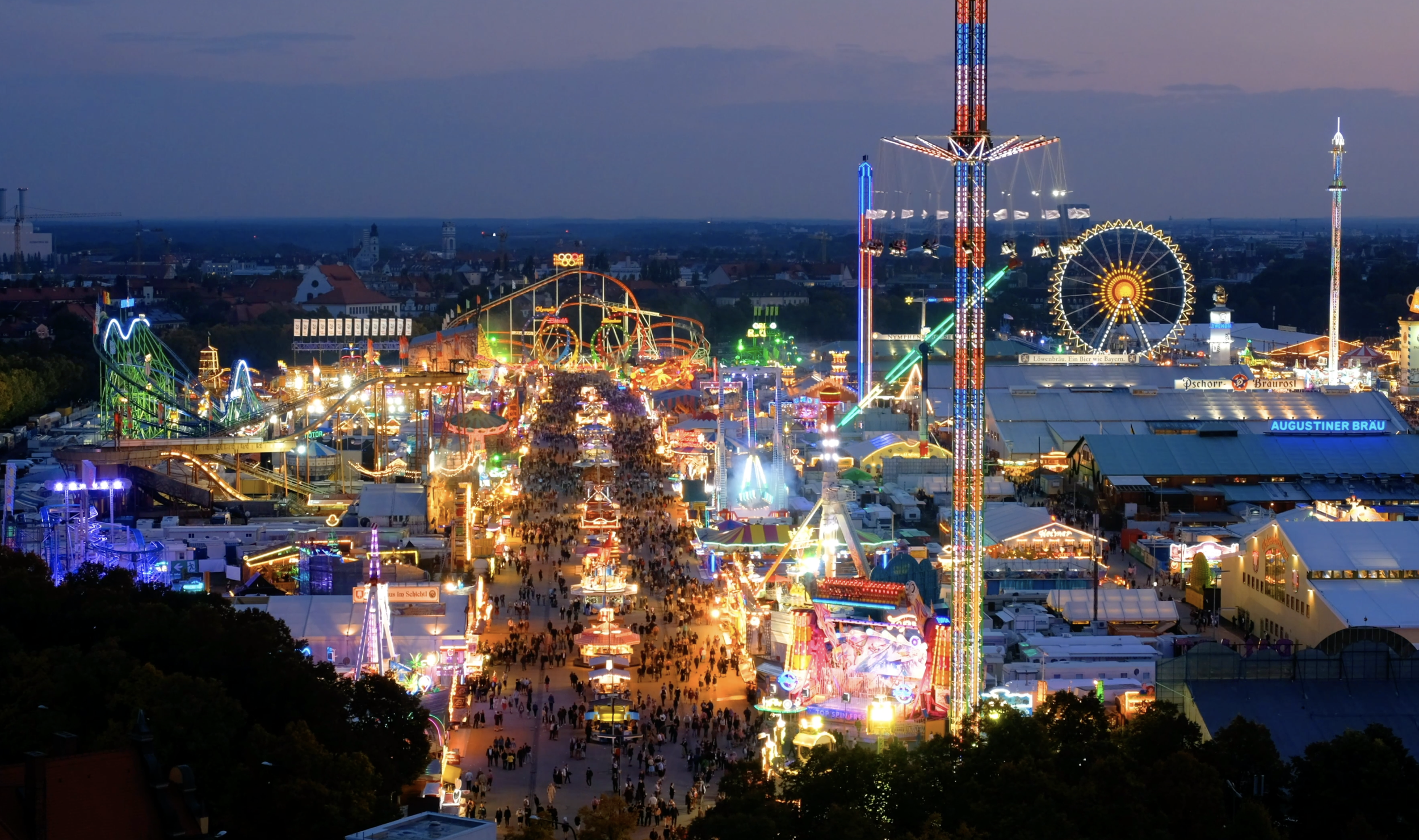
Oktoberfest takes place at Theresienwiese, a large festival ground just southwest of Munich's historic city center.
The grounds are enormous, but navigating them is easier than you might expect. The giant beer tents occupy much of the central area, while carnival rides, games, food vendors, and smaller attractions are spread throughout the festival.
Toward the southern end is Oide Wiesn, also known as Old Oktoberfest. This separate, ticketed section celebrates the festival's history with traditional rides, historic entertainment, and a more nostalgic Bavarian atmosphere.
Another recognizable landmark is the enormous Bavaria statue overlooking the grounds. Beneath it is a grassy hillside that has earned the unofficial nickname Puke Hill.
And yes, the name is exactly as unfortunate as it sounds.
After watching a few visitors who had clearly enjoyed one too many liters of beer, we understood why the locals gave it that name.
Best Time to Visit
Weekdays vs Weekends Day vs Night
If we could give first-time Oktoberfest visitors just one piece of advice, it would be to visit during the week and arrive early.
We visited at different times and discovered that the experience changes dramatically throughout the day.
Oktoberfest During the Day
Our favorite time for a first visit was roughly 10 AM to 2 PM on a weekday.
The festival was busy but manageable, and we could comfortably walk around, explore different beer tents, find seating, and enjoy the atmosphere without feeling overwhelmed.
It was also much more family-oriented than we anticipated. There were children, parents with strollers, people enjoying lunch, and visitors simply taking in the festivities.
If you've never been to Oktoberfest, this is the perfect opportunity to familiarize yourself with the grounds and understand how everything works.
Oktoberfest at Night
As the afternoon turns into evening, Oktoberfest begins transforming into an entirely different experience.
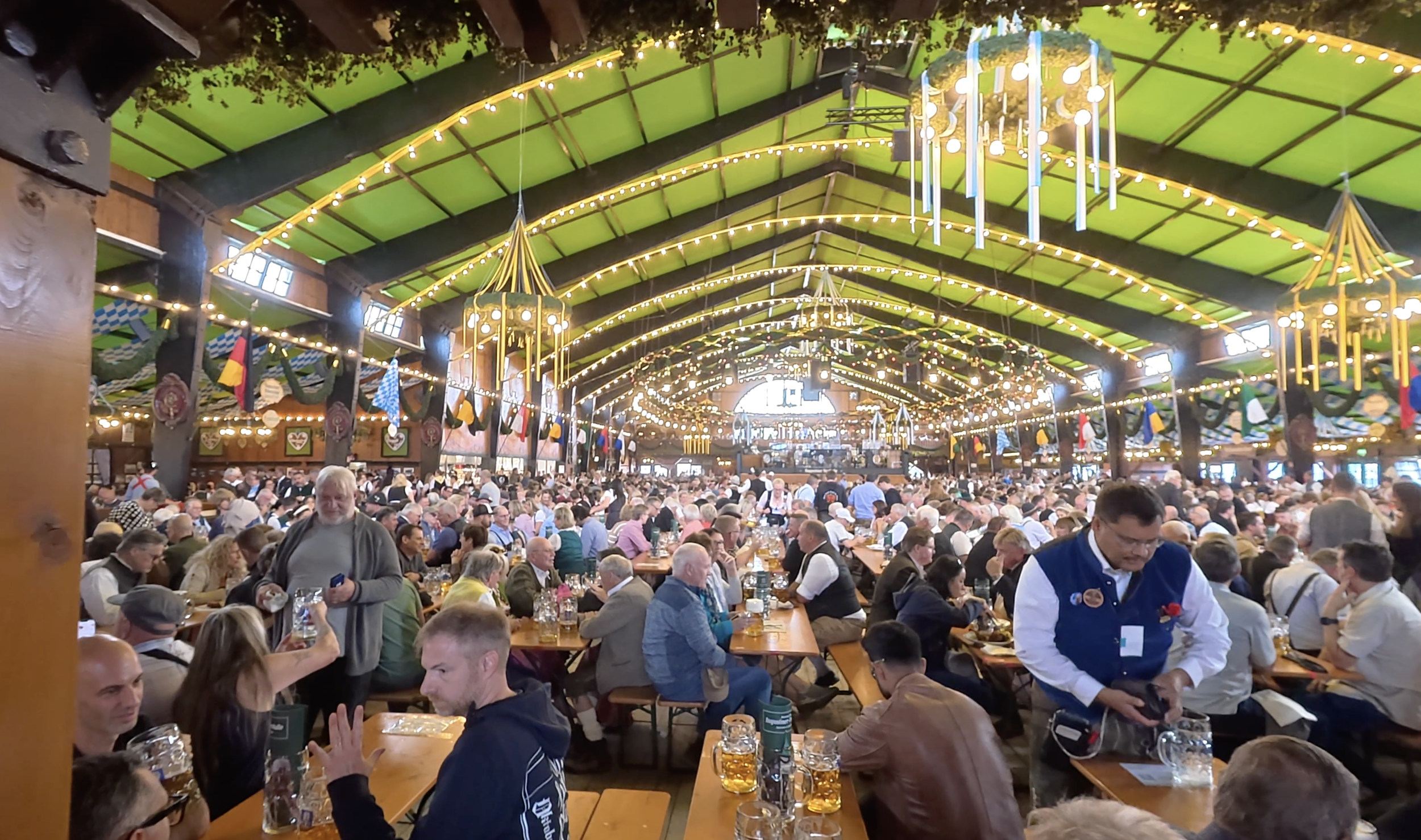
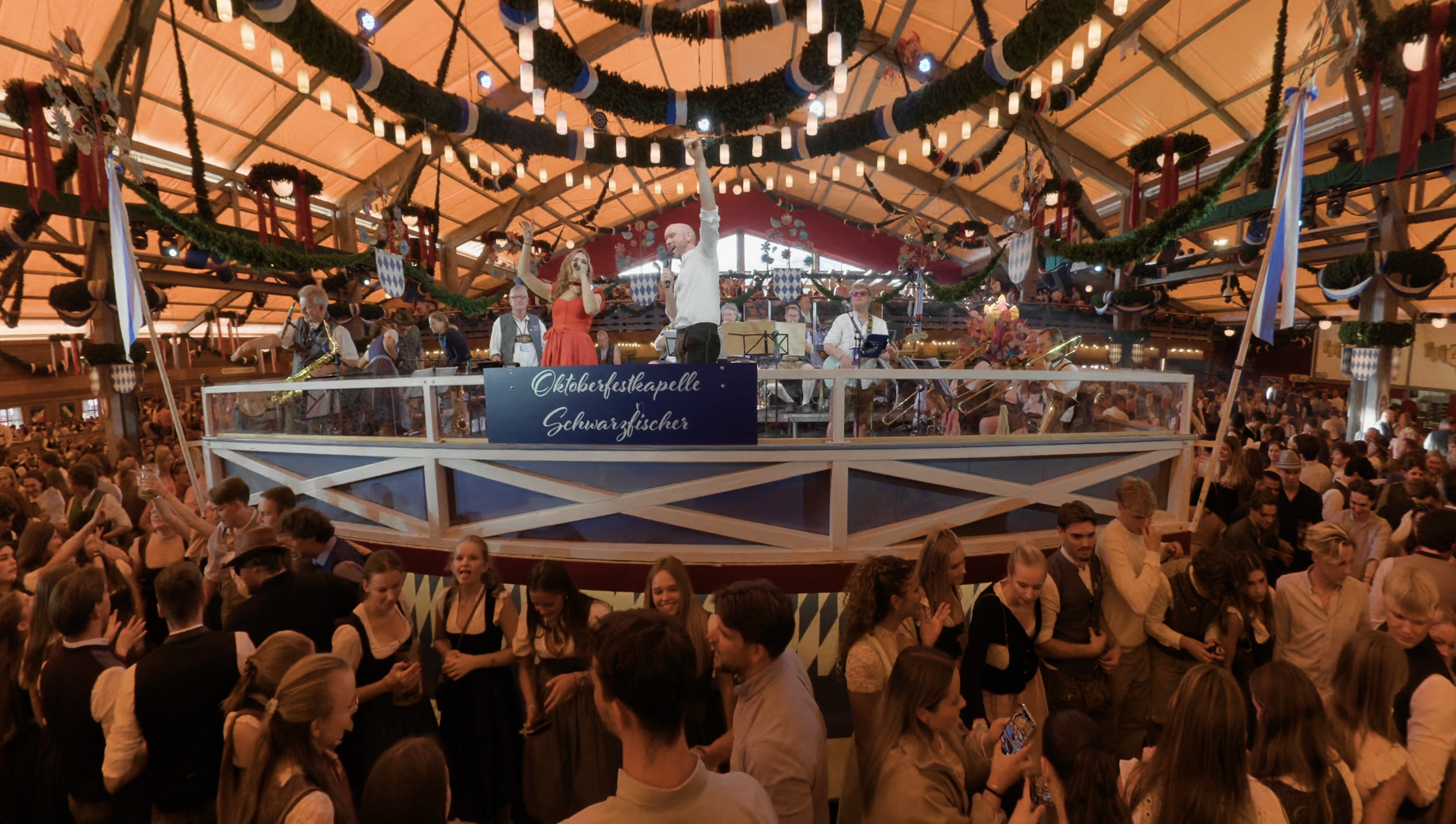
The music gets louder, the tents become packed, and thousands of people begin standing on benches, singing along with the bands, and celebrating together.
It's an incredible atmosphere, but finding an open table becomes considerably more difficult.
If you arrive at 5 or 6 PM on a busy evening without a reservation, there's a good chance you'll struggle to find somewhere to sit.
Weekends can be even more crowded, particularly inside the popular beer tents.
Our recommendation: Arrive during the week, explore the festival early, find a beer tent you enjoy, and stay long enough to watch the atmosphere change. You'll get to experience two very different sides of Oktoberfest in one visit.
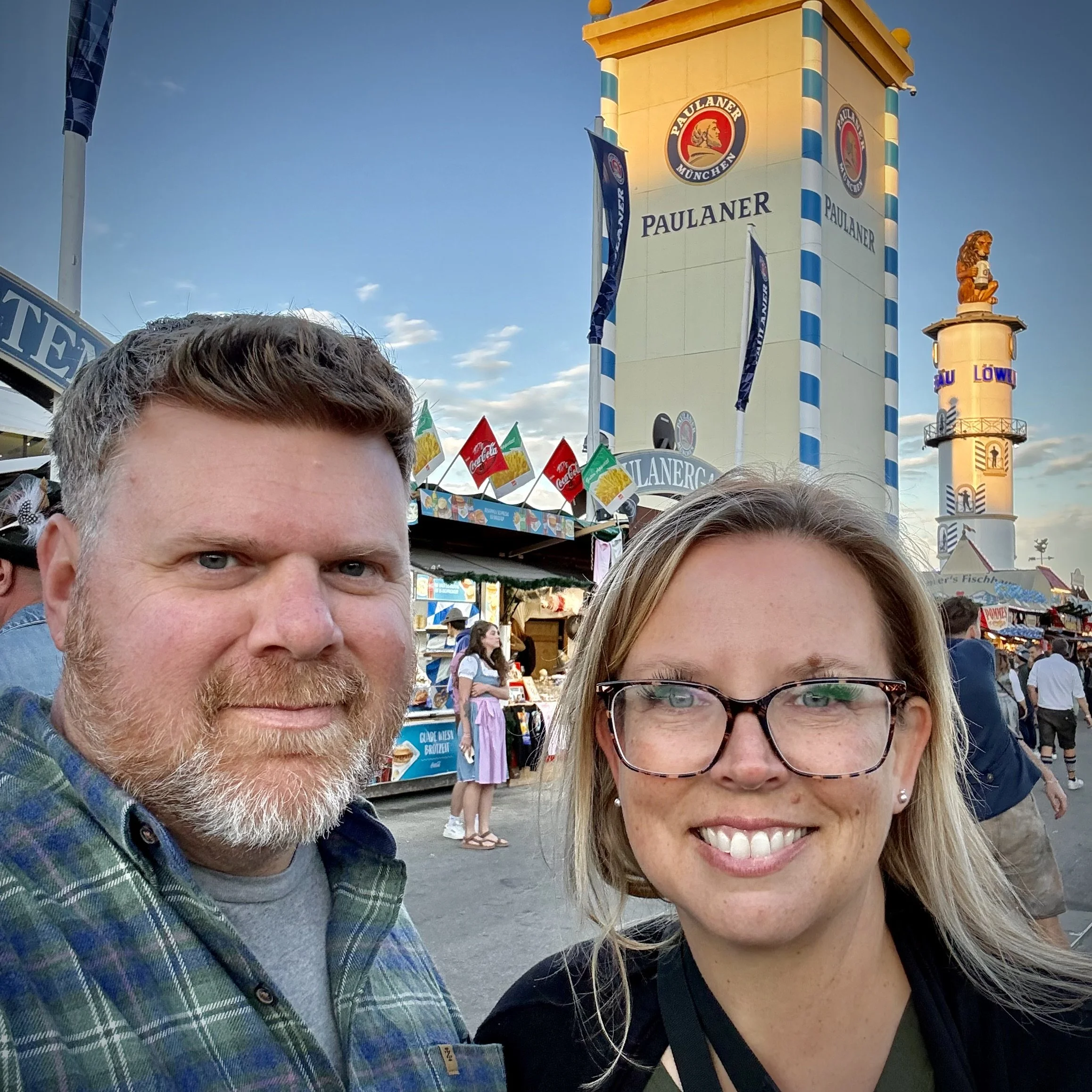
Oktoberfest Beer Tents: Do You Need Reservations?
One of our biggest questions before attending Oktoberfest was whether we needed reservations to enter the famous beer tents.
The good news is that you don't necessarily need one.
Admission to the main festival grounds is free, and most beer tents allow walk-in visitors when capacity permits.
However, there's an important difference between entering a tent and finding an available seat.
During weekday mornings and early afternoons, we found it relatively easy to explore different tents and find somewhere to sit. Later in the day, particularly during evenings and weekends, tables filled up quickly.
Each beer tent also has its own personality. Some offer a more traditional Bavarian atmosphere, while others attract younger crowds or become enormous parties as the evening progresses.
The music can change just as dramatically. One moment you're listening to traditional Bavarian songs, and an hour later you're standing on a bench surrounded by thousands of Germans singing Sweet Caroline.
Not exactly what you picture when imagining traditional German culture, but incredibly entertaining.
For first-time visitors, we recommend exploring several tents before choosing one. If you're visiting on a busy weekend or have your heart set on a specific tent and time, look into reservations well in advance.
The Meaning Behind Traditional Oktoberfest Clothing
There's also some interesting symbolism behind traditional Bavarian outfits.
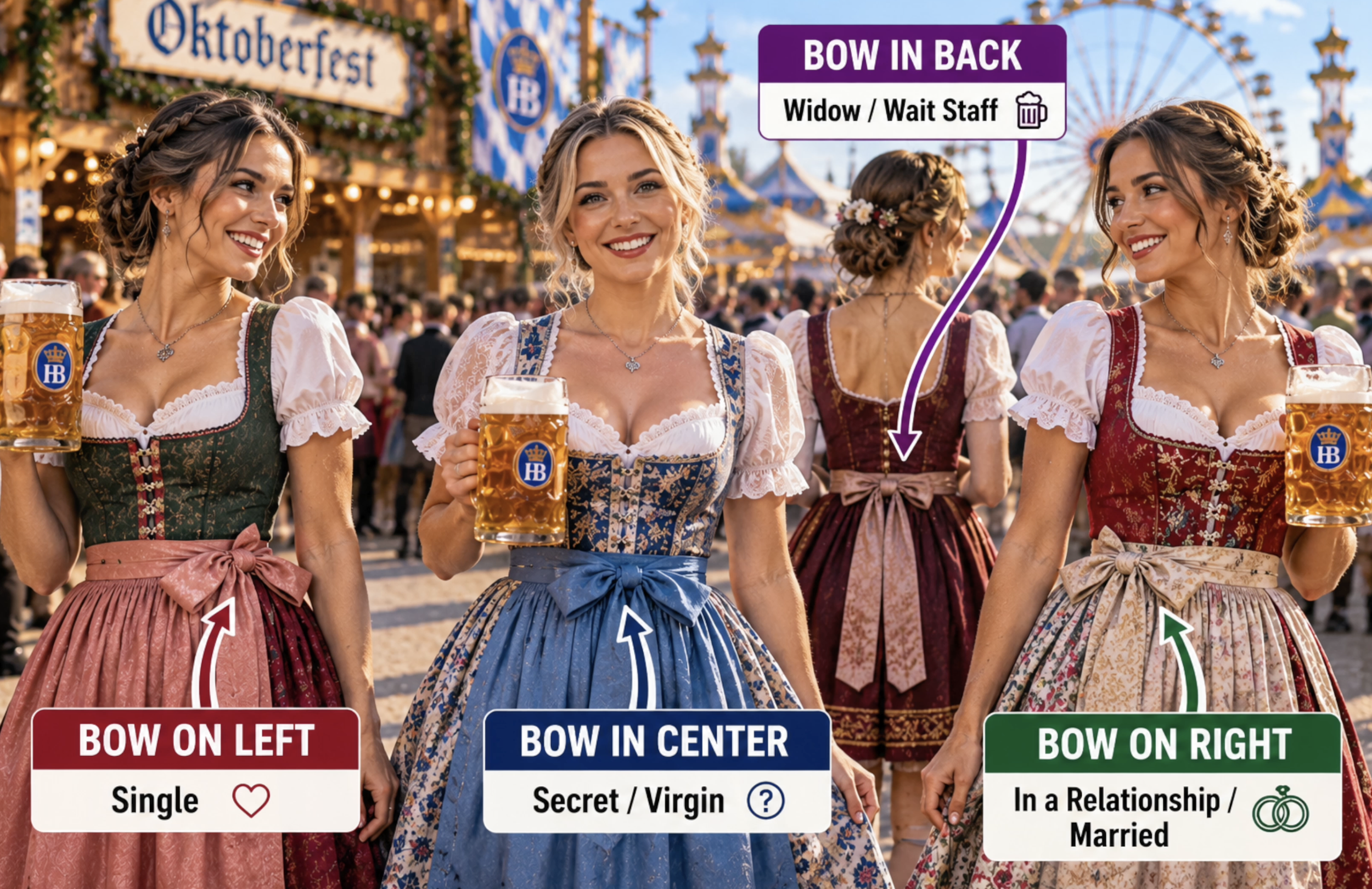
For women, the placement of the bow on a dirndl apron traditionally communicates relationship status. A bow tied on the left generally indicates someone is single, while a bow tied on the right traditionally indicates they're married or in a relationship.
Men sometimes decorate their Alpine hats with feathers, pins, and other accessories. Historically, certain decorations reflected hunting traditions, social status, or regional identity.
These outfits aren't simply costumes created for tourists. They're connected to Bavarian culture and traditions that extend well beyond Oktoberfest.
Do You Need Lederhosen or a Dirndl for Oktoberfest?
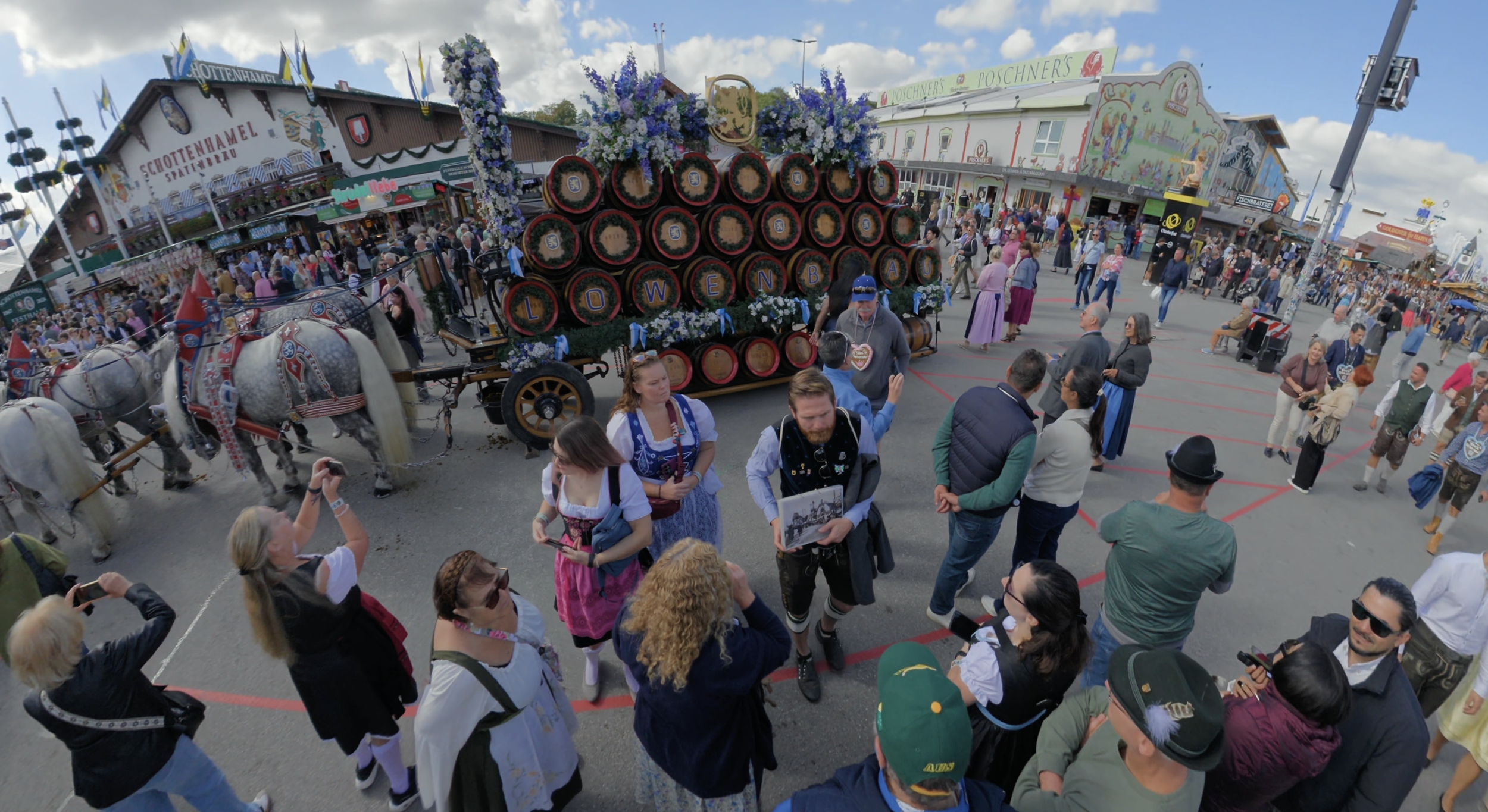
One thing you'll notice immediately in Munich during Oktoberfest is how many people wear traditional Bavarian clothing.
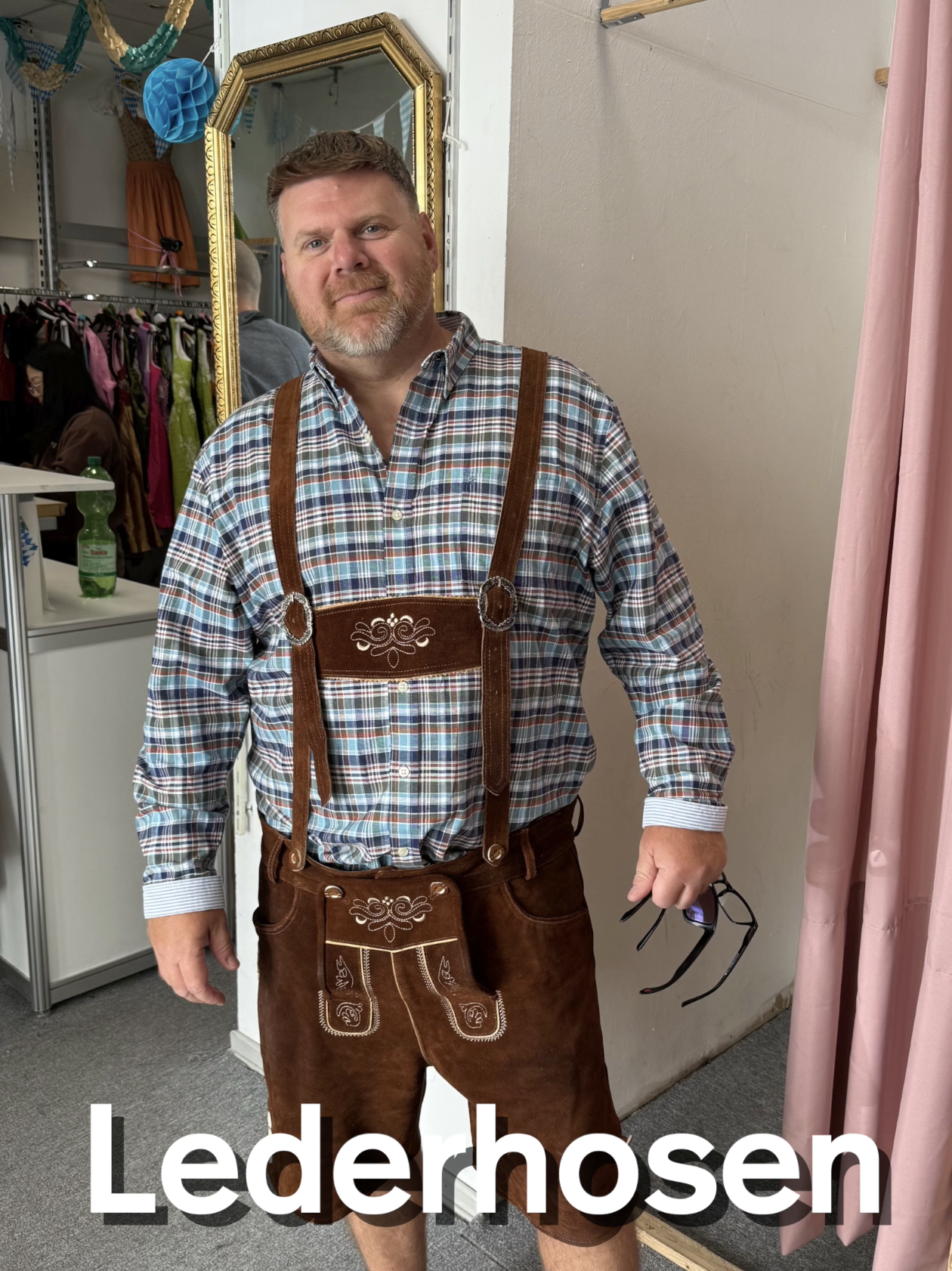
Men typically wear lederhosen, while women wear dirndls. Together, these traditional styles are part of Bavaria's cultural clothing heritage, commonly referred to as Tracht.
But do you actually need to dress up for Oktoberfest?
Absolutely not.
Before arriving, we were determined to wear traditional outfits for at least one day. We spent a considerable amount of time researching stores and rental options, but quickly discovered that renting wasn't particularly cheap or convenient.
Between sizing, limited selections, picking up and returning the clothing, and spending well over $150 for the two of us, we ultimately decided against it.
And we're glad we did.
Although a large percentage of visitors wear traditional clothing, plenty of people attend in regular clothes. We never felt out of place.
If dressing up is an important part of your Oktoberfest experience, go for it. Just make arrangements ahead of time and budget accordingly.
Best Food to Try at Oktoberfest and in Munich
Crispy Pork (Schweinebraten)
A Bavarian favorite featuring slow-roasted pork with a perfectly crispy, golden crackling on top and tender, juicy meat underneath. Often served with rich gravy, potato dumplings, or sauerkraut, it's hearty German comfort food at its best. If you love crispy pork skin, this is a must-try while visiting Munich.
Leberkässemmel
One of our favorite inexpensive meals in Munich was the Leberkäse sandwich. It's a thick slice of seasoned, finely ground meat served on a fresh bread roll, often with mustard. We found one for around €3.50, making it one of the best affordable meals of our visit.
Schmalznudel
This traditional Bavarian fried pastry was another favorite. Freshly made, it's warm, crispy around the edges, soft and chewy inside, and covered with sugar. It might look simple, but it's absolutely worth trying.
Bavarian Pretzels (Brezen)
In Bavaria, pretzels aren't just something you eat with beer. They're enjoyed throughout the day, including breakfast. Fresh Bavarian pretzels are soft inside, beautifully browned outside, and one of the easiest snacks to find throughout Munich.
Oktoberfest Roast Chicken (Wiesn-Hendl)
Roasted chicken is one of Oktoberfest's signature foods. You'll also find sausages, pork dishes, potatoes, and plenty of other hearty Bavarian meals throughout the festival grounds.
Our advice is to arrive hungry and make the food part of your Oktoberfest experience rather than treating it as an afterthought.
Best Things to Do at Oktoberfest Besides Drinking Beer
One of the biggest misconceptions about Oktoberfest is that the entire event revolves around sitting in beer tents.
There's actually an enormous amusement park outside, complete with roller coasters, games, historic rides, food stalls, and unique attractions.
Two of our favorites were also among the most entertaining things we experienced in Munich.
The Devil's Wheel (Teufelsrad)
The Devil's Wheel has been an Oktoberfest tradition for more than a century, and it might be one of the funniest attractions we've ever watched.
The concept is simple: participants sit on a large spinning platform and attempt to remain in place as it rotates faster and faster.
As if that weren't difficult enough, operators introduce ropes and a swinging ball to knock the remaining participants off balance.
The audience cheers, laughs, and watches as the final participants desperately try to hang on.
We found watching the Devil's Wheel more entertaining than many of the actual carnival rides.
The Toboggan
Another historic Oktoberfest attraction is the Toboggan, which features a tall slide that visitors reach using an extremely fast-moving conveyor belt.
And the real entertainment starts before anyone reaches the top.
Watching people attempt to step onto the moving walkway, particularly after enjoying a few beers, is hilarious.
These two attractions are worth seeking out even if you have absolutely no intention of riding them yourself.
Where to Stay in Munich for Oktoberfest
One of the biggest expenses associated with Oktoberfest is accommodation.
Hotels close to the festival grounds can become extremely expensive, especially during weekends and the busiest festival dates.
We began planning our visit almost a year in advance and still decided that staying near Oktoberfest wasn't worth the additional cost.
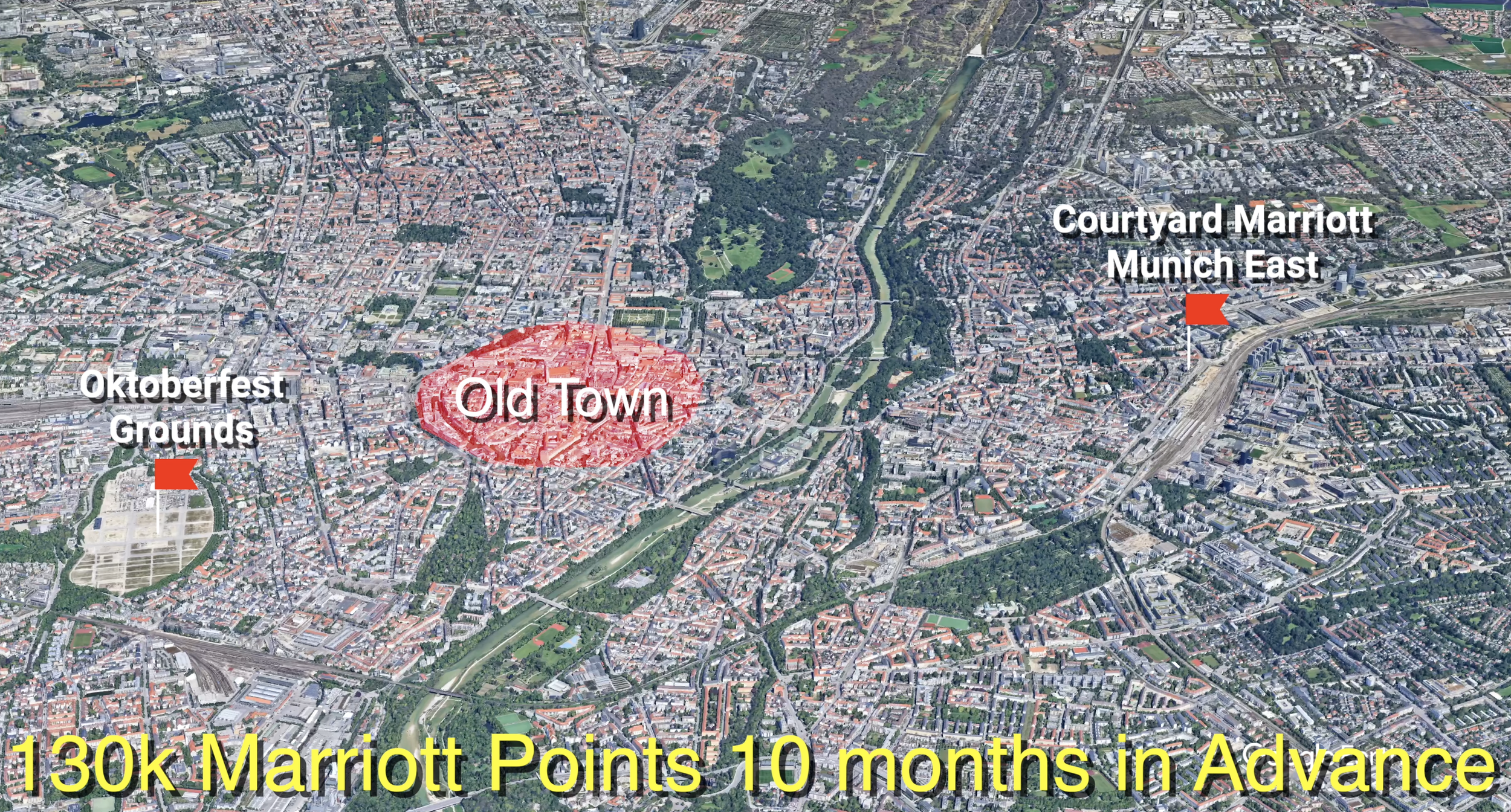
Instead, we booked five nights at the Courtyard by Marriott Munich City East.
Located east of Munich's historic center, the hotel was in a quieter neighborhood with convenient access to public transportation. We also found a great local restaurant near the hotel with considerably more affordable prices than many of the tourist-oriented restaurants in central Munich.
We redeemed approximately 130,000 Marriott Bonvoy points for our five-night stay, eliminating our accommodation expense. But BOOK EARLY!
For us, this was a much better option than paying inflated Oktoberfest hotel prices.
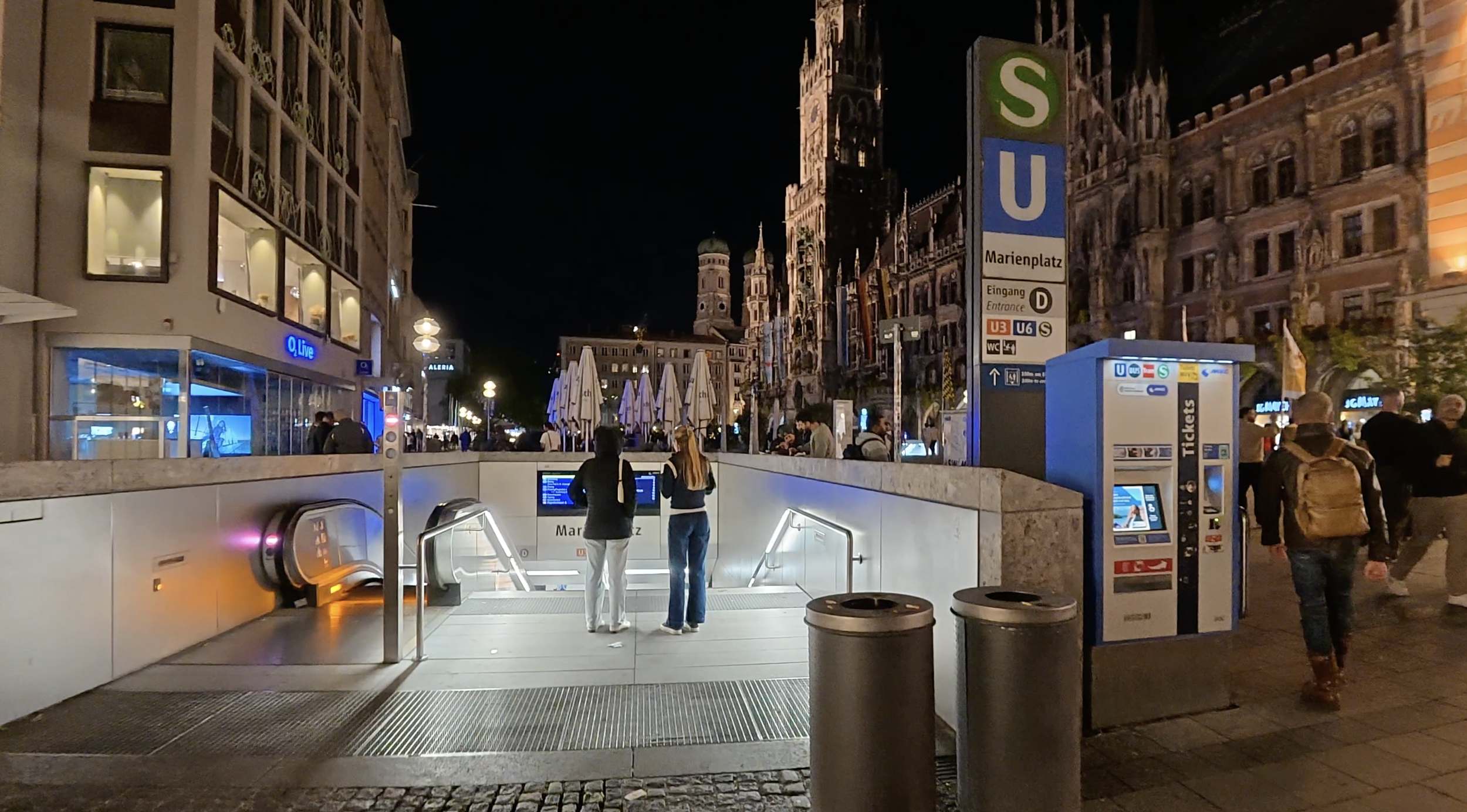
Our recommendation: Don't limit your hotel search to properties within walking distance of Oktoberfest. Look for accommodations near an U-Bahn or S-Bahn station. Munich's public transportation makes it relatively easy to reach the festival from many neighborhoods.

Getting Around Munich During Oktoberfest
Munich has an excellent public transportation system, and we found it easy to navigate the city without renting a car.
The U-Bahn, S-Bahn, trams, and buses connect most major neighborhoods and attractions, including the Oktoberfest grounds.
Theresienwiese has its own U-Bahn station, although nearby stations such as Goetheplatz and Schwanthalerhöhe can also be useful depending on your route and crowd conditions.
Because we stayed outside the historic center, we purchased a Munich public transportation pass that allowed us to travel between our hotel, Old Town, and Oktoberfest without purchasing individual tickets each time.
If you're staying for several days, compare the cost of individual tickets with the available day and multi-day passes.
We wouldn't recommend renting a car specifically for Oktoberfest. Between traffic, parking, and the convenience of public transportation, it's an unnecessary expense for most visitors.
Is Oktoberfest Safe for Tourists?
Before attending Oktoberfest, we wondered what a festival attracting millions of visitors and serving millions of liters of beer would feel like.
Would it be chaotic? Would people be aggressive? Would it feel uncomfortable?
Our experience was considerably more relaxed than we anticipated.
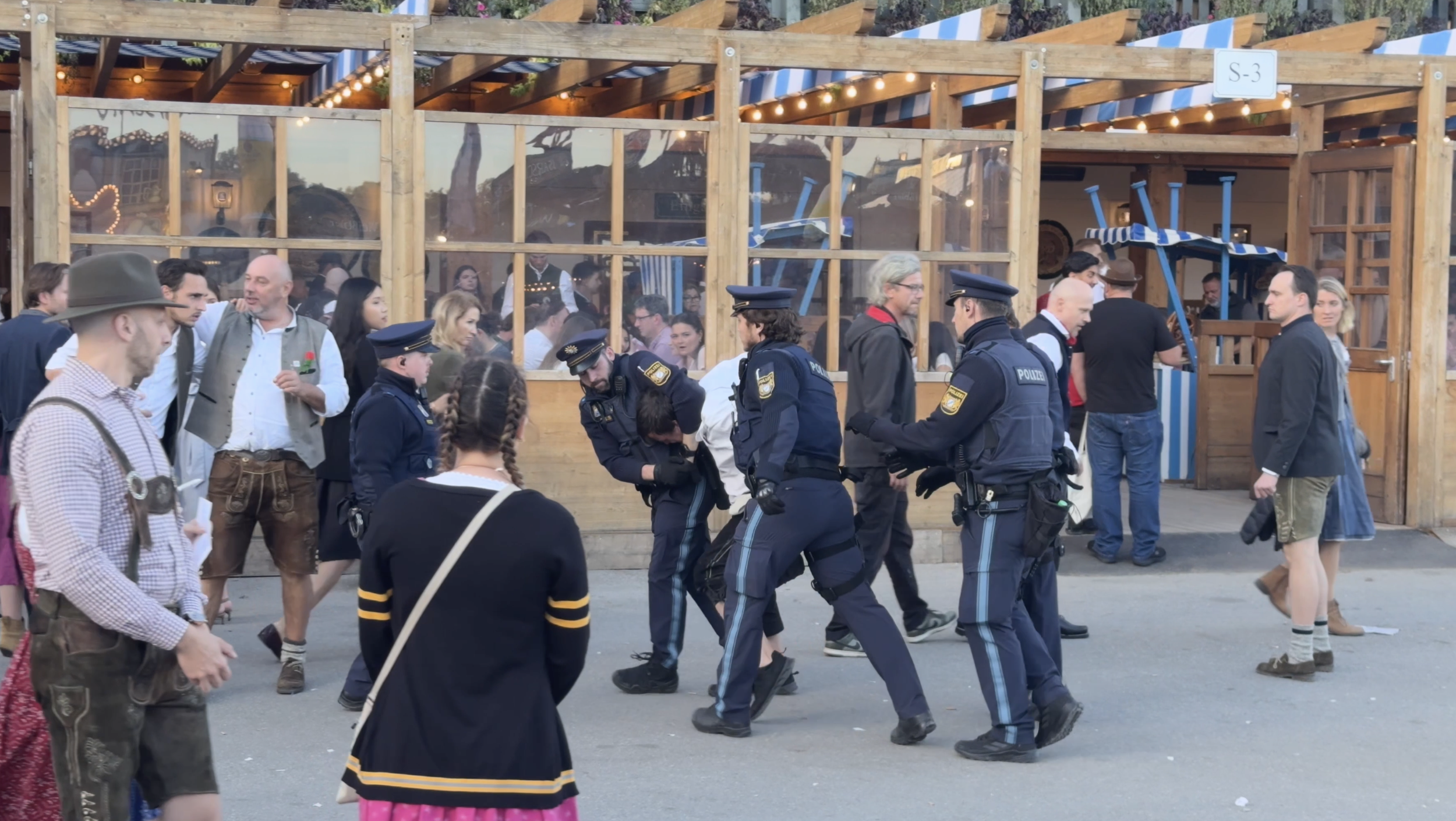
There was a substantial security and police presence, and the festival generally felt organized despite the enormous crowds.
We certainly encountered people who had enjoyed more beer than they probably should have, but we never personally experienced an aggressive or threatening atmosphere.
During the daytime and early evening, we felt particularly comfortable.
That doesn't mean visitors should let their guard down. Large crowds create opportunities for pickpocketing, and excessive drinking can lead to problems anywhere.
Keep track of your belongings, stay aware of your surroundings, and pace yourself with the beer.
Speaking of beer, Oktoberfest traditionally serves it in one-liter mugs known as a Maß. That's considerably more beer than most Americans are accustomed to ordering at once.
Take your time. Oktoberfest is much more enjoyable when you can remember it the following morning.
Do You Need Cash at Oktoberfest?
Yes. We strongly recommend bringing euros in cash.
Although electronic payments are becoming more common throughout Germany, cash was still extremely useful during our Oktoberfest visits.
We encountered many situations where cash was the easiest or preferred way to pay, including beer, food, carnival rides, snacks, and tips.
Rather than relying entirely on cards or spending time searching for an ATM inside the festival, we recommend withdrawing cash beforehand from a legitimate bank ATM.
Bring smaller denominations when possible, especially for food stands and smaller purchases.
And budget more than you think you'll need. Between giant beers, Bavarian food, and carnival attractions, Oktoberfest can make money disappear surprisingly quickly.
Is an Oktoberfest Guided Tour Worth It?
For our first Oktoberfest, we decided to book a guided experience.
The cost was approximately €375 for the two of us, which might seem excessive considering the festival itself is free to enter.
But we weren't simply paying someone to walk us around the grounds.
The biggest value was learning about the festival's history, understanding Bavarian traditions, figuring out how the beer tents operate, and getting comfortable navigating such an enormous event.
For first-time visitors who feel intimidated by Oktoberfest, a guided experience can be helpful.
Would we spend that much money on a tour every time we attended? Probably not.
Now that we understand how everything works, we'd feel completely comfortable visiting independently.
But for our first experience, we felt the tour was worthwhile.
Common Oktoberfest Mistakes to Avoid
After experiencing Oktoberfest for ourselves, there are several things we'd do differently—or recommend that first-time visitors avoid:
Arriving too late: Don't assume you'll find a table inside a popular beer tent at 6 PM on a busy evening.
Forgetting cash: Bring enough euros for food, drinks, rides, and other purchases.
Overpaying for accommodation: Consider staying farther from the festival near convenient public transportation.
Feeling pressured to dress up: Lederhosen and dirndls are optional, and regular clothing is perfectly acceptable.
Only visiting beer tents: Don't miss the carnival rides, traditional attractions, and food vendors.
Drinking too quickly: One-liter beers are larger and often stronger than visitors expect.
Not planning ahead: If you want a specific beer tent, a weekend visit, or traditional outfit rentals, make arrangements early.