Tamarindo
Tamarindo is one of Costa Rica’s most popular beach towns, combining a long Pacific beach, consistent surf, incredible sunsets, wildlife, restaurants, nightlife, and enough tourist infrastructure to make it an easy introduction to the country. It’s definitely more developed—and more expensive—than many Costa Rican beach towns, but that convenience is a big part of its appeal.
Quick & Fun Facts
Location: Guanacaste Province, northwestern Costa Rica
Closest Major Airport: Daniel Oduber Quirós International Airport in Liberia (LIR)
Language: Spanish, although English is widely spoken in Tamarindo
Currency: Costa Rican Colón (CRC), though U.S. dollars are widely accepted in tourist areas
Time Zone: Central Standard Time (UTC-6) year-round
Best Known For: Surfing, beaches, sunsets, nightlife and easy access to Guanacaste
Best Time to Visit: December through April for the driest weather
Rainy/Green Season: Generally May through November
Emergency Number: 911
Electricity: 120V with U.S.-style Type A and B plugs
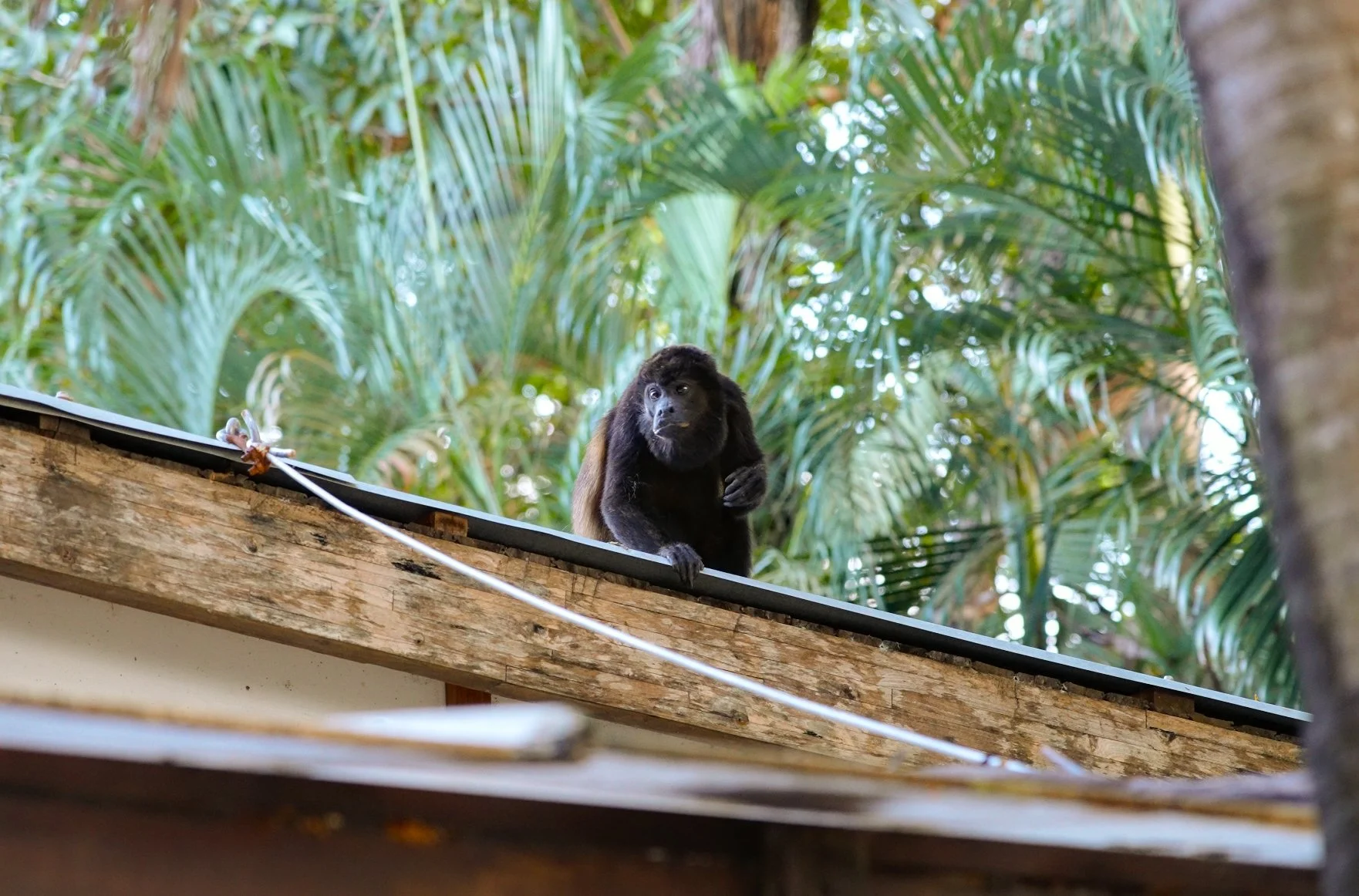
One of the coolest things about Tamarindo is that you don't have to travel far to see wildlife. Howler monkeys, iguanas, tropical birds and other animals are regularly spotted around town.
Just north of Tamarindo is Las Baulas Marine National Park, created in part to protect leatherback sea turtles nesting around Playa Grande, Playa Ventanas and Playa Langosta.
And yes, "Pura Vida" really is something you'll hear constantly. It literally translates to "pure life," but Costa Ricans use it for everything from hello and goodbye to "everything's good."
Overview & Vibe
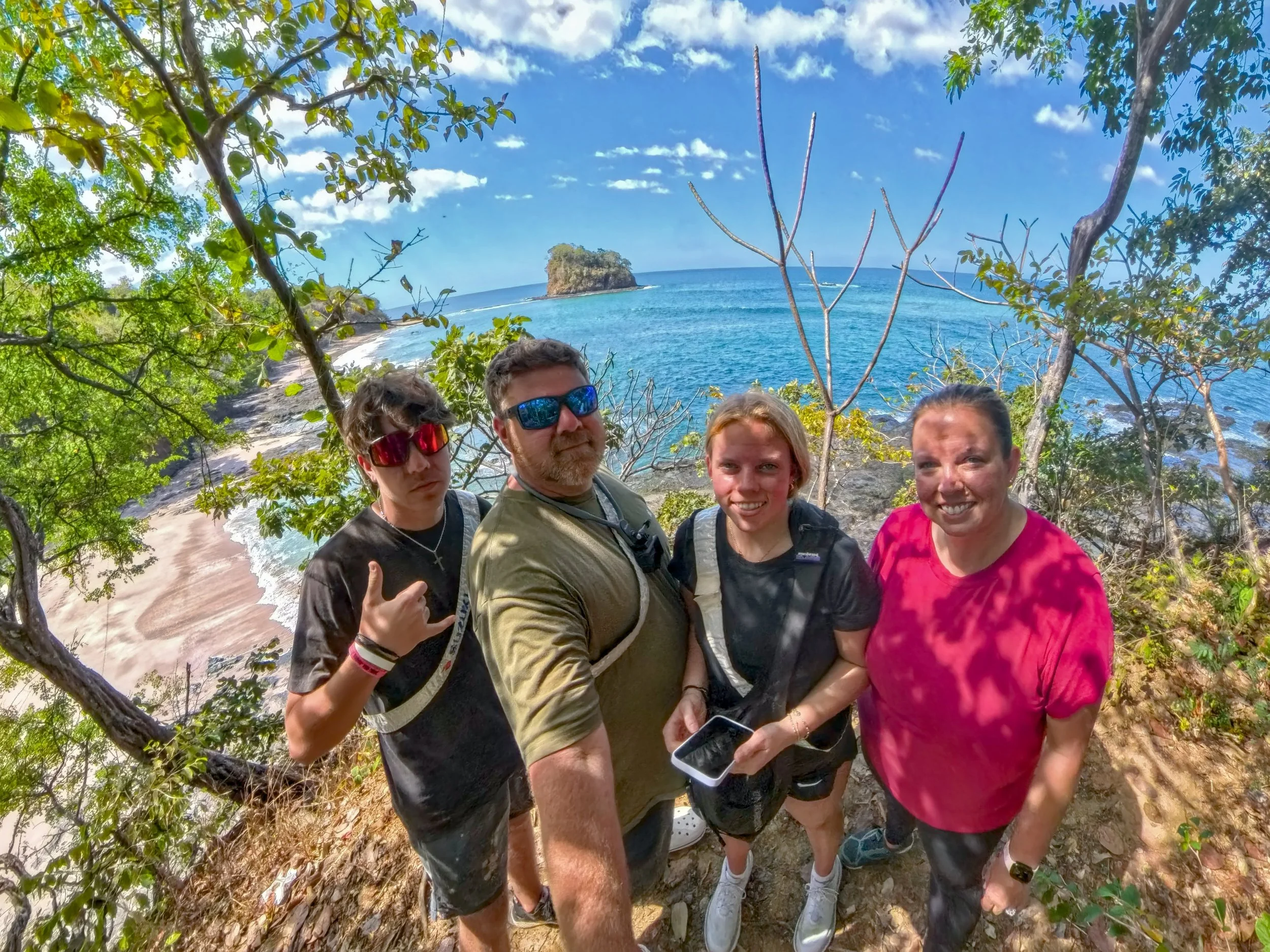
Tamarindo is probably best described as Costa Rica with training wheels—in a good way.
You get beautiful beaches, surfing, wildlife and that relaxed Costa Rican lifestyle, but you also have plenty of restaurants, supermarkets, hotels, tour operators, ATMs and transportation options. For first-time visitors who aren't ready to disappear down a dirt road into the jungle for a week, Tamarindo is incredibly easy.
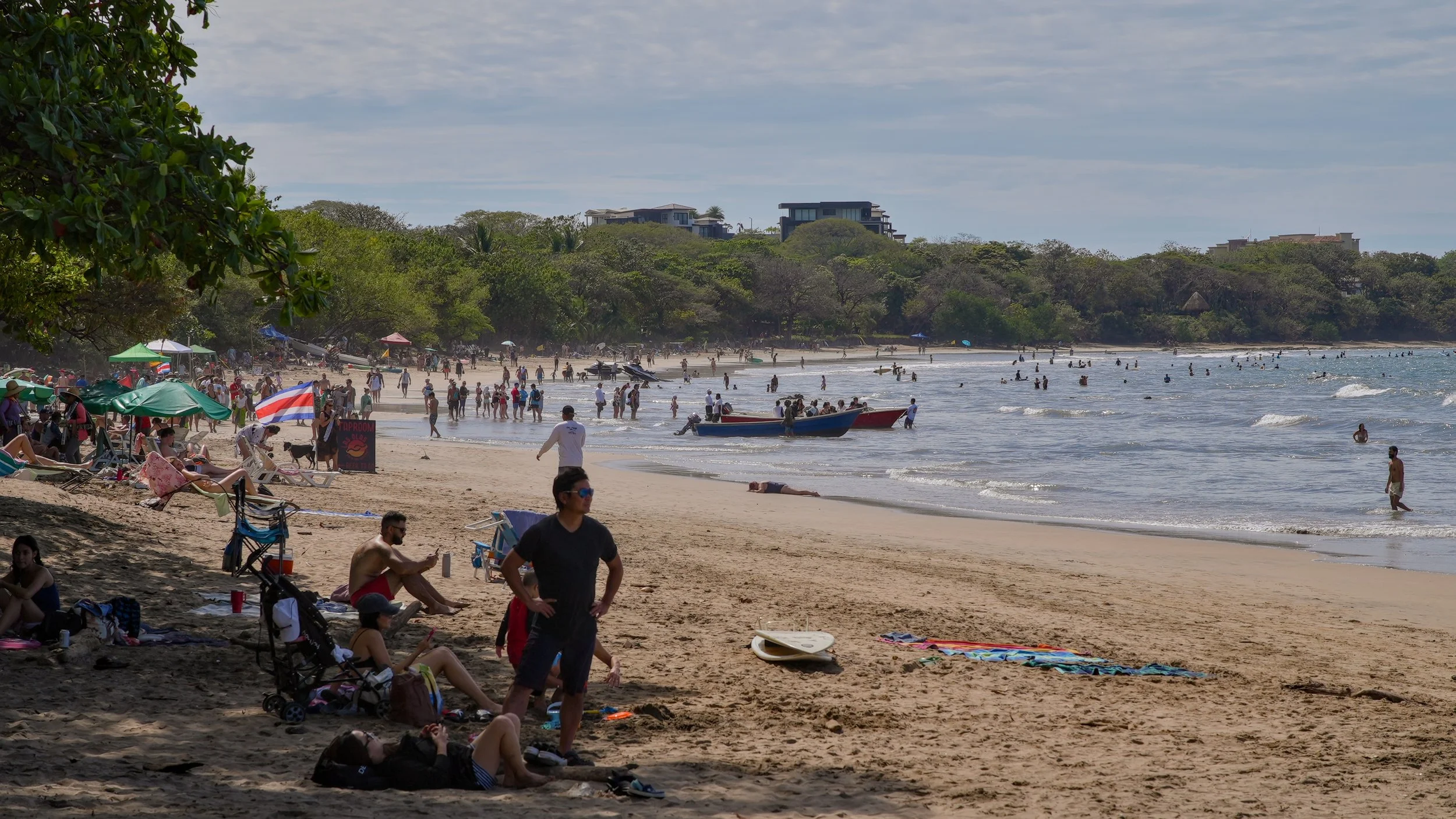
The town runs parallel to Playa Tamarindo, with most restaurants, bars, shops and accommodations within walking distance of the beach.
During the day, the atmosphere revolves around the ocean. You'll see surf lessons everywhere, people hanging around beach bars and travelers heading out on catamaran, fishing and wildlife tours.
Around sunset, practically everyone migrates toward the beach.
And once the sun goes down, Tamarindo becomes one of the livelier beach destinations in Guanacaste. There are plenty of restaurants and bars, and the nightlife can get surprisingly energetic.
That's also Tamarindo's biggest trade-off.
If you're imagining a tiny undiscovered Costa Rican fishing village where you're the only tourist around, this isn't it.Tamarindo is firmly established on the tourist trail.
You'll occasionally hear people jokingly call it "Tamagringo" because of the large number of American and Canadian visitors and expats.
But don't let that automatically scare you away. Tamarindo is popular for a reason: it's beautiful, convenient, fun and makes an excellent base for exploring northern Costa Rica.
Best Time to Visit
Tamarindo sits in Guanacaste, one of Costa Rica's driest regions.
The Pacific side of Costa Rica has two fairly distinct seasons. The dry season generally runs from December through March, April is transitional, and wetter conditions typically arrive from May through November. September and October are among the wettest months on much of Costa Rica's Pacific coast.
December through April
This is Tamarindo's peak season.
Expect lots of sunshine, hot temperatures and very little rain. It's perfect beach weather, but you'll also encounter the largest crowds and highest accommodation prices.
January through March is particularly reliable if sunshine is your priority.
March can be extremely hot and dry, and the landscape around Guanacaste may look surprisingly brown compared with the lush green Costa Rica you see in advertisements.
May through August
This can actually be a fantastic compromise.
The rains return, turning the countryside green again, but that doesn't necessarily mean nonstop rain. Showers often develop later in the day, leaving plenty of usable beach time.
July and August can also experience the veranillo, or "little summer," when rainfall temporarily decreases.
You'll generally find fewer tourists and potentially better hotel prices than during peak season.
September & October
These are among the rainiest months on Costa Rica's Pacific side.
You can absolutely still visit, but you'll need more flexibility with outdoor plans.
Our sweet spot: Late November through early December or May through July if you're trying to balance weather, crowds and cost.
Explore Las Baulas Marine National Park
Just north of Tamarindo, Las Baulas Marine National Park protects beaches, mangroves and important leatherback turtle nesting habitat. The park includes Playa Grande, Playa Ventanas and Playa Langosta.
You can also explore the Tamarindo estuary by boat or kayak while looking for crocodiles, monkeys and tropical birds.
Visit Playa Grande
If Tamarindo Beach feels too busy, make your way to Playa Grande.
It's larger, quieter and especially popular with surfers.
Visit Playa Conchal
One of Guanacaste's most famous beaches makes an excellent half-day or day trip.
Instead of typical sand, portions of Playa Conchal are covered with millions of tiny crushed seashell fragments. The water can be beautifully clear and calm depending on conditions.
Take a Day Trip
Tamarindo's location makes it a good jumping-off point for exploring Guanacaste.
Popular excursions include:
Rincón de la Vieja National Park
Palo Verde National Park
Playa Flamingo
Playa Conchal
Playa Grande
Río Celeste
Adventure parks offering ziplining and horseback riding
Keep in mind that Costa Rica looks small on a map, but driving times can be surprisingly long.
Things to Do & See
Learn to Surf
If you've ever wanted to try surfing, Tamarindo is one of Costa Rica's most popular places to learn.
You'll find surf schools everywhere, and lessons typically include the board, basic instruction and time in the water with an instructor.
Even if you're a complete beginner who has the balance of a folding chair, this is the place to give it a shot.
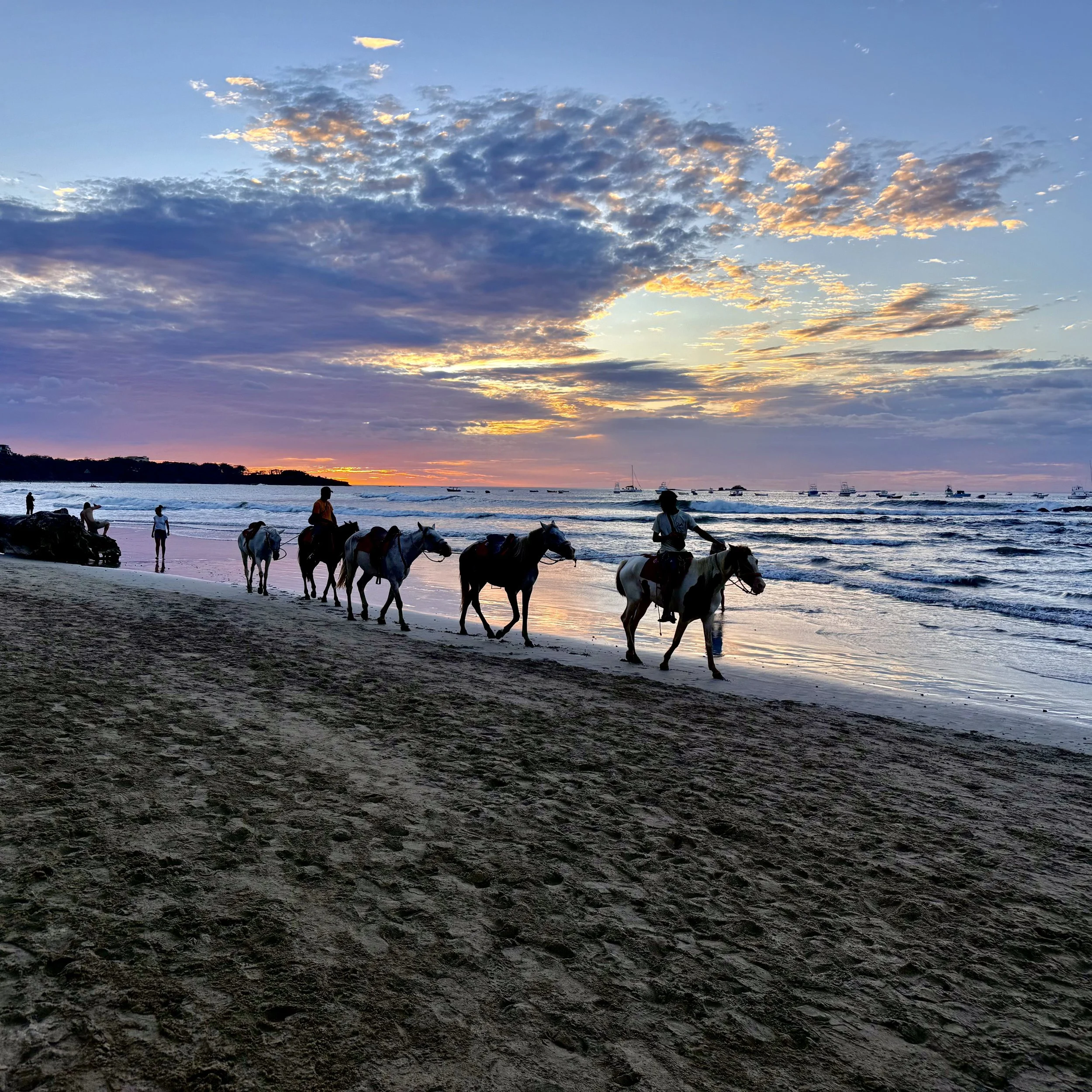
Watch the Sunset
This sounds ridiculously simple until you experience a Tamarindo sunset.
Grab a drink, find a spot along Playa Tamarindo and watch the sun disappear into the Pacific.
It's practically the town's nightly community event.
Take a Sunset Catamaran Cruise
Catamaran trips are among Tamarindo's most popular excursions.
Most head along the Guanacaste coastline and combine sailing, swimming, snorkeling, drinks and food before returning around sunset.
They're touristy.
They're also incredibly fun.
Both things can be true.
Where to Stay
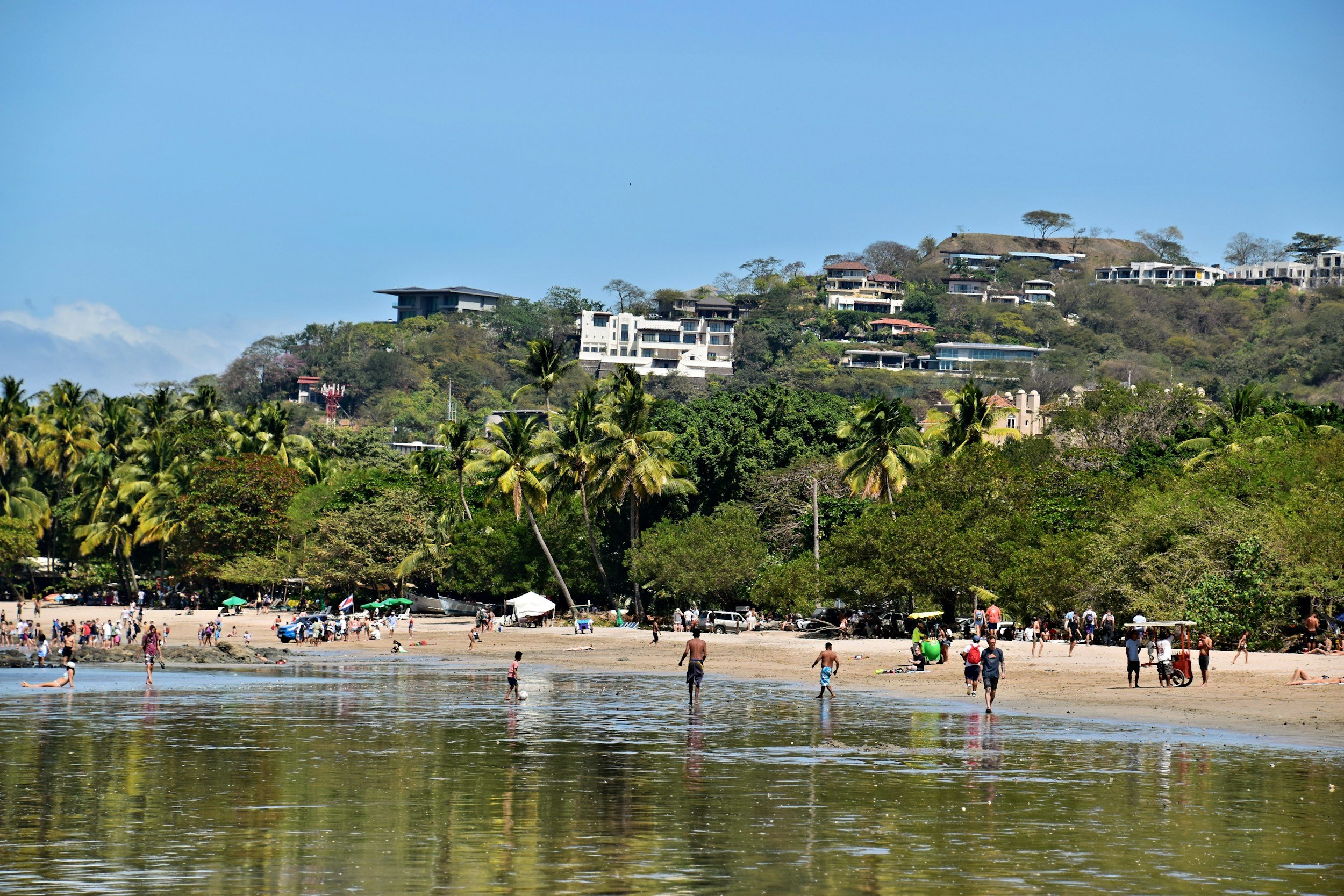
Where you stay around Tamarindo makes a surprisingly big difference because the atmosphere changes quickly as you move away from the center.
Central Tamarindo
For a first visit, staying near central Tamarindo is the easiest option.
You'll be within walking distance of Playa Tamarindo, restaurants, bars, shops, surf schools and tour companies. You can potentially spend your entire stay without renting a car.
The downside is noise.
If your accommodation sits directly beside one of the busier bars or nightlife spots, your relaxing Costa Rican vacation may come with an unexpected 1:00 a.m. soundtrack.
Best for: First-time visitors, travelers without a car and anyone wanting restaurants and nightlife nearby.
Southern Tamarindo / Playa Langosta
Head south and things become considerably quieter.
Playa Langosta is a great choice if you want access to Tamarindo without living directly in the middle of the action. You'll find upscale condos, vacation rentals and boutique properties scattered throughout the area.
You can walk into Tamarindo from some locations, although the heat can make a relatively short walk feel much longer.
Best for: Couples, longer stays and travelers wanting peace and quiet without being isolated.
Northern Tamarindo
The northern end of town can provide a nice compromise between convenience and quieter surroundings while keeping you close to the beach.
It's also convenient for accessing the Tamarindo estuary and crossing toward Playa Grande.
Playa Grande
Across the estuary from Tamarindo sits Playa Grande, part of the Las Baulas Marine National Park area.
The vibe is much quieter and less developed than Tamarindo, while still offering excellent surfing and a gorgeous beach.
Just understand that Playa Grande and Tamarindo may look extremely close on a map, but getting between them isn't always as simple as walking straight down the beach because the estuary separates them.
Best for: Surfers and travelers looking for a quieter beach experience.
Local Foods to Try
Costa Rican food isn't typically spicy. Instead, traditional cooking tends to emphasize relatively simple ingredients such as rice, beans, vegetables, plantains, eggs, meat and seafood.
Gallo Pinto
The Costa Rican breakfast staple.
Rice and beans are mixed together with seasonings and usually served alongside eggs, plantains, cheese or tortillas.
You'll see it everywhere.
Casado
If you only try one traditional Costa Rican lunch, make it a casado.
A typical plate combines rice, beans, salad, plantains and your choice of meat, chicken or fish.
For inexpensive local food, look for restaurants called sodas rather than eating every meal at beachfront tourist restaurants.
Ceviche
Being on the Pacific coast means seafood deserves some attention.
Costa Rican ceviche typically combines fresh fish with lime juice, onion, cilantro and peppers.
Chifrijo
A dangerously easy bar snack to become addicted to.
Chifrijo combines rice, beans, pork, pico de gallo and often avocado or tortilla chips.
Patacones
Green plantains are smashed, fried and served crispy, often alongside beans, guacamole or other dips.
Fresh Fruit & Juices
Take advantage of Costa Rica's tropical fruit.
Try mango, pineapple, papaya, watermelon, passion fruit and guanábana.
Ask for a batido or refresco natural and choose whether you'd like it made with water or milk.
And obviously...
Costa Rican Coffee
Costa Rica takes coffee seriously.
Even though Guanacaste isn't the country's primary coffee-growing region, you'll have plenty of opportunities to try locally grown Costa Rican beans.
Getting Around
Walking
Central Tamarindo is extremely walkable.
If your hotel or Airbnb is near the center, you can easily walk between the beach, restaurants, shops and bars.
Just remember that it's hot. A 15-minute walk at noon in Guanacaste can feel considerably longer than it looks on Google Maps.
Golf Carts
Golf carts have become a popular way to get around Tamarindo and nearby areas.
They're particularly useful if you're staying farther from the center or around Playa Langosta.
Taxis
Taxis are available for short trips, although it's smart to confirm the fare before leaving if the vehicle isn't using a meter.
Rental Car
You do not need a rental car if you're simply vacationing in Tamarindo.
But if Tamarindo is your base for exploring beaches and attractions around Guanacaste, having a car provides much more freedom.
Road conditions have improved substantially around Costa Rica's main tourist areas, but don't assume every road you see on Google Maps is a beautifully paved highway.
Because...Costa Rica.
Getting From Liberia Airport to Tamarindo
Liberia's international airport is generally the most convenient airport for Tamarindo.
The drive normally takes roughly 1 to 1½ hours, depending on traffic and your exact destination.
Private transfers, shared shuttles, taxis and rental cars are all common options.
San José's international airport is considerably farther away, so if Tamarindo is your primary destination, flying into Liberia usually makes far more sense.
Common Mistakes to Avoid
Assuming Costa Rica Is Cheap
This surprises a lot of first-time visitors.
Costa Rica—and Tamarindo especially—can be expensive.
Beachfront restaurants, imported products, cocktails, tours and accommodations can approach U.S. prices.
Eat occasionally at local sodas, shop at supermarkets and compare tour prices instead of assuming everything will be inexpensive because you're in Central America.
Staying Too Far From Town Without Transportation
That Airbnb may look like it's "only one mile from Tamarindo."
Then you arrive.
It's 92°F, you're walking uphill, the road doesn't have a sidewalk and you're reconsidering every decision that brought you here.
Check the actual walking route before booking.
Overpacking Your Itinerary
Costa Rica isn't a destination where you want to schedule something every waking minute.
Transportation takes time, weather changes and sometimes the best afternoon consists of absolutely nothing more complicated than sitting on the beach.
Leave room for Pura Vida.
Underestimating the Sun
Guanacaste's tropical sun is intense.
Wear sunscreen, bring a hat and drink significantly more water than you think you need.
Leaving Things Unattended on the Beach
Don't leave your phone, wallet, camera or backpack sitting unattended while you go swimming. Costa Rica's official tourism guidance specifically recommends keeping belongings secure at the beach.
Assuming Every Beach Is Safe for Swimming
Pacific currents can be powerful.
Conditions vary from beach to beach and even throughout the day. Pay attention to warning flags and local advice and be especially cautious around rip currents. Costa Rica's tourism authorities recommend checking beach conditions and avoiding swimming alone when possible.
Trying to See the Entire Country From Tamarindo
Tamarindo is a great Guanacaste base.
It isn't a great base for every attraction in Costa Rica.
Trying to day-trip from Tamarindo to destinations halfway across the country means spending an enormous amount of your vacation staring through a windshield.
Safety & Things to Know
Tamarindo is heavily visited by international tourists, but normal precautions still apply.
Petty theft is the most realistic concern for most travelers.
Don't leave phones or bags unattended at the beach, don't leave luggage visible inside a rental car and use your hotel safe for passports and excess cash.
At night, stick to populated areas and avoid wandering alone down isolated beaches or dark roads. Costa Rica's official tourism guidance similarly recommends avoiding secluded areas alone, particularly after dark.
Ocean Safety
Rip currents deserve more attention than crime.
Never assume calm-looking water means safe swimming conditions. Watch for warning flags, ask locals about currents and be especially careful after storms.
Crocodiles
Yes, Costa Rica has crocodiles.
And yes, there are crocodiles around estuaries.
Don't swim across the Tamarindo estuary to reach Playa Grande. Use the local boat crossing instead.
Seriously.
Saving a few dollars isn't worth auditioning for a Costa Rican nature documentary.
Drinking Water
Tap water is potable in most of Costa Rica, although bottled water may still be recommended in certain areas.
A reusable water bottle is worth bringing.
Money
Costa Rican colones are the official currency, but U.S. dollars are widely accepted around Tamarindo.
Pay attention to the exchange rate being offered when paying in dollars. Sometimes paying in colones or using a credit card with no foreign transaction fee provides better value.
Having some local currency is useful for small purchases, tips and local businesses.
Bugs
Mosquitoes can become considerably more noticeable during the rainy season.
Bring insect repellent, especially for evenings and excursions around mangroves, forests and standing water.
Visa & Entry Requirements
For American travelers, visiting Costa Rica is relatively straightforward, but don't confuse visa-free travel with having no entry requirements.
Costa Rica categorizes visitors according to nationality. Travelers from countries in its first group can receive permission to remain for up to 180 calendar days, although the immigration officer ultimately determines the authorized length of stay when you enter.
Visitors should be prepared to provide:
A valid passport
A return or onward ticket
Proof of sufficient funds if requested
A visa if one is required for their nationality
Costa Rica currently states a minimum financial requirement of US$100 per month or portion of a month of legal stay, although immigration officials may or may not request proof.
Your onward travel matters. Costa Rica specifically requires nonresidents entering on a one-way ticket to have proof of onward transportation, which can include a pre-purchased flight, international bus ticket or cruise passage.
Yellow Fever Requirements
Costa Rica may require proof of yellow fever vaccination when arriving from certain countries in South America or Africa. This becomes especially important for travelers combining Costa Rica with destinations such as Colombia, Peru, Brazil or parts of Africa.
Entry requirements can change, so always verify the rules for your nationality and recent travel history shortly before departure.
Final Thoughts
Tamarindo isn't the hidden Costa Rican beach town it may have been decades ago.
It's busy. It's touristy. And yes, it can be expensive.
But it's also popular for good reason.
You get a beautiful Pacific beach, incredible sunsets, surfing, wildlife, restaurants, nightlife and easy access to some of Guanacaste's best experiences—all wrapped into one destination that's remarkably easy for international visitors.
For first-time travelers to Costa Rica, Tamarindo can be an excellent place to start. Stay close enough to town that you can walk to restaurants and the beach, venture beyond Tamarindo to see more of Guanacaste, eat at a few local sodas instead of sticking exclusively to tourist restaurants, and give yourself enough downtime to actually enjoy where you are.
Because Tamarindo isn't really a destination you're supposed to rush through.
Sometimes the plan really should be beach, sunset, cold drink, repeat.