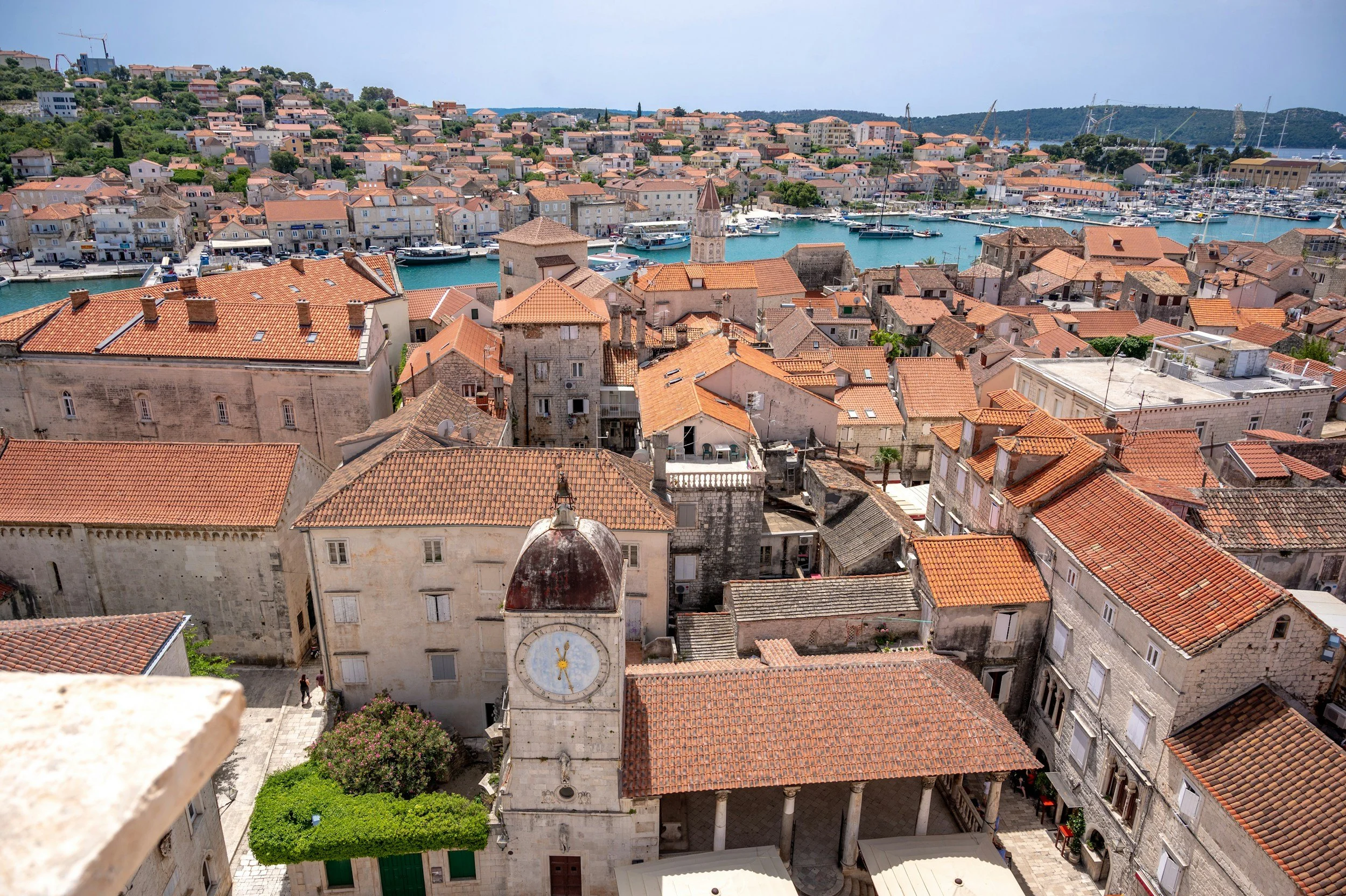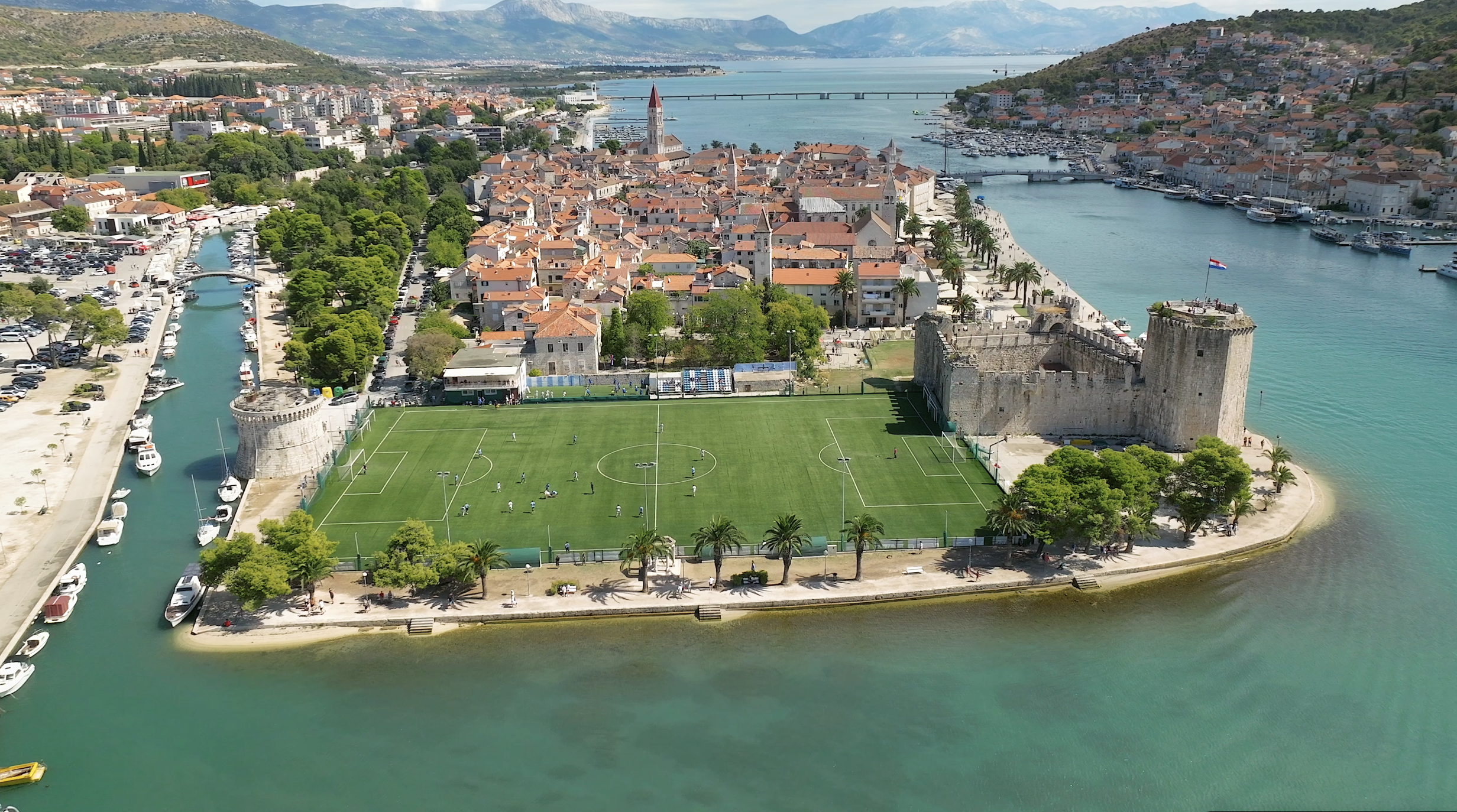
The town dates back more than 2,000 years, having been founded by Greek colonists in the 3rd century BC. Roman, Byzantine, Hungarian and Venetian influences followed, creating the architectural mix you see today. Amazingly, parts of Trogir's ancient street layout remain in use.
During summer days, Trogir can get busy with tour groups and visitors from Split. But mornings and evenings are completely different. Once the crowds thin out, the waterfront restaurants fill up, boats settle into the harbor and the Old Town becomes much more relaxed.
Cleared2Travel Tip: If your schedule allows, spend at least one night instead of treating Trogir strictly as a day trip.
Trogir, Croatia
Just 30 minutes west of Split, Trogir is one of Croatia’s most underrated stops on the Dalmatian Coast. Its tiny historic center packs centuries of history into a maze of stone streets, waterfront cafés, medieval churches and Venetian architecture — all surrounded by the brilliant blue Adriatic.
Trogir’s historic center has been a UNESCO World Heritage Site since 1997, recognized for its remarkably preserved medieval town built upon a street plan dating all the way back to the Hellenistic and Roman periods.
Trogir feels like a miniature version of some of Croatia's larger historic cities.
The Old Town occupies a tiny island connected to the mainland by bridges. Once you cross into the historic center, cars largely disappear and you're surrounded by narrow limestone streets, hidden courtyards, small restaurants and centuries-old buildings.